
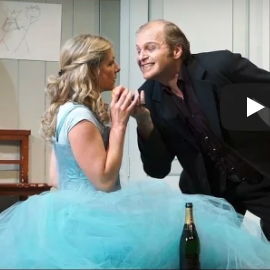
On October 17, at the Dresden State Opera 1, I went to see R. Strauss’s (1864-1949) Salome. I had done no advance research at all, but happened to pass by and learned that it was being performed, so I obtained a ticket on the spur of the moment. I do not watch opera very often, but Salome was being performed in the very theater where it premiered, and I happened to be there, so how could I not see it?
The Dresden State Opera is Germany’s oldest opera house. Richard Wagner served as its conductor from 1843 to 1849, and it is also known as the place where works such as The Flying Dutchman and Tannhäuser premiered. Richard Strauss also premiered Salome, Elektra, Der Rosenkavalier, and other works there, making it fair to call this one of Germany’s foremost theaters.

A theater’s ticket office (box office) is normally located in the theater, but in this case it is in the building on the opposite side of the square facing the theater.

Salome, Op. 54, was composed by Richard Strauss between 1903 and 1905 as an opera in 1 act. It premiered at this theater on December 9, 1905. It uses leitmotifs, makes extensive use of chromaticism, and expands tonality. Musically, it was highly innovative for its time, and this seems to have expressed decadence.
As for this production, in a word, it was very strange. The costumes being moved into the present day was one thing, but Narraboth was dressed in a bear costume that looked like Rilakkuma, making the production quite surreal. Perhaps it could also be said to have been effective in a way, as it amplified the madness of Salome, who grew up in an abnormal family and became a young woman while retaining the possessiveness and ferocity of a child. Salome kisses Jochanaan’s head, places it on her bed as though putting a doll to sleep, and lies down beside it herself. Then, at Herod’s command, “Kill that woman!”, the stage abruptly goes dark and the curtain falls.
You can get a glimpse of it in the YouTube video below. 2

This is what the inside of the theater looked like.

The theater was reduced to a pile of rubble by air raids during World War II, but they did an impressive job of rebuilding it. In Japan, we might have built something else instead.
This is what the foyer looked like.

When the opera ended and I went outside, it was of course already completely dark.

Articles about Germany
- A Visit to the Mendelssohn House in Leipzig — The Difficulties Faced by the Mendelssohn Family and Women
- API Days Berlin 2017 Presentation
- I Went to Hamburg to Eat Hamburg Steak
- Visiting C. P. E. Bach’s Grave: St. Michael’s Church in Hamburg
- Getting a SIM at Berlin Tegel Airport
- Does Rilakkuma Appear in the Semperoper Dresden’s Salome?!
- C.P.E. Bach, Father of Classical Music: 300th Anniversary of His Birth
Articles about Music
- New Discovery: Mozart Works for Flute and Harp Premiered on 6/21 (6/23 Performance Recording Also Added)
- A Visit to the Mendelssohn House in Leipzig — The Difficulties Faced by the Mendelssohn Family and Women
- Year-End Greetings: Fauré’s “In Paradisum” from Requiem, Op. 48—In Memory of Andrew Nash
- The Background, Lyrics, and Recommended Performances of Giordani’s “Caro mio ben (My Beloved)”
- An Unusual Theme Song for the Annals of Anime History — The Secrets of the Latin Lyrics to “Lilium (White Lily)”
- VTuber Chima Machita’s “Lilium” and “Caro mio ben”
- Bach’s “Toccata and Fugue in D Minor, BWV 565”: Originally a Violin Piece?
- Season’s Greetings—Bach: Siciliano (Flute and Spinet)
- “Michishirube” at the Setting of Violet Evergarden
- A Recommended Hidden Gem: Damase—Quartet for Flute, Oboe, Clarinet, and Piano
Footnotes
- its official name is the Semperoper. In fact, it is no longer a national institution but the Saxon State Opera
- The “Dance of the 7 Veils,” incidentally, was staged with 7 dancers dancing separately.
Related posts
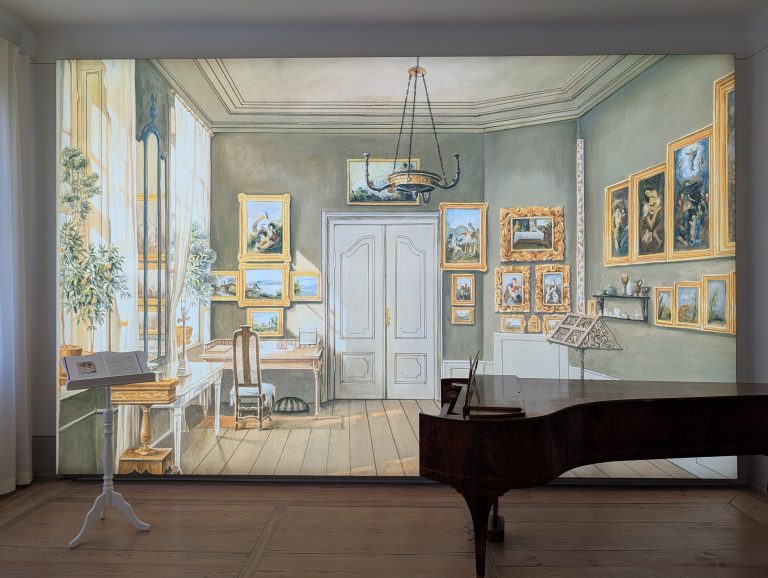
A Visit to the Mendelssohn House in Leipzig — The Difficulties Faced by the Mendelssohn Family and Women
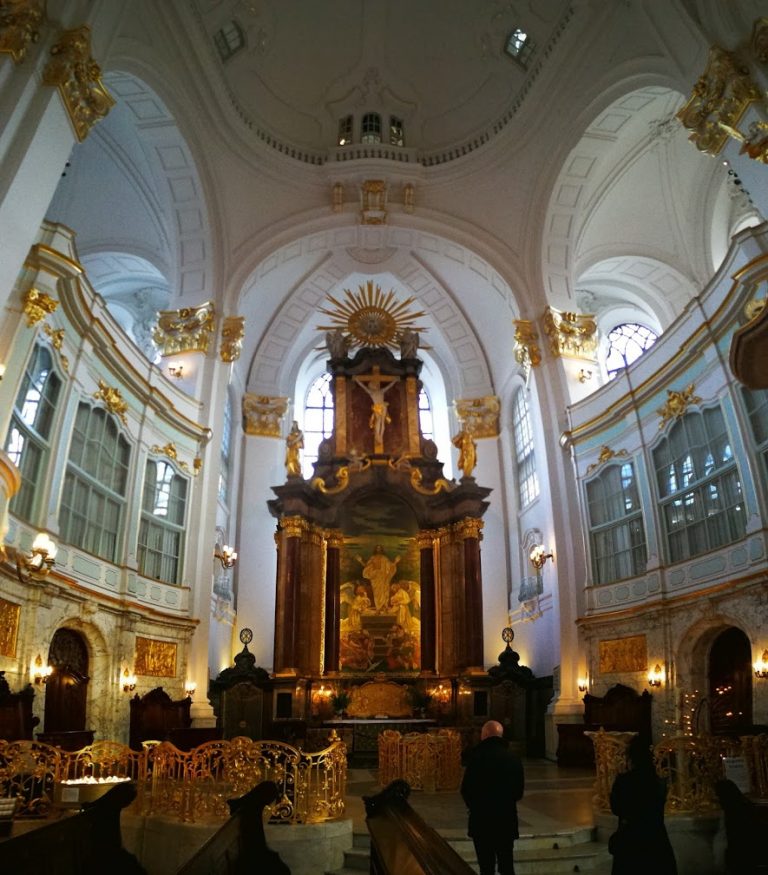
Visiting C. P. E. Bach’s Grave: St. Michael’s Church in Hamburg
Because I was traveling from Berlin to London on Sunday and had Saturday free, I went to pay my respects at the grave of C. P.…

New Discovery: Mozart Works for Flute and Harp Premiered on 6/21 (6/23 Performance Recording Also Added)
Across 250 Years: Mozart’s “Unpublished Autograph” Found in Paris Reveals the Genius Behind the Legend An “Anonymous” Treasure Sleeping in a Corner of the Library On…