
Visit date: May 25, 2026 13:30–16:00
Location: Mendelssohn-Haus Leipzig
Quiet, removed from the bustle of the city
It was the Pentecost holiday, coinciding with Wave-Gotik-Treffen, the Gothic festival, and events related to the UEFA Conference League Final, so central Leipzig was extremely crowded.
In contrast to streets full of visitors in top hats and Victorian-style black clothing, crowded trams, and noisy squares, the area around the Mendelssohn House was astonishingly quiet. Just a short distance from the center, the atmosphere changed, and it felt as though I were entering the echoes of 19-century civic culture.
The Mendelssohn House
The house where Mendelssohn spent his final years
Mendelssohn-Haus Leipzig is a museum in the house where Felix Mendelssohn actually lived during his Leipzig years. After serving for many years as an ordinary residence, the building was purchased and restored from surviving materials to its 19-century appearance.
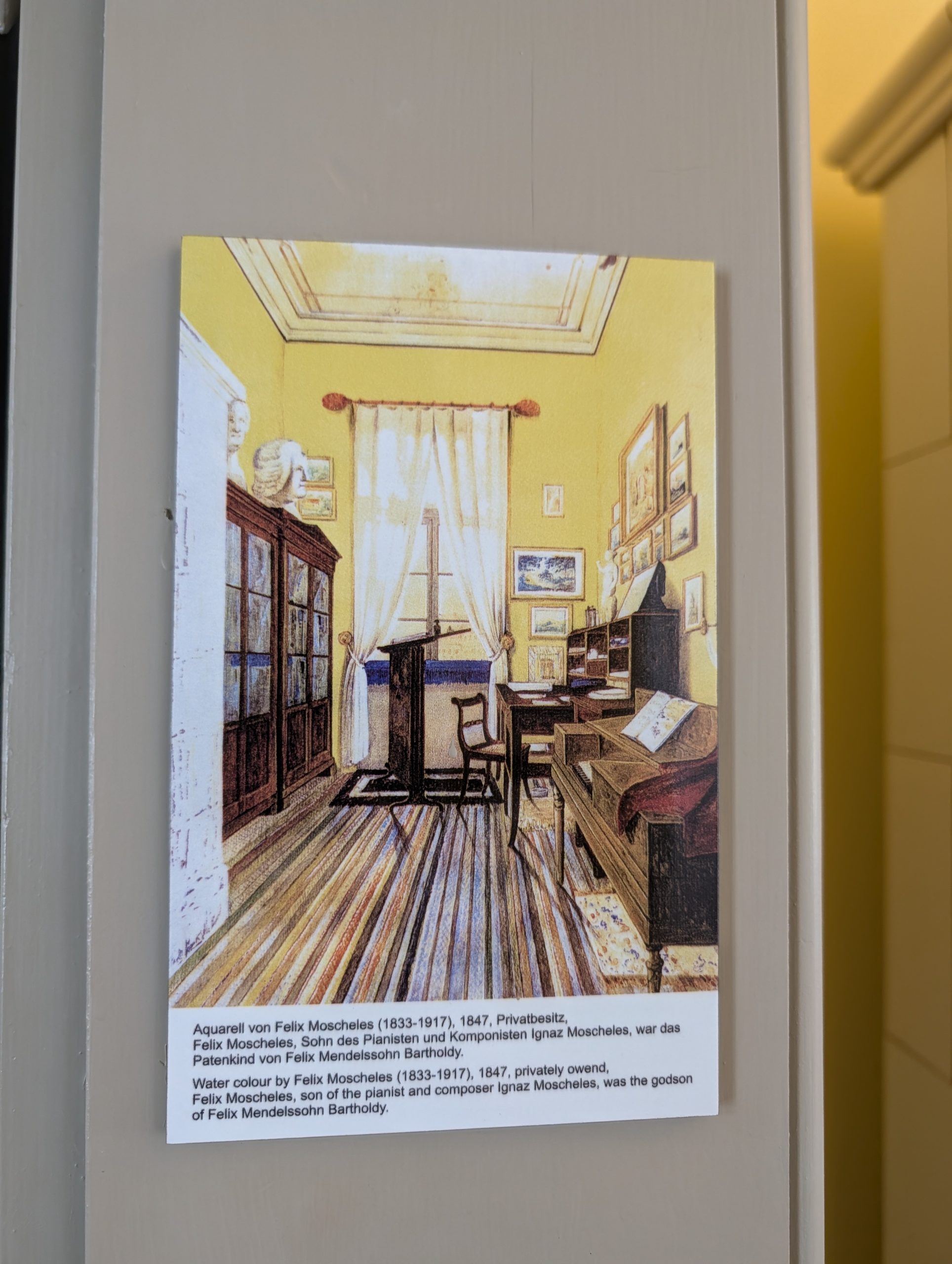
The restoration used contemporary watercolors of the interiors and felt less like a mere memorial museum than a serious historical reconstruction.
1st Floor — Experiencing Music “from Within”
1st floor has a café and an interactive music space.
Especially interesting was an exhibit for experiencing orchestral works from the conductor’s position. Separate speakers represent each instrumental group, allowing visitors on the podium to follow the score and hear the balance a conductor hears.
Hearing a Mendelssohn symphony from the center of the orchestra rather than the audience was remarkably fresh. Inner string voices and woodwind exchanges were clearer than expected, revealing the orchestration in three dimensions.
Another interactive exhibit lets visitors control tempo by waving a baton. As at other music museums, however, gesture detection remains imprecise and synchronization was somewhat unstable. A camera on the podium apparently tracks the baton.
2nd Floor — Restored Living Quarters
2nd floor recreates the living quarters from Mendelssohn’s time.
Music Room
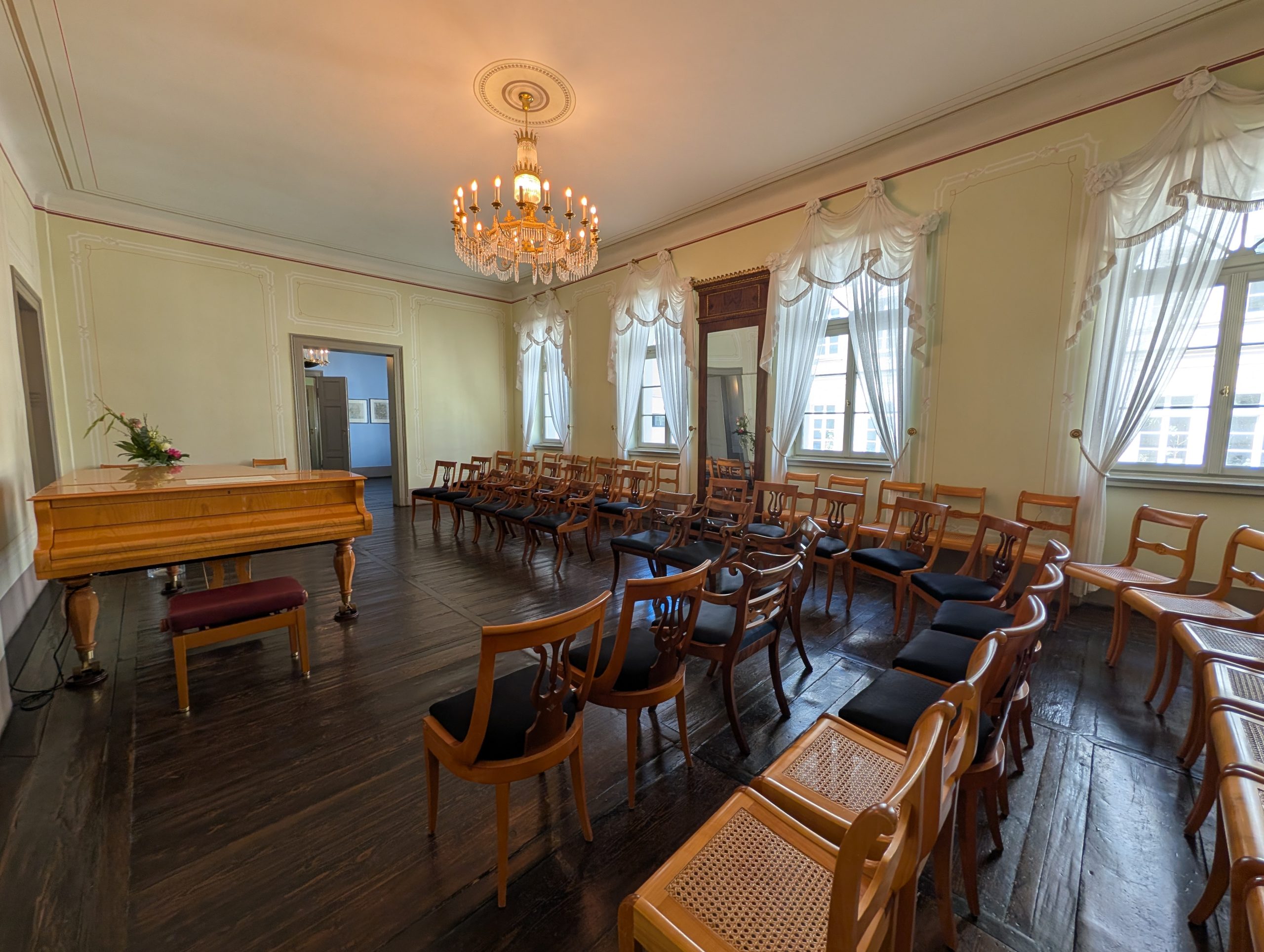
The largest room is the Music Room, where a chamber-music Sunday Concert is still held Sundays at 11 o’clock.
A wood-finished Bösendorfer piano stood there, and the room was very serene. Two young visitors, perhaps with permission, played Mendelssohn and recorded themselves on a smartphone.
Although reconstructed, the stove and mirror remain in their original positions, while replicas of period furnishings are arranged throughout. Sized for a salon concert of several dozen people, it evokes an era when music flourished as civic culture.
Composition Room
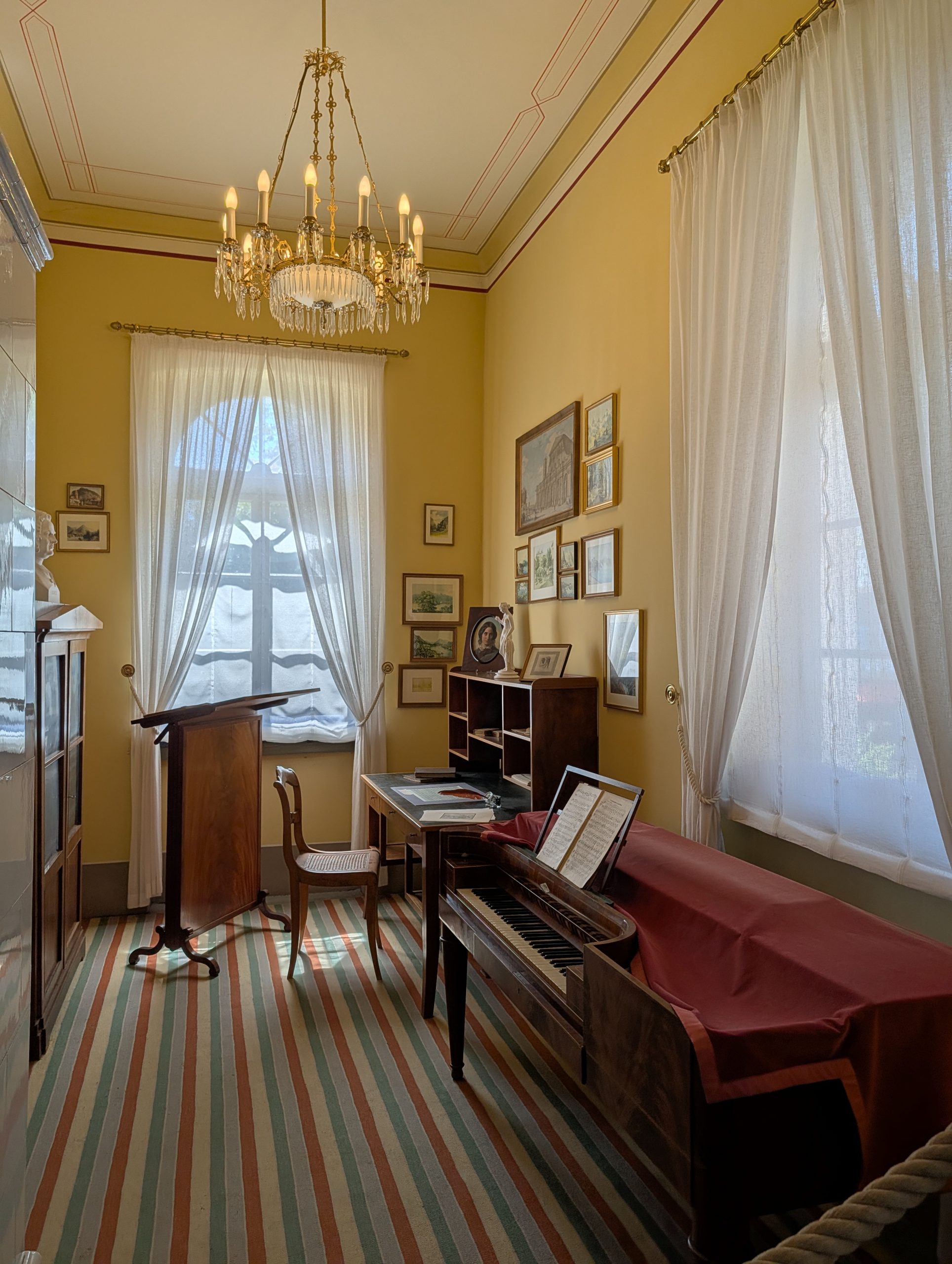
The Composition Room contained a square piano. It was small and quiet; it was surprising that vast symphonic works and the oratorio Elijah were written in such an intimate space. Kodály’s room is much larger.
A watercolor painted soon after Mendelssohn’s death survives, enabling a highly accurate reconstruction.
3rd Floor — Special Exhibition on Fanny Hensel
3rd floor featured a special exhibition on Fanny Hensel (Fanny Mendelssohn).
Her reassessment has advanced rapidly in recent years. Renewed attention to works long attributed to Felix but actually written by Fanny is accelerating both scholarship and performance.
The exhibition entrance modeled the entrance to the “Garden House,” a music hall built behind the main residence at the Mendelssohn family’s Reck’sche Palais in Berlin. Fanny lived in its residential section after marriage.
“Fanny’s Music Room”
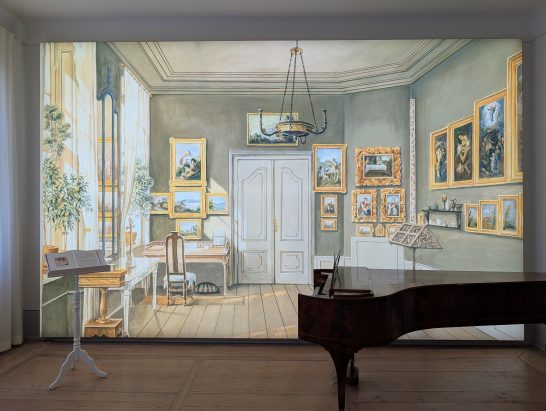
Especially memorable was “Fanny’s Music Room,” recreating her home salon.
A piano and furniture stood before a life-size enlargement of a period watercolor, making the space very bright. Sitting on the sofa triggered Fanny’s music softly overhead.
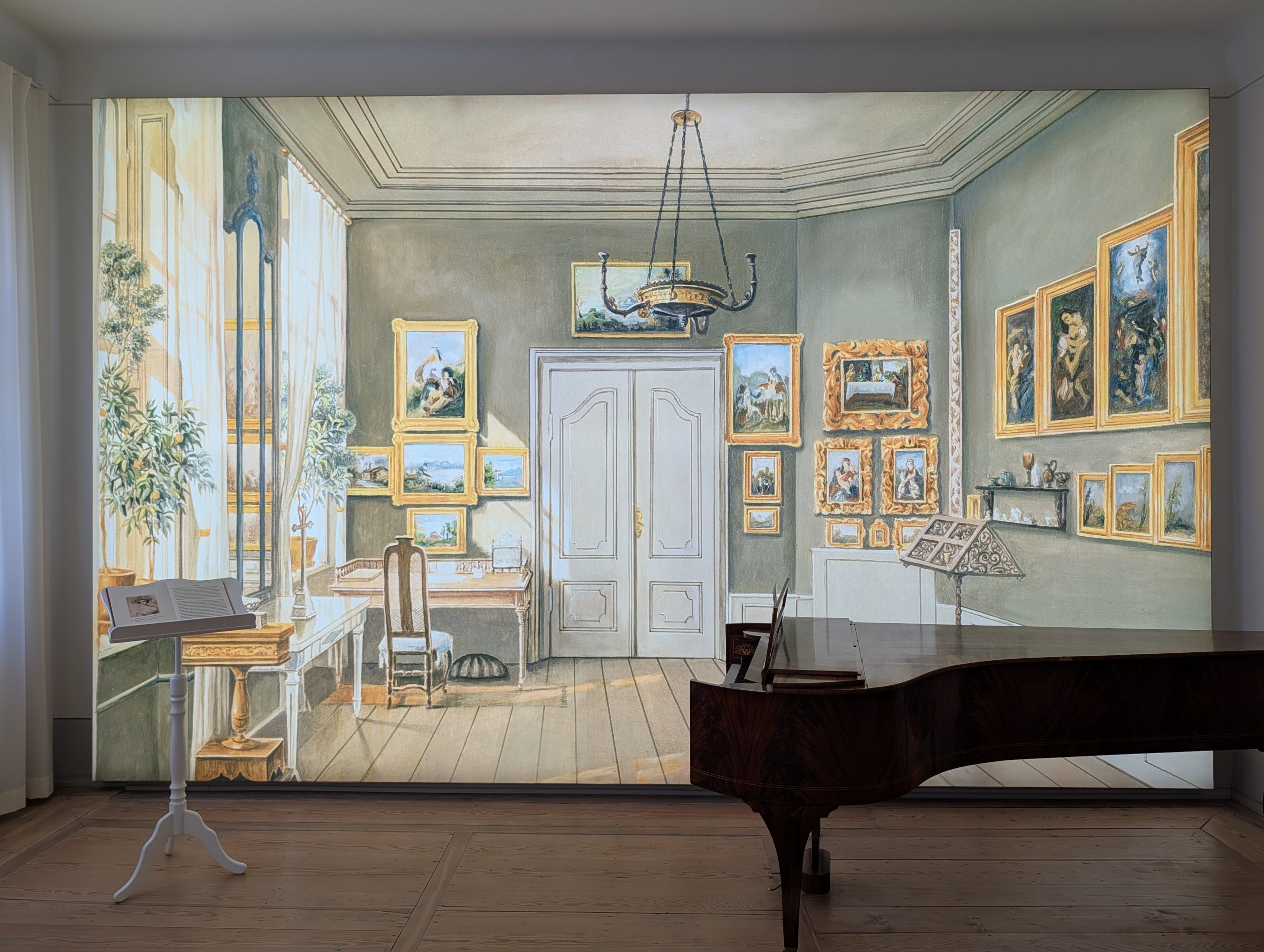
What struck me was that the Garden House music hall at the great mansion at 3 Leipziger Strasse, Berlin, was a remarkably open space with a vast glass wall facing the garden.
19-century salon emphasizing natural light itself conveys the family’s extraordinary wealth and cultural awareness.
Rather than merely displaying documents, the exhibit made one physically imagine her living, performing, and directing concerts there.
The Mendelssohn Siblings and the “Sunday Concerts”
An Extraordinary Musical Environment from Childhood
I realized anew that the siblings’ upbringing was far beyond what “a wealthy family” normally implies.
Their father Abraham Mendelssohn possessed immense wealth as a banker. When Felix was about 12 years old, he invited musicians of the Royal Prussian Court Orchestra, predecessor of today’s Staatskapelle Berlin, to their home for Felix to conduct his own opera The Soldier’s Love.
Felix thus grew up not merely as a child composer, but able to test works with a real professional orchestra.
Later, in 1825 when he was 16 years old, the family moved to the vast Reck’sche Palais at 3 Leipziger Strasse, Berlin (Leipziger Str. 3), now the site of the German Bundesrat.
Its music hall reportedly held several hundred people, with light streaming through a huge garden-facing glass wall, almost like a conservatory.
The Midsummer Night’s Dream overture was written and performed in this house.
Their Mentor Zelter and Goethe
Their teacher Carl Friedrich Zelter was a close friend of Johann Wolfgang von Goethe.
In 1821 Zelter wrote Goethe about “a banker’s children of astonishing talent,” and Felix, aged 12, visited Goethe’s Weimar home.
Zelter also rated Fanny extremely highly, even saying that the sister was capable of reaching Bach’s heights.
Fanny Hensel’s Genius and the Social Pressures Women Faced
What especially impressed me was that Fanny was far more than “a talent hidden in her brother’s shadow”; she was recognized as one of 19-century Europe’s foremost musicians.
At 13 years old she performed all of J.S. Bach’s Well-Tempered Clavier from memory and was deeply respected by Franz Liszt and Ignaz Moscheles.
Yet upper-class society disapproved of women working as professional musicians, and both her father and Felix strongly opposed publication and public activity. After her father’s death, her mother suggested to Felix that Fanny be allowed to publish.
She finally published under her own name in 1846—the year before her death. Having taken that step in a society that denied women such agency, she wrote joyfully in her diary on February 1847 that “it is rather piquant to experience this kind of success first at an age when, for women, if they ever had it, it is usually already over”1 This shows not merely that she could publish, but that late in life she could finally affirm publicly her long-suppressed identity as a composer. The collection published then was “6 Lieder, Op. 1.”
The Italian Journey and Charles Gounod
A particularly memorable section concerned Fanny’s Italian journey.
Fanny Hensel traveled through Italy from 1839 to 1840 with her husband Wilhelm Hensel and son Sebastian, staying in Rome for an extended period. Longing to visit Italy since youth, she experienced spiritual and creative liberation, not mere tourism.
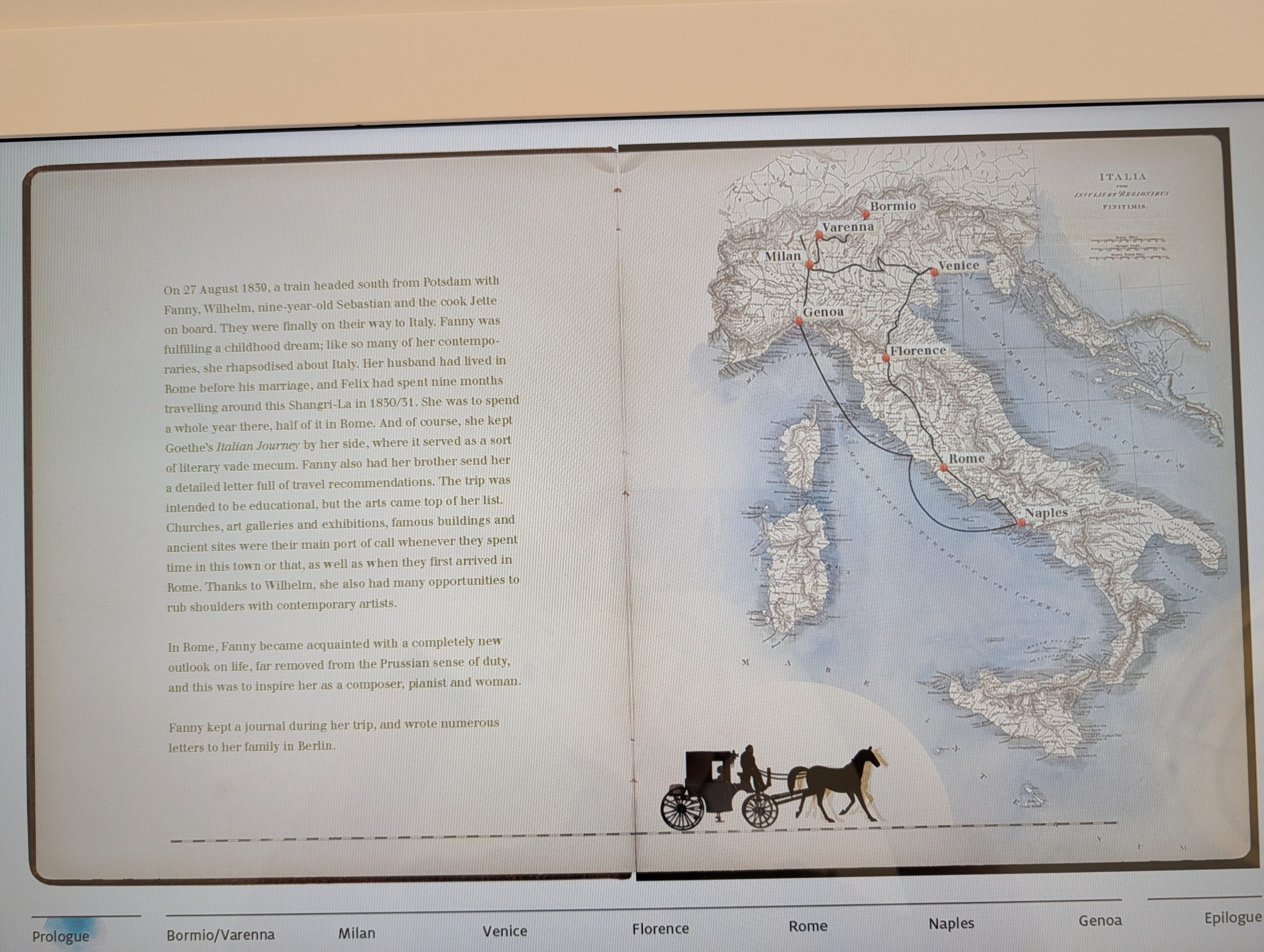
One young musician she befriended in Rome was Charles Gounod, later composer of the opera Faust.
Gounod, who had just won the Prix de Rome in 1839 and was 21 years old, was staying at the Villa Medici. Fanny, aged 34, deepened her friendships with him and other young French artists.
Gounod was captivated by Fanny’s piano playing and intellect. She played Bach and Beethoven for him; introducing J.S. Bach’s Well-Tempered Clavier reportedly had a decisive later influence.
Gounod’s famous later Ave Maria overlays a melody on Bach’s Well-Tempered Clavier, Book 1, Prelude No. 1, reflecting Fanny’s influence in Rome.
But Gounod was not the only one changed by this exchange.
For Fanny, long suppressed by family and society for “composing too much for a woman,” being honored as a great musician by young artists in Rome was a decisive spiritual turning point.
After Rome, she returned home and proceeded to publish in her own name.
The exhibition included a memorable episode from her Roman diary.
One night near the Roman Forum, young Gounod climbed an acacia tree and threw flowering branches down to Fanny and the others. They then walked through Rome at night singing a Bach concerto loudly.
Hard to reconcile with the later image of “Maestro Gounod,” it radiates youthful energy.
The exhibition shows that Fanny was not merely a woman composer confined at home, but a highly intellectual, international figure connected to the center of Europe’s artistic network.
Her Roman experience led to her later masterpiece Das Jahr (The Year).
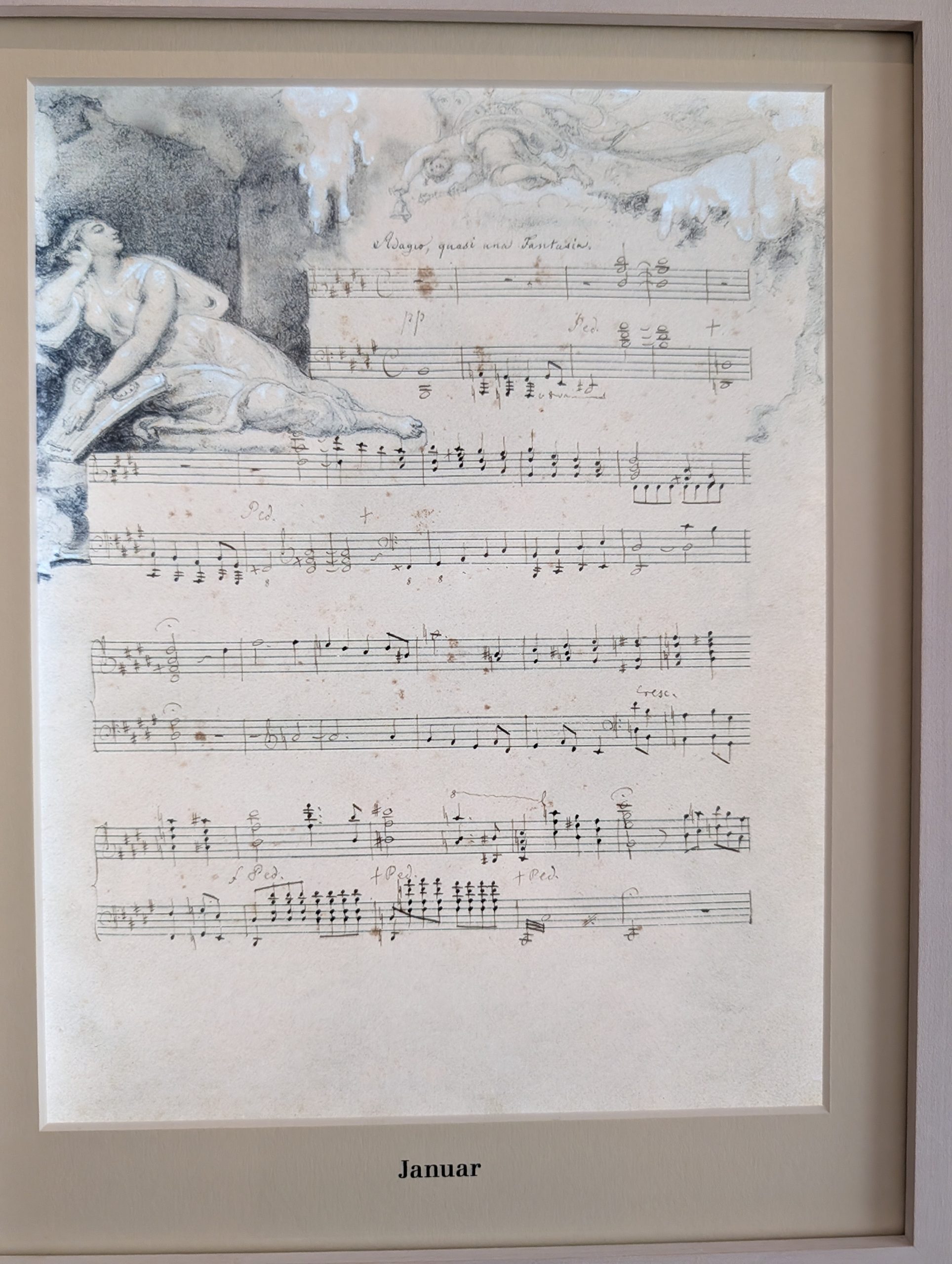
The “Sunday Concerts” and the Bach Revival
The Mendelssohn family’s Sunday Concerts (Sonntagsmusiken) were Berlin’s premier cultural salon in the 19 century.
They brought together
- Franz Liszt
- Robert Schumann
- Clara Schumann
- Niccolò Paganini
- Georg Wilhelm Friedrich Hegel
- Alexander von Humboldt
and other central figures of 19-century European culture.
Fanny effectively served as music director of this vast salon—a festival lasting all summer.
The salon was not merely social space, but a laboratory that changed music history.
Most famous is the process culminating in Felix Mendelssohn’s revival of J.S. Bach’s St. Matthew Passion in 1829.
The Berlin Singakademie performance of 1829 is often portrayed as a sudden revival, but the family had long studied, excerpted, and tried out the St. Matthew and St. John Passions.
The celebrated revival was thus the product of long preparation in this private salon.
Also performed or tried out here were
- the Midsummer Night’s Dream overture
- the Octet
- early symphonies
- Fanny’s Das Jahr
- the String Quartet
- the Cholera Cantata
- Praise Be to God
.
From the latter half of the 19 century onward, the view of Bach as central to Western music history owed much to this salon culture.
The Gewandhaus and Felix Mendelssohn
One memorable exhibit was a model of the old Gewandhaus.
The Gewandhausorchester is central to understanding Felix Mendelssohn’s relationship with Leipzig.
Mendelssohn became music director of the Gewandhaus Orchestra in 1835 at age 26. He held the post until his death in 1847 and made Leipzig a center of 19-century European musical life.
What distinguished the Gewandhaus Orchestra was its development as a citizen-supported orchestra rather than a court or church ensemble.
Its origins go back to 1743 and the Grosses Concert founded by Leipzig merchants.
It was an attempt by citizens to support music as their own culture, rather than music for royalty and aristocracy.
In 1781 its venue moved to the Gewandhaus textile merchants’ hall, establishing the name.
The orchestra was thus one of the earliest successful modern civic orchestras and a symbol of Leipzig’s free civic culture.
The model recreated the old Gewandhaus of Mendelssohn’s era.
It looks small and intimate beside today’s grand hall, yet many events that changed 19-century music history occurred there.
Here Mendelssohn premiered
- the Scottish Symphony
- the Violin Concerto in E minor
- Lobgesang
and other major works.
He also championed contemporary composers and older works, not only his own.
Especially important was bringing Franz Schubert’s Symphony No. 9, “The Great,” to broad attention. Performing this nearly forgotten vast symphony in Leipzig after Schubert’s death began his reassessment.
He also actively programmed Robert Schumann’s symphonies and supported young composers.
Mendelssohn was therefore not merely a Romantic composer, but advanced
- revival of older works
- support for contemporary composers
- development of civic musical culture
- modern orchestral management
- systematization of concert programming
simultaneously, becoming an architect of the modern classical-music institution.
Looking at the model, I strongly felt that Mendelssohn did not merely write works; he designed musical culture itself.
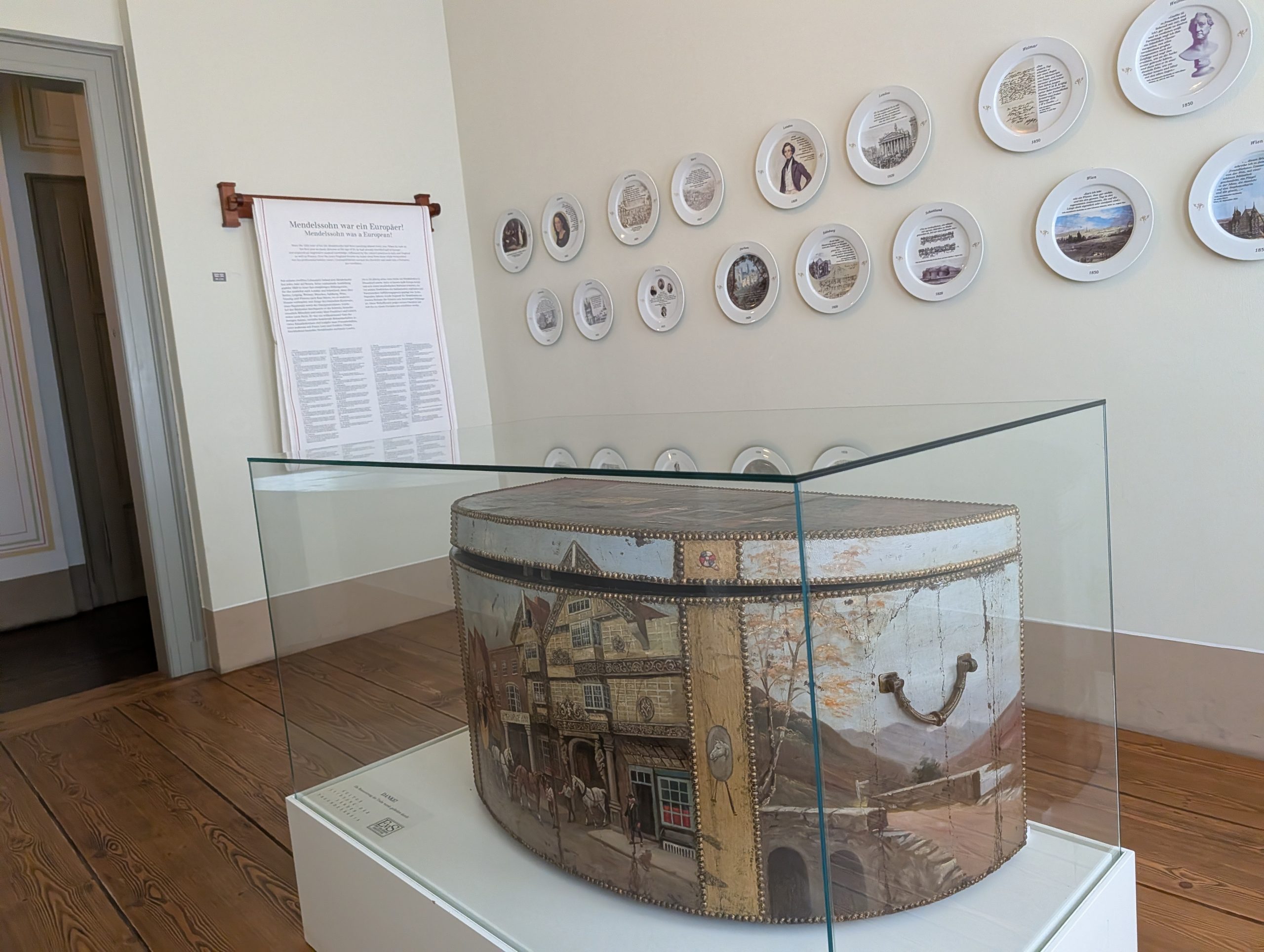
The Traveling Mendelssohn and Britain
Another key to understanding Felix is how international he was.
From youth he traveled extensively throughout Europe.
- England
- Scotland
- Italy
- Switzerland
- France
; these experiences deeply shaped his works.
The Scottish Symphony and Fingal’s Cave overture grew from British travel; the Italian Symphony from travel in Italy.
His ties with Britain were especially deep.
Mendelssohn visited Britain nearly 10 times and was enthusiastically received in London as composer, pianist, organist, and conductor.
His relationship with Queen Victoria and Prince Albert was especially symbolic.
In 1842 Mendelssohn visited Buckingham Palace and performed for the royal family; Queen Victoria reportedly sang one of his songs.
A highly symbolic episode follows.
The song Italien (“Schöner und schöner”), which the Queen called a favorite and sang, appeared in a collection under Felix’s name, but was actually written by Fanny.
Felix later wrote Fanny that the Queen’s favorite song was actually hers.
This small episode encapsulates much:
- the quality of Fanny’s work
- a 19-century society that kept women composers from public view
- the siblings’ complex, profound bond
- and Mendelssohn’s music permeating European royal culture
.
Kurt Masur and Leipzig
Another strong impression from this visit was Kurt Masur’s presence.
An exhibit on the Kurt Masur Foundation/Institute described his role in preserving and restoring the building.
Masur’s efforts were crucial to the museum’s existence. The International Mendelssohn Foundation was formed in the early 1990s to preserve the long-residential building and restore its Mendelssohn associations, with Masur central to the work.
Masur’s importance goes beyond that.
During Leipzig’s Monday demonstration on October 9, 1989, amid danger of violent East German repression, he helped issue an appeal for nonviolence among citizens, church figures, and authorities, helping avert bloodshed.
A demonstration of about 70,000 people took place that day.
With China’s Tiananmen incident fresh in mind, many East Germans feared tanks in Leipzig.
A statement by 6 people including Masur, calling for calm and dialogue, was repeatedly broadcast locally. Major bloodshed was avoided, making this a decisive turn toward the East German regime’s collapse and the fall of the Berlin Wall.
Thus this place connects
- the Bach revival
- the Mendelssohn siblings
- 19-century civic salon culture
- the Gewandhaus tradition
- the 1989 Leipzig Peaceful Revolution
in a single line.
I felt the Mendelssohn House was not merely a composer’s memorial but a symbol of Leipzig’s civic, intellectual, and liberal traditions.
The Siblings’ Final Days
The Mendelssohn family was genetically prone to cerebrovascular disease.
In 1847 Fanny collapsed during a rehearsal of The First Walpurgis Night and died of a stroke that day, aged 41.
Devastated by his beloved sister’s death, Felix completed String Quartet No. 6, but six months later also died of a stroke, aged 38.
Their lives were far too short.
At his request, Felix was buried beside Fanny in Berlin.
Meanwhile, the children were raised under family protection and succeeded in business and scholarship. The second son, Paul, co-founded the photographic and chemical company AGFA.
Under strong Prussian government pressure, the ownerless mansion was sold to Prussia 4 years after Fanny’s death, used as a temporary Prussian House of Lords, then replaced by the present building in 1899. Parts destroyed in World War II were replaced with modern glass architecture.
Reflections
Most striking was seeing the abstract history of “19-century German music” emerge as a concrete living space.
Fanny Hensel’s presence was also greater than expected.
Though traditionally treated as Felix’s sister, the exhibition makes clear she was herself central to 19-century European culture, while embodying the difficulties facing women in the 19-century West.
The Mendelssohns were not merely a wealthy musical family, but combined a
- private concert hall
- artistic salon
- space for trying new works
- center for early-music revival
- international cultural network
—a hub of 19-century European culture.
I was deeply impressed that this spirit extended through Kurt Masur to Leipzig’s Peaceful Revolution of 1989.
The Mendelssohn House does not merely preserve the past.
It preserves Leipzig’s long memory that music creates civil society.
Footnotes
- „Ich kann wohl nicht läugnen, dass die Freude an der Herausgabe meiner Musik auch meine gute Stimmung erhöht, bis jetzt habe ich, unberufen keine unangenehme Erfahrung damit gemacht, und es ist sehr pikant, diese Art von Erfolg zuerst in einem Alter zu erleben, wo sie für Frauen, wenn sie sie je gehabt, gewöhnlich zu Ende sind.“ from https://www.mendelssohn-stiftung.de/de/fannyjahr
Related posts
Visiting C. P. E. Bach’s Grave: St. Michael’s Church in Hamburg
Because I was traveling from Berlin to London on Sunday and had Saturday free, I went to pay my respects at the grave of C. P.…
C.P.E. Bach, Father of Classical Music: 300th Anniversary of His Birth
Ah, I have given it another sensational title. Nevertheless, I do not think it is entirely wrong to call C.P.E. Bach (Carl Philipp Emanuel Bach), whose…
New Discovery: Mozart Works for Flute and Harp Premiered on 6/21 (6/23 Performance Recording Also Added)
Across 250 Years: Mozart’s “Unpublished Autograph” Found in Paris Reveals the Genius Behind the Legend An “Anonymous” Treasure Sleeping in a Corner of the Library On…
You must be logged in to post a comment.