
Across 250 Years: Mozart’s “Unpublished Autograph” Found in Paris Reveals the Genius Behind the Legend
An “Anonymous” Treasure Sleeping in a Corner of the Library
On February 2026, a dramatic discovery that rewrites music history was announced by the Music Department of the Bibliothèque nationale de France (BnF). A music notebook from the latter half of the 18th century that had slept for centuries in a corner of the archive as “anonymous and untitled” proved to be an autograph manuscript by the genius Wolfgang Amadeus Mozart (1756–1791). The discovery began with the sharp archival intuition of BnF curator François-Pierre Goy, who recognized traces of Mozart’s distinctive hand while examining anonymous materials. After rigorous expert authentication, its genuineness was formally confirmed in the same year on April by Armin Brinzing, director of the Bibliotheca Mozartiana at the Salzburg Mozarteum Foundation. Considered one of the most important discoveries of recent decades, the document conveys the living breath of Mozart’s days as a young man in Paris.
Surprising Fact 1: Mozart’s Honest View of His Pupil and the Reality of Teaching
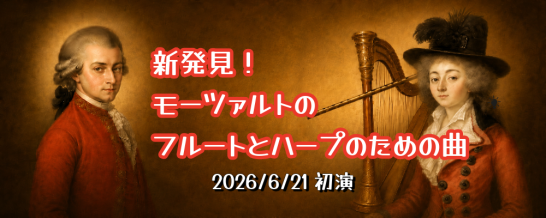
This 44-page notebook was a vivid record of composition lessons Mozart gave during his Paris stay in 1778 to Marie-Louise-Philippine de Bonnières de Guînes (the woman on the right in the title image), daughter of the Duc de Guînes, a virtuoso flutist, who lived from 1759 to 1795. Written on French paper, it has exceptional scholarly value as the “earliest direct evidence” of Mozart’s teaching methods. Particularly notable is the complex intermingling of Mozart’s handwriting with his pupil’s. The notebook visually records the master providing examples and corrections to the clumsy exercises written by his pupil. Yet in a letter to his father dated May 14, 1778, Mozart himself complained sharply that she lacked “musical invention.” The notebook’s 7 short pieces for flute and harp, of which 6 are complete, testify both to the genius’s frustration with an ordinary student and to the dialogue he nevertheless maintained as a teacher.
“In the opinion of experts, this is one of the most important discoveries of the past several decades. First, it sheds light on Mozart’s final stay in Paris; second, it reveals the everyday dialogue between Mozart as a young teacher and his pupil.” — Gilles Pécout, President of the Bibliothèque nationale de France
Surprising Fact 2: A Custom Flute with a “Low C” Was the Decisive Clue
The decisive evidence identifying the score as Mozart’s was its “special instrumental specification.” The pieces in the notebook assume a flute capable of sounding the “low C,” which was uncommon in Paris at the time. In Paris during the latter half of the 18th century, flutes normally descended only to D, but the Duc de Guînes had obtained a custom “flute with a low C” while staying in London. Mozart’s “Concerto for Flute and Harp (KV 299),” composed for the duke and his daughter around the same time, was likewise written for this unusual instrument. The physical constraint of the instrument’s range became the “key” that established the score’s identity after 250 years.
Surprising Fact 3: The “2 Packets” That Survived the French Revolution
The turbulent history of the French Revolution is deeply inscribed in how this notebook survived to the present. On May 4, 1794, the revolutionary government confiscated “2 packets of music” from the Duc de Guînes’s mansion on Rue de Varenne in Paris. This notebook was one of them, and in the following year, 1795, it entered the national library’s collection. Its value was long overlooked, but a French-made manuscript of the “Concerto for Flute and Harp” that attracted attention in 2020 was found to bear exactly the same stamp as this notebook. Fragments of history that had nearly become scattered were reunited by a common mark, leading to authentication.
Surprising Fact 4: Paris Is Now the World’s No. 2 Mozart Center
This discovery has renewed recognition of the importance of the Bibliothèque nationale de France (BnF) collection. Today, after Salzburg, the BnF ranks alongside the Berlin State Library as one of the world’s largest repositories of Mozart autograph manuscripts. It holds autograph documents including supreme masterpieces such as the opera “Don Giovanni” and Piano Concerto No. 23, for a total of 45 items. Found in the shadow of these major works, this notebook recording routine lessons has value as a “final puzzle piece” that completes our understanding of the background to the genius’s creative activity and musical life at the time.
Conclusion: An “Unfinished Lesson” Resounding Across Time
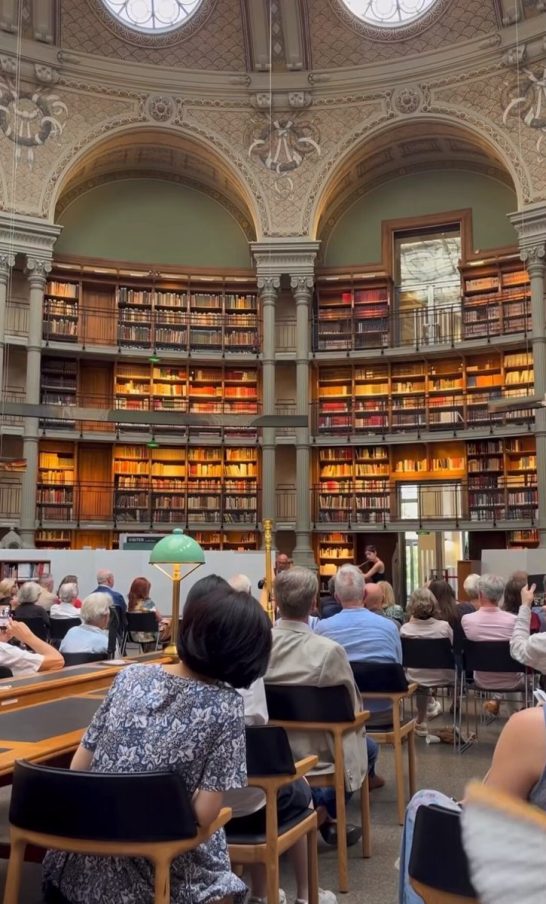
On June 21, 2026, the world premiere of this unpublished score will take place in the Oval Room at the Richelieu site in Paris. Mathilde Calderini, flute, and Nicolas Tulliez, harp, of the Radio France Philharmonic Orchestra will unseal it for the first time in 250 years. Sibyle Veil, President and CEO of Radio France, called it “an important moment in the transmission of musical heritage,” and it is scheduled for broadcast on France Musique the following day. The notebook ends abruptly with an unfinished exercise and several blank pages, telling us that the lessons quietly concluded when the pupil married on July 1778.
“Might the depths of the archives still hold sleeping voices of geniuses?”
This discovery inspires such hope. As long as there is passion for carefully unraveling historical materials, the great minds of the past can return to the present again and again, bringing us new wonder.
References
- Bibliothèque nationale de France. (2026). Discovery of an unpublished autograph manuscript by Mozart in the BnF Music Department. BnF. <https://www.bnf.fr/en/actualitesEN/discovery-unpublished-autograph-manuscript-mozart-bnf-music-department>
(Added 6/23)
Scenes from the Premiere
The premiere on June 21 has concluded, and excerpts have been posted on the French public broadcaster’s X account.
続報)土曜日にお知らせした、約250年ぶりに発見されたモーツァルトのフルートとハープのための作品の初演の様子です。いや~、モーツァルト!作曲の経緯などはスレに↓https://t.co/FhlrjwuvFR
Personne ne l’avait entendue depuis plus de 200 ans.
À 15h, @francemusique vous fait découvrir une partition inédite de Mozart, récemment mise au jour.
Un rendez-vous historique à écouter en direct. 🎼✨
🎧radiofrance.fr/francemusique
🎙️@LionelEsparza
🎥 @SofiaAnastasio
Complete Performance Recording
Following the premiere on June 21, the complete work was broadcast by the French public broadcaster at three in the afternoon local time (ten in the evening Japan time). It can also be heard from Japan. The entire performance lasts about 18 minutes. Please follow the link below.
Please let me know what you thought after listening!
Related posts
Requiem
A short while ago, NHK's Album of Classical Masterpieces featured three requiems. Verdi, Mozart, and Fauré. Every one of them is a masterpiece. In Verdi's, I…
C.P.E. Bach, Father of Classical Music: 300th Anniversary of His Birth
Ah, I have given it another sensational title. Nevertheless, I do not think it is entirely wrong to call C.P.E. Bach (Carl Philipp Emanuel Bach), whose…
Elisabeth Schwarzkopf Dies
According to Austrian news reports and other sources, Elisabeth Schwarzkopf, who retired in the 1970s, had been regarded alongside Maria Callas and others as one of…
You must be logged in to post a comment.