

Everyone knows the children’s song “Shojoji no Tanuki Bayashi,” commonly called “Shojoji,” right?
Yes, the one that begins, “Sho, sho, Shojoji, in Shojoji’s garden….”

It is a delightful song.
As you know, Haydn was a great composer who continued creating symphonies throughout his life, repeatedly experimenting and elevating the form. He truly was the father of the symphony. His Symphony No. 89 is a masterpiece said to anticipate the later Beethoven. Please listen to its opening.

Did you hear it? Right from the start: “Sho, sho, Shojoji!”
Well, the notes are C–E–G–E–C. Still, I was dumbfounded when I first heard it. How about you? It is a very good piece, so please listen to the whole symphony.
Haydn’s Symphony No. 89 in F Major: A Masterpiece Resonating with Classical Maturity
The Austrian composer Joseph Haydn (1732–1809) contributed so greatly to the development of the symphony that he is called the “father of the symphony.” Written in 1787, his Symphony No. 89 in F Major, Hob. I:89, is a masterpiece representing the rich creative period of Haydn’s middle years.
Background: An Extension of the Paris Symphonies
Symphony No. 89 is positioned as a successor to the “Paris Symphonies” of 1785, Nos. 82 through 87. Indeed, Nos. 89 and 90 are sometimes treated as “2 additional Paris Symphonies.” Haydn was then working with Prince Esterházy’s court orchestra, while growing commissions and publications from abroad were increasing his fame throughout Europe.
Structure and Musical Features
Symphony No. 89 is a typical Classical symphony in 4 movements, but its content is rich and filled with surprises and playfulness.
Movement 1: Vivace
It begins with a stately, fanfare-like theme—the familiar “Sho, sho, Shojoji”—immediately followed by a light, contrasting motif. While following sonata form, it uses variation and counterpoint to produce a characteristically witty Haydnesque development.
Movement 2: Andante con moto
This movement is especially noteworthy. Written in variation form, it develops from the theme into variations featuring the wind instruments. Highlights include the dialogue between oboe and bassoon and the colorful exchanges between strings and woodwinds. Elegance and wit are exquisitely balanced.
Movement 3: Menuet and Trio
This is a characteristically Classical minuet movement, but rhythmic handling that confuses the perceived beat and unexpected turns of phrase reveal compositional skill extending beyond a simple dance. In the trio, flute and strings create a pastoral atmosphere.
Movement 4: Finale (Vivace assai)
A cheerful, energetic final movement. A theme resembling hunting horns recurs and develops in succession. This bright and lively finale fully displays the appeal of Haydn’s distinctive style.
Highlights and Appeal
- Witty construction: Sudden modulations, rhythmic play, and unexpected silences scatter characteristically Haydnesque “surprises” throughout the work.
- Prominent woodwinds: Especially in movement 2, the oboe and bassoon are treated as soloists, and their dialogue with the strings is captivating.
- Bright, approachable melodies: The bright tonality throughout and memorable melodies are also characteristic of this work.
Recommended Recordings
- Trevor Pinnock / The English Concert
A crisp period-instrument performance that clearly communicates Haydn’s wit. - Ádám Fischer / Austro-Hungarian Haydn Orchestra
Part of a complete recording, this is a careful, well-balanced performance. (It is the YouTube recording above.)
Conclusion: An Approachable Yet Profound Symphony
Symphony No. 89 is not flashy, but it is a fine work packed with Haydn’s craftsmanship, humor, and rich expressive power. It can be recommended both to first-time Haydn listeners and to those wishing to rediscover the appeal of Classical music. Please take the time to listen closely.
Related Music Articles
- New Discovery: Mozart Works for Flute and Harp Premiered on 6/21 (6/23 Performance Recording Also Added)
- A Visit to the Mendelssohn House in Leipzig — The Difficulties Faced by the Mendelssohn Family and Women
- Year-End Greetings: Fauré’s “In Paradisum” from Requiem, Op. 48—In Memory of Andrew Nash
- The Background, Lyrics, and Recommended Performances of Giordani’s “Caro mio ben (My Beloved)”
- An Unusual Theme Song for the Annals of Anime History — The Secrets of the Latin Lyrics to “Lilium (White Lily)”
- VTuber Chima Machita’s “Lilium” and “Caro mio ben”
- Bach’s “Toccata and Fugue in D Minor, BWV 565”: Originally a Violin Piece?
- Season’s Greetings—Bach: Siciliano (Flute and Spinet)
- “Michishirube” at the Setting of Violet Evergarden
- A Recommended Hidden Gem: Damase—Quartet for Flute, Oboe, Clarinet, and Piano
Related posts
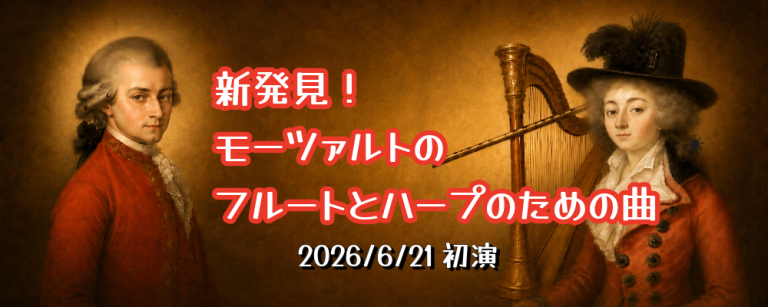
New Discovery: Mozart Works for Flute and Harp Premiered on 6/21 (6/23 Performance Recording Also Added)
Across 250 Years: Mozart’s “Unpublished Autograph” Found in Paris Reveals the Genius Behind the Legend An “Anonymous” Treasure Sleeping in a Corner of the Library On…
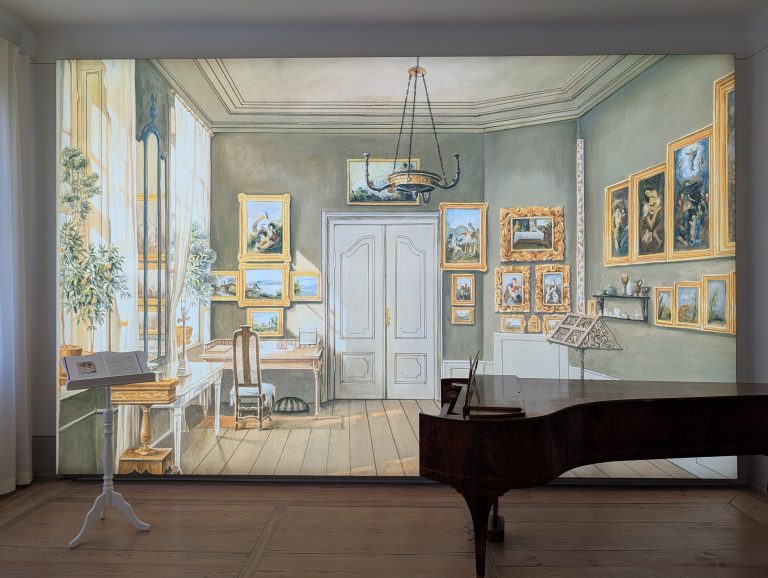
A Visit to the Mendelssohn House in Leipzig — The Difficulties Faced by the Mendelssohn Family and Women
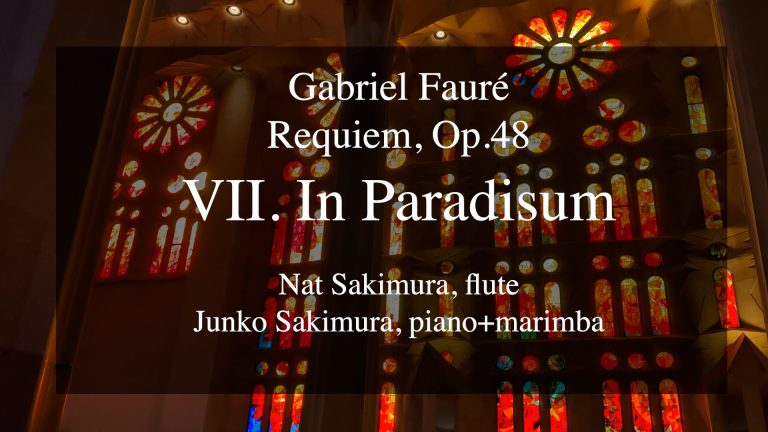
Year-End Greetings: Fauré’s “In Paradisum” from Requiem, Op. 48—In Memory of Andrew Nash
Here are my customary year-end greetings. This year I had begun preparing to perform “Lilium”, but after learning of the death of my close friend and…