
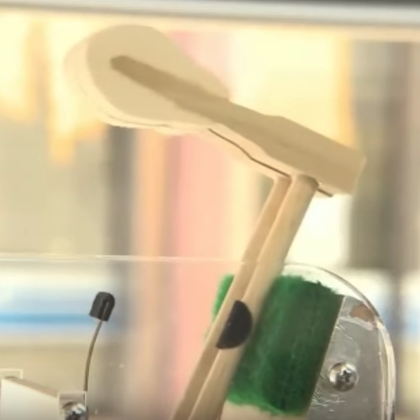
This may be rather remarkable: “Grand Feel,” developed by Fujii Piano Service in Kagoshima.
A grand piano has a repetition mechanism1, enabling it, in 1 second, to repeat the same note 13 to 14 times, but an upright piano cannot do so.
In addition, because gravity lowers the hammers in a grand piano, the interval between striking the strings and the hammers moving away is short. The hammers do not suppress the strings, allowing rich overtones to emerge. In an upright piano, by contrast, the hammers move horizontally and cannot make effective use of gravity. They suppress the strings, reducing the overtones and making the sound less brilliant.
Fujii Piano Service’s “Grand Feel” solves these problems. It improves hammer movement by fitting each hammer with 2 springs, achieving, in 1 second, 14 repeated strikes and producing rich overtones.
This NHK video clearly shows how it works.

I hope this kind of upright-piano mechanism becomes widespread soon.
Footnotes
Related posts

The Sound Beethoven Sought in the “Moonlight” Sonata
"Sonata quasi una fantasia" (a sonata in the manner of a fantasy), commonly known as the “Moonlight Sonata” (op.27, No.2) , is probably one of the most…

People Say the TEPPEN 2015 Piano Showdown Was Rigged, but…
I knew nothing about it, but apparently a Fuji Television entertainment program called TEPPEN 2015 held a piano competition among celebrities. Those currently attracting attention online…
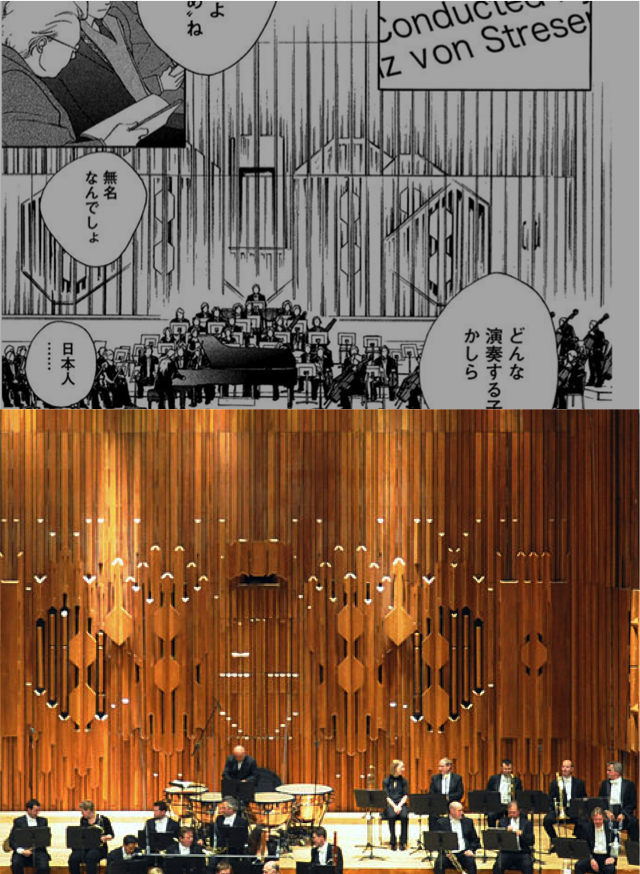
Where Was Nodame’s Debut Concert? An Unusual but Excellent Performance?
Nodame makes her debut playing Chopin’s Piano Concerto No. 1 with a top British orchestra conducted by Stresemann, also known as Milch. But which hall is…