
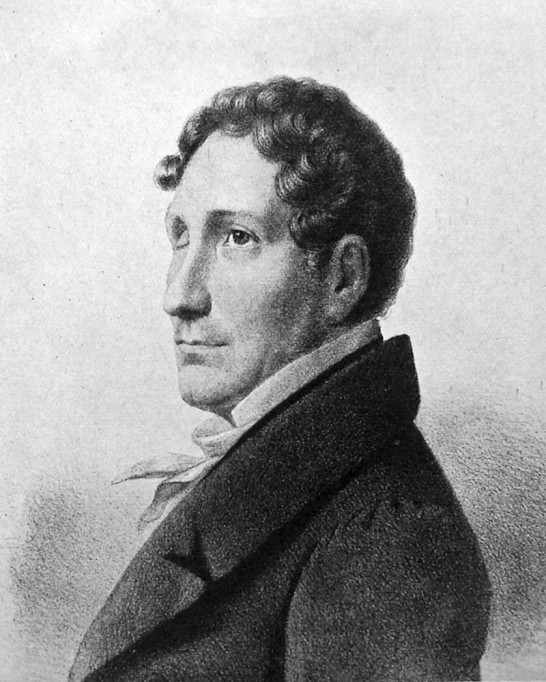
I seem to have an affinity for composers who remain in the historical record but are relatively obscure.
While sorting through a pile of scores at home, I found Friedrich Kuhlau’s (Firedrich Kuhlau, 1786/9/11-1832/3/12) Trio in G op.119.
When one thinks of Kuhlau, the first thing that comes to mind is surely the Sonatina Album. Its opening piece is Kuhlau’s “Sonatina No. 1 in C Major, op.20-1,” so it is extremely familiar to anyone who has studied piano. Many probably have a strongly negative impression of him as a composer who wrote dull pieces repeating the Alberti bass do-sol-mi-sol, do-sol-mi-sol over I-IV-V-I. Once you think “oh no” as a child, it is hard to grow fond of it. I was the same.

Kuhlau wrote various works for the flute, including:
- Grande Sonate Concertante in A Minor Op. 35
- Grande Sonata Brillante in E flat Major, Op.64,
- Flute Sonata in F Major Op.79
- Flute Sonatas Op. 83 Nos. 1–3
- Duets for Flute and Piano Op. 110 Nos. 1–3
He left many flute works such as these.
Because his style resembles Beethoven’s, he is apparently sometimes called the “Beethoven of the flute.” But even so, his music somehow still feels monotonous… There are quite a few moments when one wonders why he repeats a phrase there, or why he does not change the harmony.
But then there is this. In the year he died at age 46, he wrote his final flute work, “Trio in G Major op.119,” and, for whatever reason, it is actually quite a good piece1. Of the performances on Youtube, this may be the best…
Boris Bizjak, Marko Zupan, Yoko Misumi

Another performance I like is the one by Toke Lund Christiansen and William Bennett, leading performers of Kuhlau’s flute music. Toke Lund Christiansen is a flutist with the Danish National Symphony Orchestra who made the world’s first complete recording of Kuhlau’s flute works. The Bizjak/Zupan/Misumi performance above is much more relaxed in tempo, which ordinarily differs from my preference for breakneck speed, but I like it because it brings out another side of the piece.
What is that side?
“Song”.
In this performance, it sounds like a soprano and tenor or alto duet in an opera. I wondered whether Kuhlau might have been good at opera and looked into it. Bingo.
Kuhlau’s Life
Kuhlau was born in 1786 in Uelzen, near Hamburg in northern Germany2. His father was an oboist in a military band, which meant the family moved frequently. When he was 7, the family moved to Lüneburg, but that winter young Friedrich slipped on the ice, injured his right eye, and lost its sight. After graduating from the Gymnasium in Brunswick at age 14, his exceptional musical talent led him to begin studying composition with Christian Friedrich Gottlieb Schwenke, who had succeeded C.P.E. Bach as Hamburg’s music director in 1788.
Over the next several years Kuhlau composed songs and chamber music, and by 1804 he began appearing frequently as a concert pianist. From then until his death, he continued composing piano and flute works to earn his living. Because he wrote so much flute music, people once assumed he played the flute himself, but in fact he could not play it.
In 1810, Kuhlau moved to Denmark to escape conscription for the Napoleonic Wars. By then he had completed his Piano Concerto in C Major op.7, which earned him a position as a Danish court musician in 1812, though it was unpaid3. During this period he supported himself by performing on the piano and teaching the instrument.
Kuhlau admired Beethoven, whose influence is strongly evident in his piano music. His Piano Concerto in C Major op.7, for example, written 15 years after Beethoven’s Piano Concerto No. 1 in C Major op.154, is a pastiche of that work. Much of the introduction of Beethoven’s music to Denmark also appears to have occurred through Kuhlau5.
His breakthrough came 2 years after becoming an unpaid court musician, with the Singspiel “Røverborgen” (The Robbers’ Castle) (1814).6 In 1816 he became a highly paid singing teacher at the Royal Theatre, and in 1817 he resigned that post to become a court musician who was frequently commissioned to compose. From around this time, Kuhlau began composing operas and Singspiels in rapid succession, including “Trylleharpen” (The Magic Harp) (1817), “Elisa” (1820), “Lulu” (1824), and “Hugo og Adelheid” (1827)7 Then, in 18288, with the Singspiel “Elverhøj” (The Elf Hill) (1828), he established the first national Romantic music in Danish music history and ushered in the golden age of Danish music9. He later wrote works including “Trillingbrødrene fra Damask” (The Triplet Brothers from Damascus) (1830). He was not merely the sonatina composer after all.

Listening again to Kuhlau’s flute works from this perspective, many of them seem better played as songs than treated as instrumental music. Even when writing flute music, a Singspiel may actually have been playing in his head. If the music were reconstructed around the image of song, some pieces might sound better than they do in the performances currently available.
Kuhlau reached his peak in 1828, but tragedy followed. His parents died in 1830, and the following year his house burned down, destroying most of his manuscripts. This caused Kuhlau to develop a lung illness, and he died in 1832 at the young age of 46. The aforementioned “Trio in G Major op.119” was his 4th-to-last work.
Kuhlau’s Posthumous “String Quartet in A Minor op.122” (1832)
His posthumous work is the “String Quartet in A Minor op.122” (1832). It begins with a dark introduction (Andante Sostenuto), as if foreseeing death, followed by an intense 1st theme (Allegro assai poco agitato) that could be heard as anger, regret, sorrow, or impatience. After the theme has been developed, the 2nd theme appears as a violin duet in C major, with a melody reminiscent of a Nordic folk song and of happy days remembered. A short development follows before the recapitulation, where the 2nd theme appears in A major. The second movement (Andante con espressione) is highly operatic. It is enjoyable to separate it mentally into orchestral and vocal parts. The third movement (Scherzo: Allegro assai) is in ternary form: its first section contrapuntally intertwines 2 themes, while the contrasting trio supports a simple, lucid melody in the 1nd violin with lute-like pizzicato accompaniment from the 2st violin, viola, and cello. The fourth movement (Finale: Allegro molto) is in expanded sonata form. Just when one expects it to begin in A minor, it unexpectedly opens with a chorale in A major. Could this be a Danish folk song? Once that statement ends, a rhythmic 1st theme in the style of an opera overture is introduced and developed somewhat. Then the “song” of the 2nd theme appears in the violin, followed by the rhythm of the earlier 1st theme, ending the exposition. After repeating the chorale motif and the first-theme motif, the development unfolds into a fugue based on the chorale motif. The recapitulation begins with the chorale; both the 1st and 2nd themes appear in A major, and the work ends with a brilliant coda.
My recommended performance is by the eSBe String Quartet.

It is thoroughly Romantic. His friendship with Beethoven may tempt us to think of him as Classical, but Beethoven’s late work is itself sometimes classified as Romantic.
The Musical Context of the Period—Other Masterpieces Written Around 1831
To understand the musical climate around 1831, it is useful to know what other works were being written at the time. Let us conclude by introducing 2 particularly famous works.
The first is Chopin’s Piano Concerto No. 1 (1830). The final movement uses the rhythm of a Polish folk dance, giving it a sense of national Romanticism. The performance is by Krystian Zimerman. In Nodame Cantabile, Nodame plays an extraordinarily slow, “unconventional Chopin,” and this performance makes one wonder whether it was the inspiration. In most earlier performances the orchestra was merely an accompaniment, but here extremely fine nuances are articulated, making one think, “Ah, this is what Chopin intended.” The beauty of the piano is incomparable. It is truly a revolutionary performance.

The other is Berlioz’s Symphonie fantastique (1830), a work that revolutionized orchestration.

The Orchestre philharmonique de Radio France conducted by Myung-Whun Chung (2013)
Footnotes
- I will provide a separate analysis.
- The following is based on http://www.allmusic.com/artist/friedrich-kuhlau-mn0002285780/biography .
- One theory says his salary went unpaid because the state went bankrupt in 1813. http://www.hmv.co.jp/artist_%E5%BC%A6%E6%A5%BD%E5%9B%9B%E9%87%8D%E5%A5%8F%E6%9B%B2%E9%9B%86_000000000222284/item_Scandinavian-String-Quartet-kuhlau-Berwald-Grieg-Sibelius-Copenhagen-q_1818368
- Although it is numbered No. 1, it was composed after No. 2 and is therefore actually his 2th concerto.
- Kuhlau in fact visited Vienna in 1821 (for 4 months) and again in 1825, and became acquainted with Beethoven.
- Around this time, his sister and parents also moved to Denmark, and he had to support them all.
- Apparently none except Lulu could really be called successful.
- That year he was awarded the title of honorary professor and began receiving a substantial pension.
- I listened to a little of it, but, well… Apparently it skillfully uses Danish and Swedish folk songs, so perhaps it would be different if I knew them.
Related posts
New Discovery: Mozart Works for Flute and Harp Premiered on 6/21 (6/23 Performance Recording Also Added)
Across 250 Years: Mozart’s “Unpublished Autograph” Found in Paris Reveals the Genius Behind the Legend An “Anonymous” Treasure Sleeping in a Corner of the Library On…
A Visit to the Mendelssohn House in Leipzig — The Difficulties Faced by the Mendelssohn Family and Women
Year-End Greetings: Fauré’s “In Paradisum” from Requiem, Op. 48—In Memory of Andrew Nash
Here are my customary year-end greetings. This year I had begun preparing to perform “Lilium”, but after learning of the death of my close friend and…