

On July 30, for the first time since 1998, the U.S. Senate passed a law aimed at protecting children online. In 1998, social networks did not yet exist, and it was long before children who are now 13 or younger were born.
The Kids Online Safety Act (KOSA) aims to protect children from the harms posed by social media, gaming sites, and other online platforms. It passed the Senate with overwhelming support, but its fate in the House is uncertain. President Biden has indicated that he will sign the bill if it passes.
The bill imposes a “Duty of Care” on online platforms to ensure that they do not harm children. “Duty of Care” is a legal term requiring companies to take reasonable measures to prevent harm. Here, the duty of care includes measures to protect children from bullying, encouragement of suicide, eating disorders, drug abuse, sexual exploitation, and advertisements for illegal goods. It also requires the protection of minors’ information, the disabling of addictive features and personalized algorithms, and limits on communication with other users.
The bill has the support of a wide range of groups, especially parent groups, child advocacy organizations, and technology companies. However, the ACLU and the Electronic Frontier Foundation (EFF), among others, oppose it on the grounds that it could violate the 1 Amendment.
The ACLU and EFF are concerned that the bill violates the 1 Amendment. The EFF says that state attorneys general could enforce KOSA’s “Duty of Care” provision in a way that targets and censors online content and services. It is also concerned that the bill’s duty of care provision could be abused by politically motivated individuals to target the LGBTQ community and other marginalized communities.
NetChoice, a technology industry group whose members include Meta, Google, and X, also opposes the bill. It does so because it believes that the bill violates fundamental constitutional principles, deprives parents of their rights, and will not improve children’s online safety.
House Speaker Mike Johnson has not said when the bill will be considered, but he has said that he will seek consensus. If the bill passes by January, President Biden is expected to sign it.
The video below summarizes some of the matters discussed in this blog and the background of the bill. I hope you will watch it as well.

References:
Related posts
Data Sustains Lives—MyDataConference 2026 Opening Address
The following is the opening address for the MyData Japan Conference 2026, delivered by Nat Sakimura in his capacity as Chair of the General Incorporated Association…

The MyData Conference 2026 Is This Wednesday. See You at Hitotsubashi Hall!
I have been posting announcements on X every few days, and the MyDataJapan Conference 2026 is this Wednesday. There are many highlights: Naohiro Fujie, Representative Director…
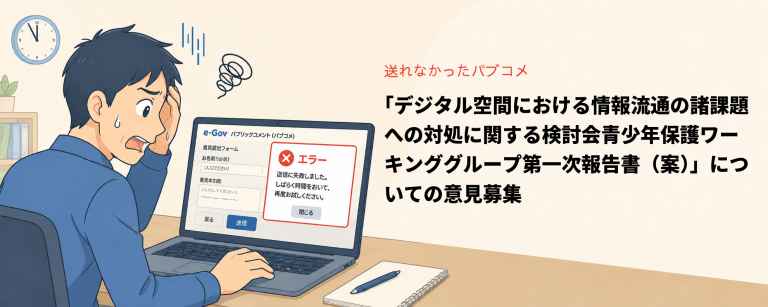
Unsubmitted Public Comment on the Call for Comments on the Draft First Report of the Youth Protection Working Group on Information Distribution in the Digital Space
July 823:59 was the deadline for the call for comments on the draft first report. I ended the FAPI WG early and23:40 began the submission process…