
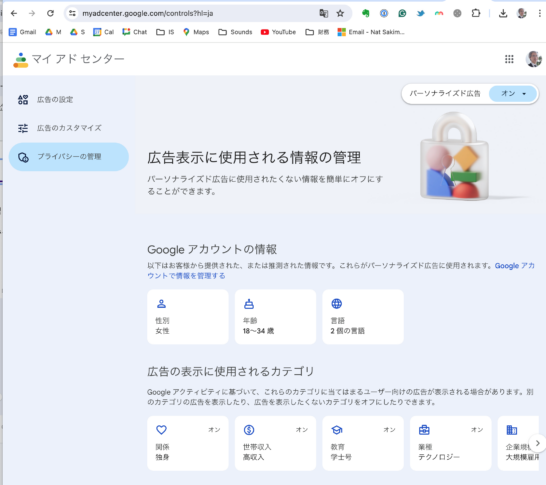
Google My Ad Center is a platform that uses information Google has collected from users’ online behavior to infer their profiles and disclose those profiles to them. Its main features are as follows.
- Interest categories: It displays categories that Google has inferred to be of interest to the user from such data as their web browsing history.
- Demographic information: Users can view demographic information Google has inferred about them, such as their age range and gender.
- Ad settings: Users can manage or opt out of personalized ads based on their profile information.
- Information transparency: Users can see how Google perceives them, increasing transparency around data collection.
- Privacy controls: From My Ad Center, users can change privacy settings concerning Google’s collection and use of information.
My Ad Center is a tool designed to increase information transparency and help users manage their privacy by showing them how Google understands them. Users can review their profiles and change settings as needed to tailor services such as personalized advertising to their preferences.
So, let’s go there now and see how Google perceives me using the vast amount of information it has!Please follow along and check yours too.
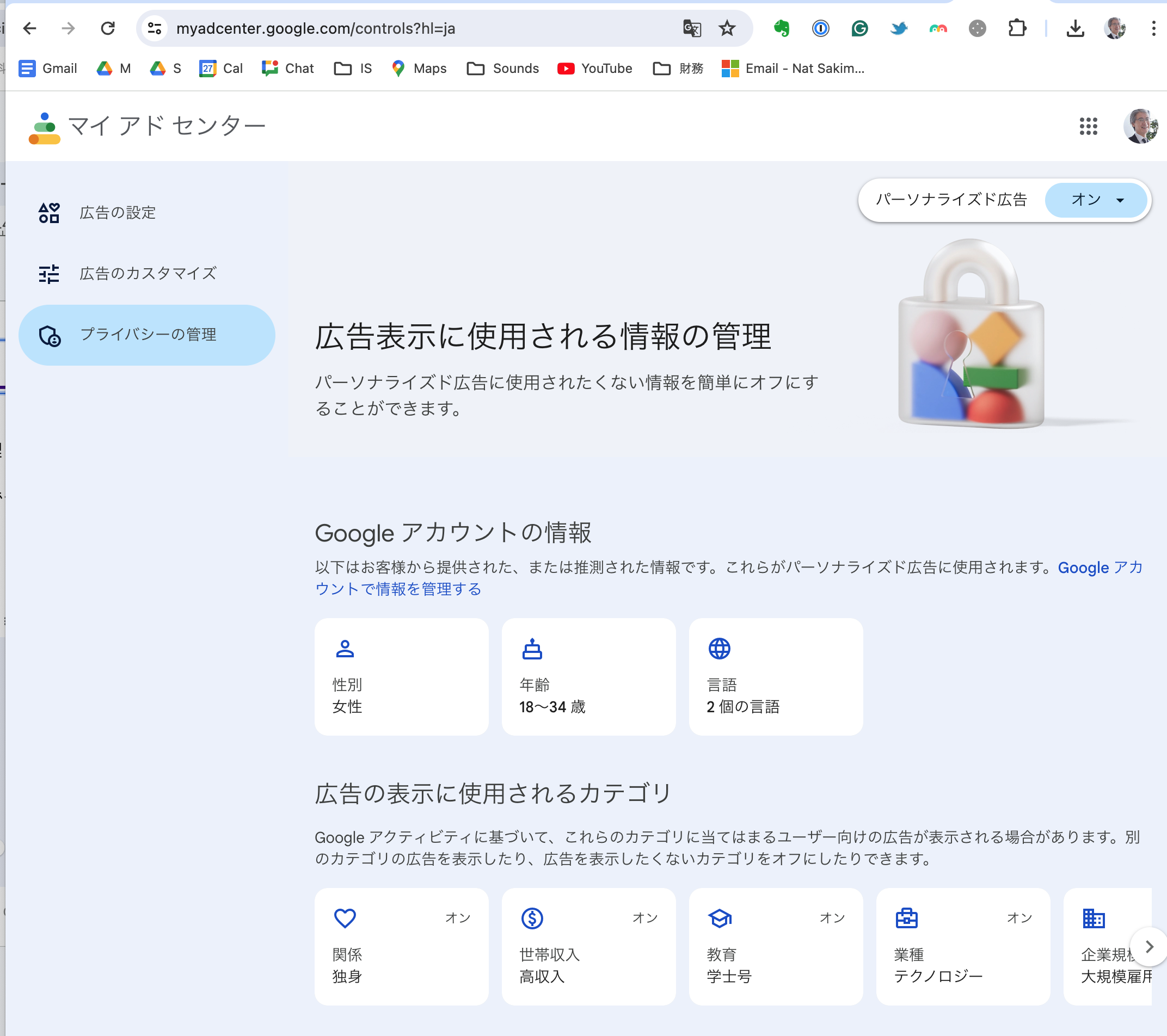
Apparently, Google thinks I am a 18–34-year-old woman who is single and works for a large company, lol. Do women around that age tend to protect their privacy by using an avatar of an elderly man like the one shown in the upper-right corner of the screen…? The correct answer, by the way, is a married man nearing sixty who works for a small or medium-sized company. 1
What results did you get? If you find anything amusing, please post it in the comments.
P.S.
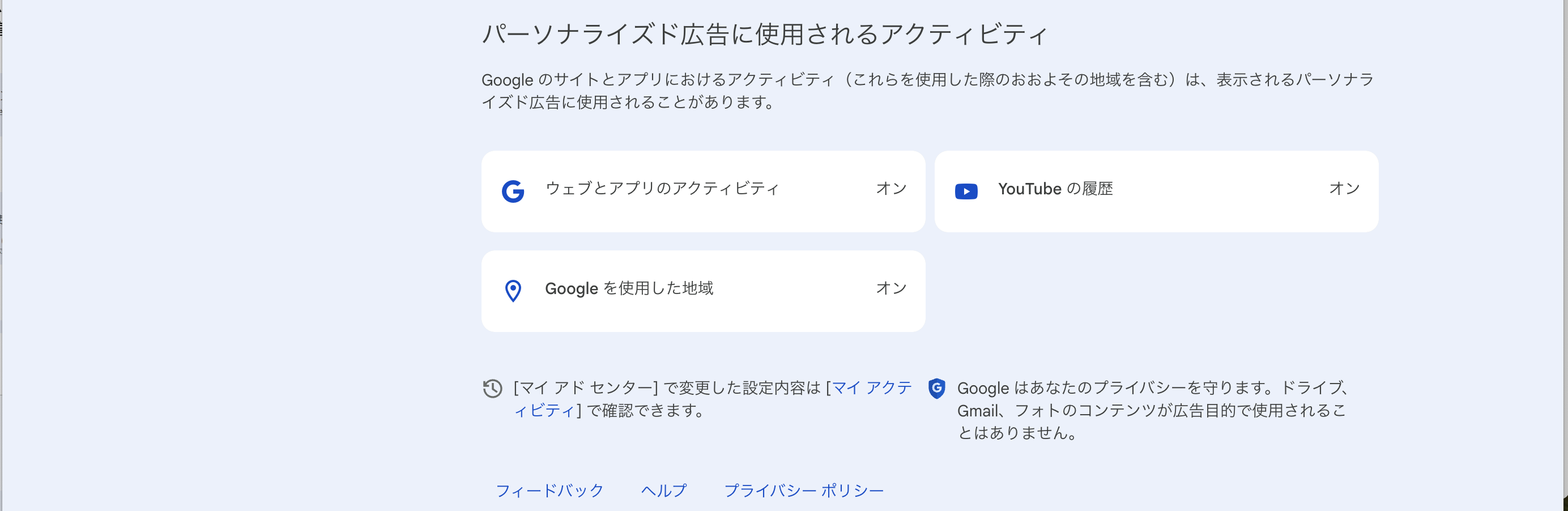
Incidentally, Google reportedly uses the following main sources of information when inferring a user’s interest categories.
- Search history: It infers topics of interest from the keywords and phrases users search for on Google.
- Web browsing history: It infers users’ interests from their browsing history when they visit websites that use Google Analytics.
- YouTube watch history: It identifies categories of interest from the content of videos users watch on YouTube.
- Google Account information: Information users register in their Google Accounts, such as age, gender, and occupation, is also used to infer their interests.
- Android device usage history: If users have an Android smartphone or tablet, their interests are inferred from the apps they have installed and how they use those apps.
- Location information: It infers frequently visited places and categories associated with those places from users’ location information.
By analyzing this information with machine-learning algorithms, Google automatically infers users’ interest categories. However, if users restrict the collection of this information in their privacy settings, the accuracy of those inferences may decline.
Interest categories are also updated periodically, so the categories change as users’ interests change.
It really shows how difficult profiling from behavior can be. In my case it is mostly harmless, but inaccurate profiling like this can also cause privacy-related harm, so it is something we should check carefully.
Footnotes
- To be a little fair to Google, perhaps my searches for trips with my daughter influenced the result. The profile is spot-on if you apply it to my daughter. I have personalized ads turned off on Android, and I use a different Chrome profile for YouTube.
Related posts
Data Sustains Lives—MyDataConference 2026 Opening Address
The following is the opening address for the MyData Japan Conference 2026, delivered by Nat Sakimura in his capacity as Chair of the General Incorporated Association…

The MyData Conference 2026 Is This Wednesday. See You at Hitotsubashi Hall!
I have been posting announcements on X every few days, and the MyDataJapan Conference 2026 is this Wednesday. There are many highlights: Naohiro Fujie, Representative Director…

Unsubmitted Public Comment on the Call for Comments on the Draft First Report of the Youth Protection Working Group on Information Distribution in the Digital Space
July 823:59 was the deadline for the call for comments on the draft first report. I ended the FAPI WG early and23:40 began the submission process…
You must be logged in to post a comment.