On Monday morning, 11/5, I attended Meeting 2 of the Study Group on Platform Services. It was held in an auditorium on basement level 2 of the Ministry of Internal Affairs and Communications, a room that seats 440 people. Since speaking about information bank certification on 10/191, this was my 2nd visit in half a month.
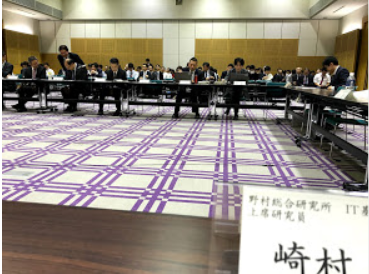
This time, Professor Tezuka presented a report on trust services, and the secretariat reported the results of public comments on the proposed agenda.
The materials are available here.
Material 1: Current Status of Trust Services P
Material 2: Material Submitted by Committee Member Tezuka
Material 3−1: Proposed Agenda for Deliberations by the Study Group on Platform Services
Material 3−2: Summary of the Results of the Call for Proposals
Material 3−3: Main Opinions from Committee Members at Meeting 1
I asked Professor Tezuka, “It appears that eIDAS makes acceptance mandatory for governments, but what about the private sector?” The underlined portion is important.
Also, in an informal conversation afterward:
- Might the terms “electronic signature” and “timestamp” be misleading? The phrase “electronic signature” suggests an electronic version of a handwritten signature or seal, but the functions an electronic signature actually provides are “the ability to detect tampering (which paper provides)” and “who endorses what is written on that paper (which is what an ordinary signature or seal provides).” Meanwhile, a timestamp brings to mind a postal cancellation mark, but what it actually does is “guarantee that, at a particular point in time, the entire set of digital data to which the timestamp was applied existed in that form and has not been altered since.” Its function and value are therefore far greater than those of a cancellation mark. Because this is not understood, everyone gravitates toward “blockchain.”
That is the sort of thing I discussed with Professors Tezuka and Miyauchi.
Well, in that sense, it was in a way accurate for Estonia’s Guardtime (essentially a timestamp company) to market itself as “the world’s largest blockchain company.”
Footnotes
Related posts
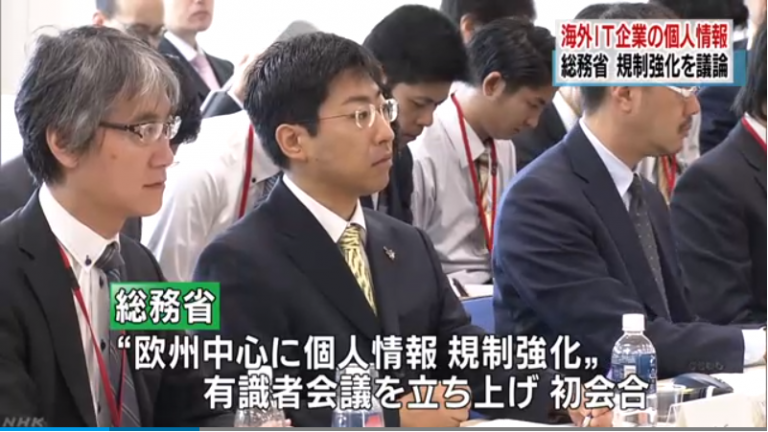
Appearing on NHK: MIC Study Group on Platform Services
The Ministry of Internal Affairs and Communications' “Study Group on Platform Services” began on October 19, 2018. In light of platform operators' recent provision of services…

JIPDEC Develops and Publishes Registration Criteria for Trusted Service Registration (Electronic Contract Services)
JIPDEC, where I also serve as a visiting researcher, has developed and published registration criteria for “JIPDEC Trusted Service Registration (Electronic Contract Services)” to improve the…
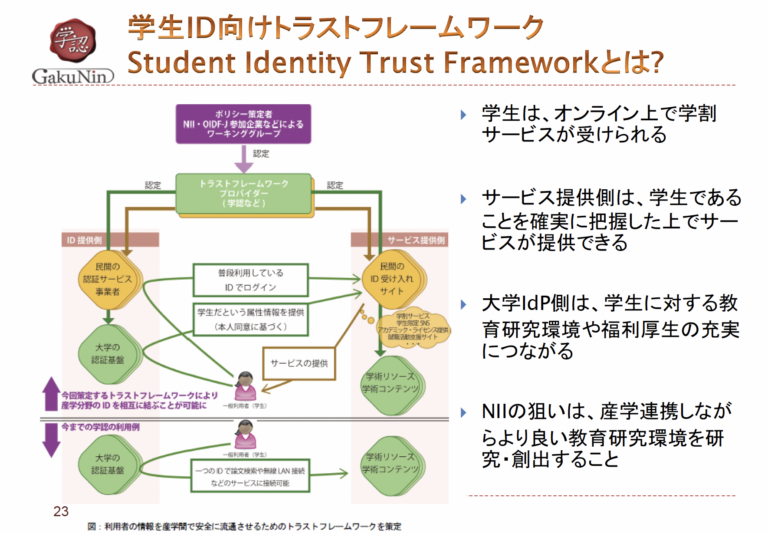
Overview and Future Outlook of the Student ID Trust Framework
On May 17, 2012, the OpenID Foundation Japan Student Identity Trust Framework WG held “Trust Framework Seminar vol. 2: Use Student IDs to Provide Online Student-Discount…
You must be logged in to post a comment.