

The experiment was conducted in a café in London’s financial district near the Houses of Parliament. Citizens connecting to the free Wi-Fi hotspot were first asked to agree to the terms of use, but its “Herod clause” stated: “The user agreed to surrender their 1st child to us permanently.” During the short period in which the experiment was conducted, however, 6 people reportedly “agreed” to these terms of use.
Well, this is something I have repeatedly pointed out in the Ministry of Economy, Trade and Industry’s Personal Data Working Group as well… It is strange to make people press an “Agree” button when everyone knows they will not read the terms, isn’t it?
It seems that the UK’s ICO has been thinking about the same thing. I heard today from Deputy Commissioner David Smith that the former Commissioner, Richard Thomas, said, “Britain is a gathering of liars. Everyone presses the ‘I have read it’ button even though they have not read it.” The “Herod clause” in the quotation above also became a topic of discussion for a while.
I think it is about time that everyone seriously reconsidered how consent is obtained.
What is important from the perspective of protecting citizens is not to write every possible thing comprehensively in policies or notices. What matters is obtaining substantive understanding, so I think it is time to reconsider the present approach. What do you think?
Related posts
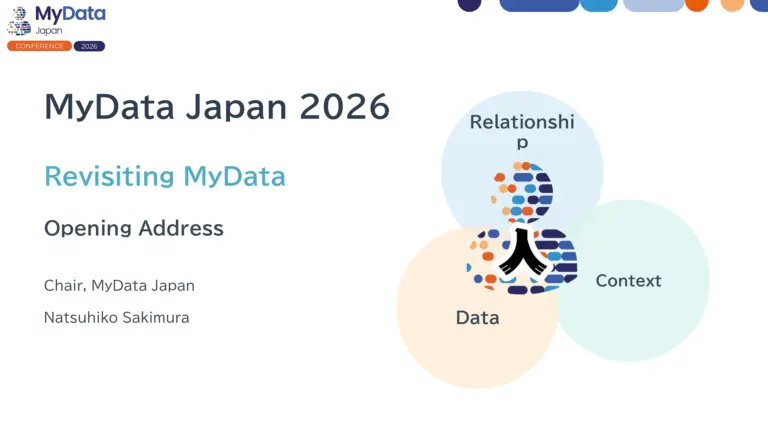
Data Sustains Lives—MyDataConference 2026 Opening Address
The following is the opening address for the MyData Japan Conference 2026, delivered by Nat Sakimura in his capacity as Chair of the General Incorporated Association…

The MyData Conference 2026 Is This Wednesday. See You at Hitotsubashi Hall!
I have been posting announcements on X every few days, and the MyDataJapan Conference 2026 is this Wednesday. There are many highlights: Naohiro Fujie, Representative Director…
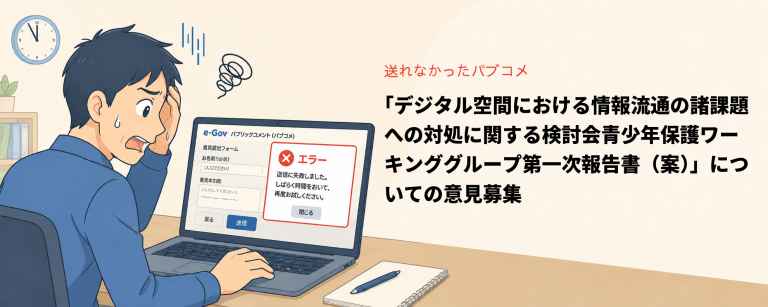
Unsubmitted Public Comment on the Call for Comments on the Draft First Report of the Youth Protection Working Group on Information Distribution in the Digital Space
July 823:59 was the deadline for the call for comments on the draft first report. I ended the FAPI WG early and23:40 began the submission process…