


On the 12th, the government published materials[1] on identity verification measures related to the My Number system.
These materials explain the methods of number verification and identity verification required by law when using the number for identifying a specific individual in administrative procedures (My Number). They distinguish between (I) receiving the information from the person concerned and (II) receiving it from a representative, and explain each in terms of (1) in person or by mail, (2) online, and (3) by telephone.
What is interesting about this classification is that in-person and postal procedures are grouped together. International standards distinguish between (1) in person and (2) remote, so mail would seem more likely to be grouped with online procedures. The government’s classification this time, however, seems instead to distinguish among (1) verification on paper, (2) electronic verification, and (3) verification by voice.
The materials basically provide an accessible explanation of the My Number Act Enforcement Regulations[2], and also indicate which parts of the Enforcement Regulations should be consulted. For example, for (2) online procedures under (I), where information is received from the person concerned, the following 3 methods are listed.
① Individual Number Card (reading the IC chip) (Regulations 4(i))
② Electronic signature using the Public Certification Service for Individuals (Regulations 4(ii)(c))
③ A method deemed appropriate by the entity implementing Individual Number utilization affairs (Regulations 4(ii)(d))
Here, Regulations 4(ii)(d) means that one should refer to Article Four, paragraph Two, item (d) of the Enforcement Regulations. The relevant passage actually states: “In addition to the items listed in (c), verify, by a method deemed appropriate by the entity implementing Individual Number utilization affairs, that the person using a computer connected by a telecommunications line to the electronic data processing system is the person providing the information.”
What personally caught my attention in these materials was the explanation attached to item ③ above, “A method deemed appropriate by the entity implementing Individual Number utilization affairs.” It says, “* Private-sector-issued electronic signatures, issuance of IDs and passwords by entities implementing Individual Number utilization affairs, and similar methods are envisaged,” suggesting scope for broader use in the future.
[1] Cabinet Secretariat: “Materials on Identity Verification Measures” http://www.cas.go.jp/jp/seisaku/bangoseido/sekoukisoku/26-4hk.pdf
[2] Cabinet Secretariat: “Enforcement Regulations of the Act on the Use of Numbers to Identify a Specific Individual in Administrative Procedures (My Number Act Enforcement Regulations)” http://www.cas.go.jp/jp/seisaku/bangoseido/sekoukisoku/26-3.pdf
[3] The rabbit illustration was obtained from here → http://pic.prepics-cdn.com/munimuniwaon/35872028.jpeg because it was pointed out that using the My Number rabbit character might violate the terms of use.
Related posts

OpenAI Launches Sign in with ChatGPT (Based on OpenID Connect)
(Work in progress; last updated 2026-10-02 12:39 JST) On September 29, at DevDay 2026, OpenAI officially announced Sign in with ChatGPT (SIWC). I would like to…
When Software Becomes Staff: Governance, Security, and Safety for Agentic AI
Below is the transcript of my keynote speech at EIC 2026 on May 19, 2026. The slides are provided as a PDF at the end of…
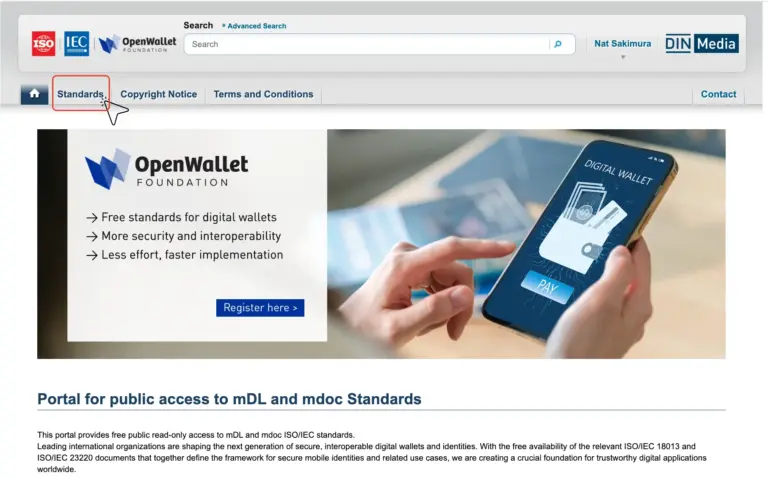
mDL/mdoc Standards Are Now Available to Access Free of Charge
As I shared in real time with those who follow me on X, standards related to mDL/mdoc are now available to access free of charge at…