
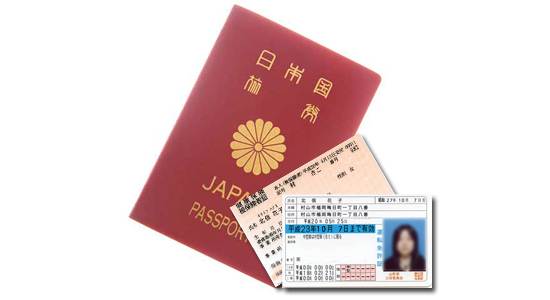
Today’s Nikkei Business Online included an article entitled:
“The Utterly Absurd ‘Identity Impersonation Case’”
It tells the story of Luo Caixia, a student at Tianjin Normal University, whose identity was falsely claimed and used by a former high school classmate.
Apparently there are various cases of this kind in China, but we should not regard them as someone else’s problem. They may be surprisingly common in Japan as well. Japan’s identity verification methods are looser than one might think. For example, even when an organization says it “checks an official identity document,” in how many cases does it follow a proper process to verify that the document is not forged? Is it not often the case that it merely obtains a copy?
New Zealand’s experience provides a useful reference for verification processes of this kind.
Following an impersonation case involving fraudulent social-security benefits, its identity verification methods were reviewed, leading to the definition of a standard process called the “Evidence of Identity Standard.” As a result, many cases of impersonation were discovered. It is said that the system can now generally detect identity fraud within one year.
Establishing measures of this kind in Japan might reveal more identity impersonation cases than expected.
* The Nikkei Business Online article uses the Japanese expression for “status impersonation,” but because Japan has no legal status system of that kind, this article uses the term “identity impersonation.”
Related posts
Data Sustains Lives—MyDataConference 2026 Opening Address
The following is the opening address for the MyData Japan Conference 2026, delivered by Nat Sakimura in his capacity as Chair of the General Incorporated Association…

The MyData Conference 2026 Is This Wednesday. See You at Hitotsubashi Hall!
I have been posting announcements on X every few days, and the MyDataJapan Conference 2026 is this Wednesday. There are many highlights: Naohiro Fujie, Representative Director…
Unsubmitted Public Comment on the Call for Comments on the Draft First Report of the Youth Protection Working Group on Information Distribution in the Digital Space
July 823:59 was the deadline for the call for comments on the draft first report. I ended the FAPI WG early and23:40 began the submission process…