
I have written this before, but I do not think of myself as a tanka poet. The reason is simple: I have studied far too little.
I have not properly read the Man’yōshū, the Kokinshū, or the Shinkokinshū. I have not properly read Shiki or Akiko, either. Nor have I read Mokichi, Akahiko, Fumio, Kunio Tsukamoto, or Takashi Okai. I have only glanced through things that might be called representative poems, through my father’s introductions. I have never read them systematically. In that state, there is no way I could take a step that builds upon them. Therefore, my tanka do not go beyond the realm of play.
In terms of having learned something systematically, I am much better at music. I am an amateur in music too. But I have a fairly systematic grasp of it, mainly from Bach onward. Or rather, in the classical world, there is no other way. Listening deeply to the Well-Tempered Clavier and to the complete Beethoven piano sonatas is the obvious minimum. That is why, even when an unfamiliar piece comes on the radio in the car, I can say, “Well, with orchestration like this, who could it be? Yes, Mahler,” or “Ah, this is probably Poulenc.” Unfortunately, if shown an unfamiliar tanka, I cannot identify its author. In the world of music, that puts me below the level of an amateur.
Everything is built on past achievements; that is why one can do what comes next. The Kokinshū could take its form because it built on the Man’yōshū, and the Shinkokinshū because it built on the Kokinshū. In music, Stravinsky and Schoenberg did not write their then-avant-garde music by acting at random. In reality, they merely took a small step on the extension of a line running continuously through Bach, Haydn, Mozart, Beethoven, Brahms, Liszt, and Wagner. Human beings cannot start from zero and suddenly make a great leap. In other words, a work that does not build on the classics is, to put it harshly, inevitably either “trivial” or a “fluke.” Accordingly, my tanka are almost certainly trivial, so to disguise that, as it were, I introduce wordplay or place them under different rules. It is both an attempt to hide my embarrassment and an étude.
Recently, plain tanka have been in fashion. That is not itself a bad thing, but because they seem easy to compose on the surface, there appears to be a strong tendency to write them without knowing the classics and to regard that as good. This is regrettable. There is an enormous difference between knowing the classics and being able to write difficult poems yet deliberately writing plain ones, and being able to write only plain poems.
Long ago, my father’s study was filled with books. Not only the Man’yōshū, Kokinshū, and Shinkokinshū, but complete editions of Mokichi Saitō, Fumio Tsuchiya, and others covered an entire wall. Whenever something came up, he would quickly pull out one of those volumes and show me a poem. If I am to call myself a tanka poet, however imperfectly, I think I must maintain that level. The thought of doing so in tanka is exhausting, but in other fields that degree of knowledge is taken for granted. Surely that is true? Even I would ordinarily say, “Ah, that part is like this phrase in Beethoven,” and then play the end of No. 30 from a complete Beethoven piano-sonata CD set. Indeed, I would not stop there, but go on about musical organization, what it takes to destroy tonality, and so on. All as an amateur. The same is true of physics, mathematics, and economics, is it not? That is the level required to attach titles such as specialist, professional, or expert to oneself.
Therefore, I am not a tanka poet. I cannot possibly be a “tanka poet” when I have not even built on the classics and reached the present cutting edge.
Related posts
My 7 Recommended Books
Long ago there was something called the #7BookCoverChallenge, intended to help promote a culture of reading. “To participate, post a photograph of the cover of one…

Twitter Renga (collaborative linked verse)
At the after-party following a GLOCOM study session, we composed a Twitter renga, among other things. Links to the original tweets and such can be found…
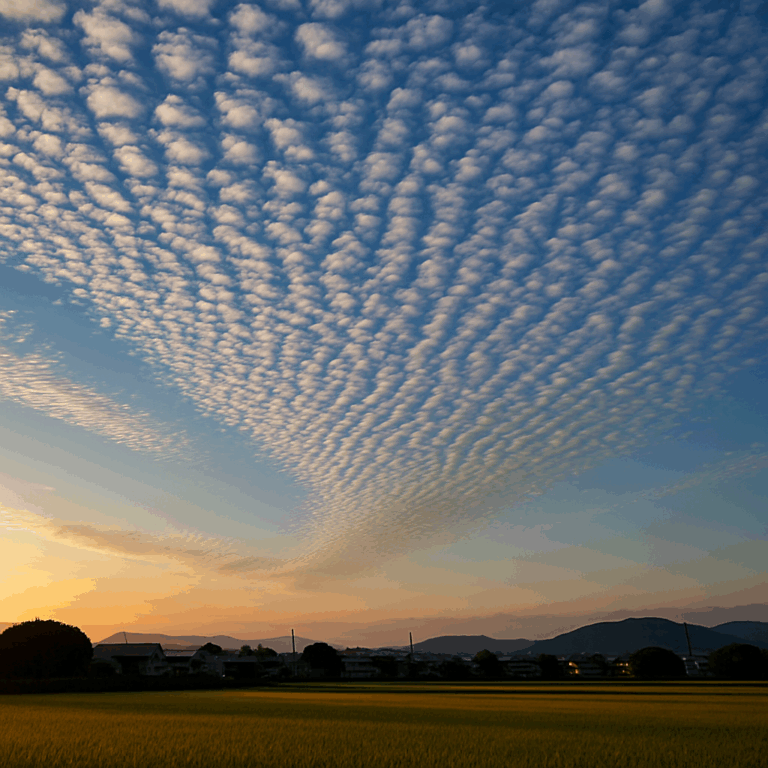
Of August
After the late-August typhoon, in the autumn sky, mackerel-scale clouds seem to be falling.