Since attending the NSTIC governance workshop, I have been thinking about how procurement should work when there are multiple purchasers at a societal level, as represented by a country. This is preparation for the second NSTIC workshop beginning Monday.
At first glance, the approaches are:
(1) Traditional competitive bidding in which a coordinator selects one successful bidder;
(2) Competitive bidding in which a coordinator selects multiple successful bidders; and
(3) Individual procurement.
There are about 3 types. Approaches (1) and (2) are also joint-purchasing methods.
At first, (1), which maximizes purchasing power, seems efficient. From the supply side too, concentrating on supplying 1 type of product appears efficient. Do you not agree?
In practice, however, (3) is efficient. The reason is that people’s preferences differ.
No two people have exactly identical preferences. Likewise, no 2 organizations, such as municipalities, have exactly identical preferences. Approach (1) forgets this. To explain, I wrote a fable about an island country in the North Pacific called Nippon.
The Fable of Nippon, the Land of Happiness
Long ago, in the North Pacific, there was an island country called Nippon. Until about 20 years ago, it enjoyed its heyday on the strength of a booming economy. Now it suffered from a declining birthrate and aging population caused by leaving in place a low-birthrate policy adopted during a population explosion 60 years earlier.
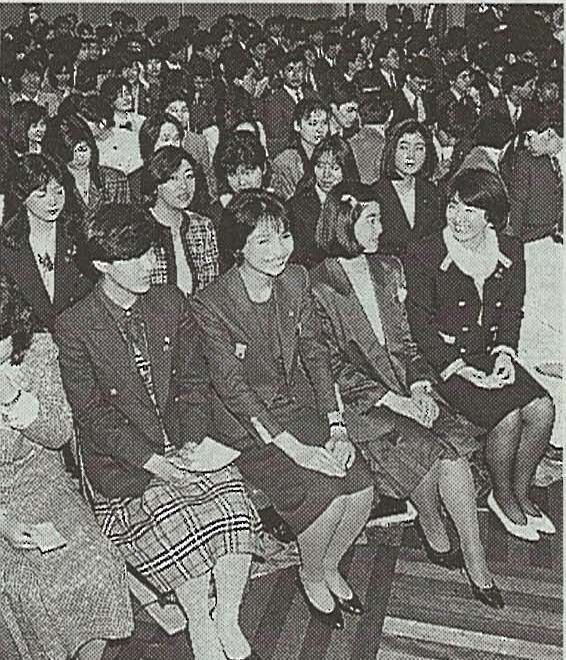
The country had 100 million people. Average annual income was ¥4 million, and citizens were broadly divided into 2 groups: one prioritizing food, clothing, and housing, and another prioritizing education and entertainment, each accounting for 5 tenths. With average income of ¥4 million, gross domestic product was ¥400 trillion.
Mr. I. Shoku-Ju cared deeply about food, clothing, and housing, buying high-quality goods and spending ¥3 million on those needs and ¥1 million on education and entertainment. Ms. Go Raku instead spent ¥3 million on education and entertainment while economizing on food, clothing, and housing, spending only ¥1 million. Both 2 people wished they earned more, but considered these allocations best for their incomes.
Then a new government took office: the Fairness and Efficiency Party. It had 2 pledges: “Fairness first” and “Eliminate waste and become efficient.”
The government immediately began implementing them.
It started by eliminating waste. To identify waste, it convened a committee of experts.
“Why produce so many varieties? Design and production processes create overhead. Consolidating production would reduce overhead and improve efficiency. If the government purchases and distributes everything for all citizens, its enormous purchasing power will secure low prices. Let us do that.”
“What about fairness? If food, clothing, housing, and entertainment are procured and distributed in bulk, everyone receives the same things, making it extraordinarily fair. Wonderful! Our government will last forever!”
The party promptly implemented the policy. The government procured and distributed a single variety of everything. Clothing, food, housing, and entertainment therefore had to be average. Centralized purchasing reduced each procurement amount by 2 tenths. The government declared: “You can now save 2 tenths and put the money into savings or social security. Is that not wonderful?”
But Mr. I. Shoku-Ju and Ms. Go Raku looked dissatisfied. He said, “Why must I live in such a shabby place? The food is worse, yet too much is wasted on education and entertainment.” She complained, “There is no point attending such a low-grade concert. Housing could be simpler; give me decent education and entertainment!”
The government replied, “We understand your dissatisfaction, but must it be number one? Is number 2 not good enough? Besides, you can now save ¥800,000.”
Unable to answer, both reluctantly withdrew.
But could they really save ¥800,000?
Before the new government, each spent ¥4 million, producing total expenditure of ¥400 trillion. Companies divided this ¥400 trillion among employees as salaries of ¥4 million each. Now companies received only ¥320 trillion and could pay each person only ¥3.2 million.
Their bonuses fell sharply, making the promised ¥800,000 saving impossible. Both were furious, and government approval plunged. An emergency policy meeting followed.
The prime minister asked, “What should we do?”
An expert answered, “Supplying everyone with the best is impossible. But we can answer one complaint: neither wants to spend so much on both categories. Lower the quality and provide food, clothing, housing, education, and entertainment producible for ¥1 million. Their complaint disappears, and savings increase.”
“Wonderful! Do it!” the prime minister shouted, issuing instructions immediately.
Soon the news announced: “The Fairness and Efficiency Party government has revised its policy, putting citizens’ lives first, and reduced both categories to ¥1 million. This answers citizens who do not need such luxury and enables savings of ¥1.2 million, exceeding the original pledge.”
Approval quickly rose. Mr. I. Shoku-Ju said, “Exactly. ¥1 million is enough for education and entertainment. Being forced to pay ¥1.6 million was terrible. The government has awakened.” Ms. Go Raku said, “Exactly. Spending ¥1.6 million on food, clothing, and housing was absurd. ¥1 million is enough.”
But trouble soon appeared. Their employers said they could not pay bonuses and must reduce salaries next year.
“Corporate tyranny!” they shouted, but company finances showed huge losses. Economy-wide sales had fallen to only ¥200 trillion, naturally, because only ¥2 million was spent on each category. Their annual incomes fell to ¥2 million each, leaving nothing to save.
The public erupted. Mr. I. Shoku-Ju cried, “What is this?! I can eat only this awful food and cannot even save!”
Ms. Go Raku said, “What can I do with such dreadful education and entertainment? I cannot save either. What happens in old age?!”
Government approval finally entered single digits. The government reconvened the experts.
“What went wrong?!” the prime minister demanded.
The experts answered, “The problem is citizens’ divergent preferences. Control the news, broadcast public advertisements, reform education, and align everyone’s preferences. Send dissenters to reeducation camps to correct their biased tastes.”
“Understood. Begin immediately,” the prime minister shouted.
Television carried government announcements, schools concentrated on producing homogeneous children, and both citizens were sent to camps for preference correction. Those whom correction failed were purged.
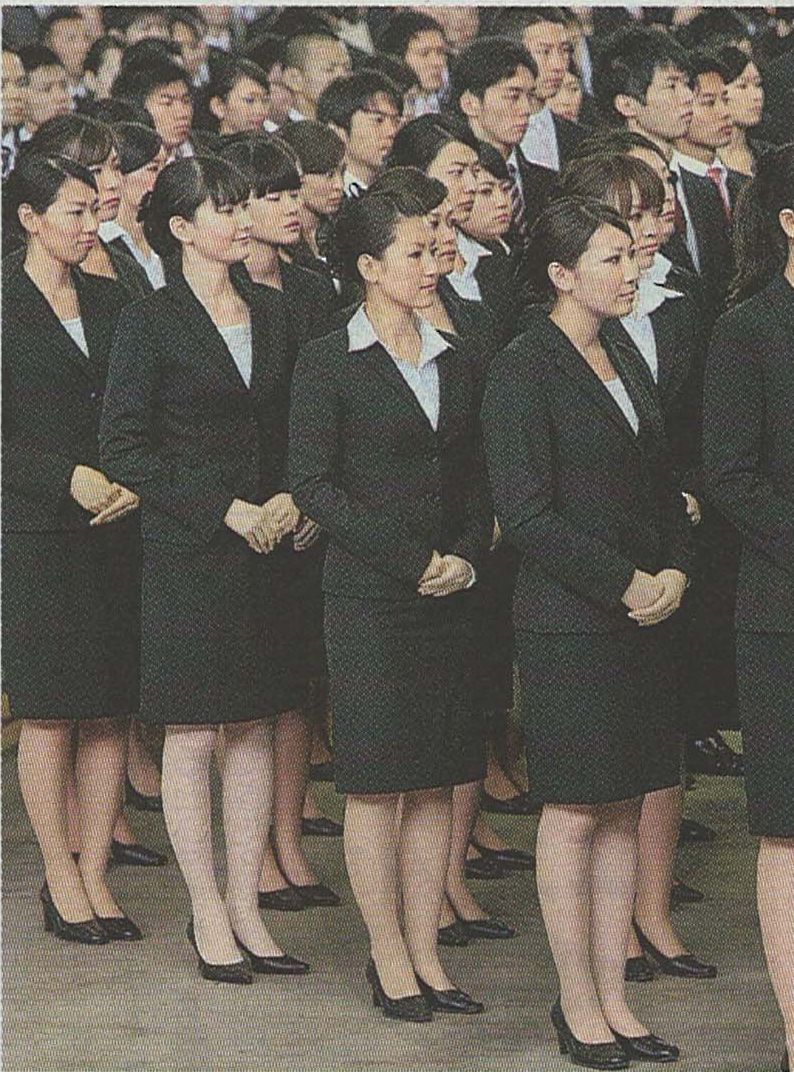
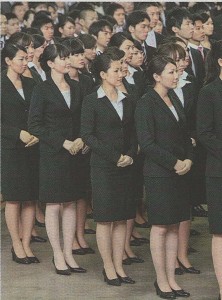
GDP fell below half its pre-government level. Yet Gross National Happiness soared. Everyone wore identical clothes and hairstyles and praised the prime minister. Government approval was 98%, and a newspaper survey ranked it the world’s happiest country. The 2% who kept saying something was wrong were excluded as heretics. Street interviews yielded: “Our great prime minister enabled this wonderful happiness and fairness.” Occasionally a heretic crouched roadside, while mothers pointed and taught children: “That is a heretic, a blight on society. Never become like that.”
The prime minister told a foreign reporter: “Our GDP has admittedly fallen greatly, but our happiness is the world’s highest. We chose Gross National Happiness over Gross Domestic Product.”
The Moral of the Fable
This sounds terrible, but it is nearly a true story: the Soviet Union and North Korea are representative examples. Surprisingly, despite the public’s suffering, nobody is necessarily malicious, and each individual measure could appear locally optimal. Yet accumulated local optimizations produce a global minimum. The failure came from refusing to recognize diversity in human preferences.
You may say this cannot happen in Japan.
In fact, smaller versions do occur here.
Consider a system jointly used by municipalities or other public bodies, such as the “information-sharing platform” discussed for the “Number” system. It connects information systems of as many as 1800 municipalities and public institutions, transferring personal information to improve administrative efficiency and reduce burdens. A single common system jointly used by all appears efficient. But that assumes every organization has identical preferences, which is plainly false. Hence municipal dissatisfaction with past examples such as the Basic Resident Registration Network and Public Personal Authentication.
The first step toward the correct choice is to recognize diversity in each entity’s preferences. This eliminates the option of centrally purchasing one system, option (1). One might argue that (1) is cheaper and efficient, but as the fable shows, even if cheaper, it is inefficient when participant satisfaction falls further. Lower cost is efficient only if satisfaction remains constant.
Next is (2). It is better than (1), but the coordinator is the problem because a coordinator cannot understand every stakeholder’s preferences.
Therefore, (3) is the proper measure. Although (3) says individual, parties with nearly identical preferences may form purchasing groups. Crucially, each party must be free to move between groups at any time and create new groups as necessary: freedom to choose a group, which yields freedom to choose what is purchased. When only one person or organization purchases, note that (1) equals (3). Approach (1) is efficient only when there is one purchaser and no diversity of preferences.
Under (3), multiple suppliers provide multiple products and services. Interfaces and data formats must be standardized for compatibility. Private industry does this routinely, so government can too.
NSTIC treats choice and standardization as key governance requirements because it understands this.
Taking It One Step Further
When buyers comprise multiple entities, individual procurement is more efficient than centralized bulk purchasing. Can we go further?
For example:
“Instead of presenting specifications and soliciting bids, evaluate privately offered services and purchase only what suits you, in the amount needed.”
The advantage is that national or local governments need not build systems using taxes.
Tax-funded construction always risks building unused systems. Estimates are made carefully, but new systems cannot be predicted precisely. Large sums have often produced unused systems.
Using privately offered services requires no tax-funded construction. Paying only for use eliminates waste. Multiple suppliers create competition, lower prices, improve services, and incorporate new technology.
This procurement is common in countries such as the United States and is called COTS (Commonly Off the Shelf). It reduces development time and procurement cost. Dependence on third-party products and rising integration costs are concerns, but standardized interfaces, standardized data formats, and data portability can solve them. This is why international standardization matters. International standards—not only ISO and ITU-T but open de facto standards—create broad markets and multiple interface-compatible suppliers, reducing vendor dependence and lock-in.
Given Japan’s fiscal difficulties, perhaps it is time to consider this procurement model.
(In Boston)
Related posts
Anyone Who Thinks Identity Is Given by the State or Government Should Sit Up and Read This: Utah Digital ID Bill SB260 and the Transformation Brought by a User-Centric Digital ID System
As digital technology evolves, our dependence on personal information and data continues to grow. Yet many government-provided ID systems do not always give sufficient consideration to…
The Provider Liability Limitation Act Has Become the Information Distribution Platform Act (May 10)
Following deliberations by the Ministry of Internal Affairs and Communications’ Study Group on Platforms, of which I was also a member, the amended “Provider Liability Limitation…
MyData Japan submitted comments in response to the public consultation on the “Order Partially Amending the Regulation for Enforcement of the Act on Certification Business of the Japan Agency for Local Authority Information Systems Pertaining to Electronic Signatures, etc.”
In response to the public consultation announced on January 26 regarding the "Draft Order Partially Amending the Regulation for Enforcement of the Act on Certification Business…
You must be logged in to post a comment.