

?️ Major Changes in Government and Policy
- Full enforcement of the REAL ID Act begins on May 7, 2025 – Everyone in the United States aged 18 or older must have REAL ID-compliant identification to board domestic flights or enter federal facilities. A facial-recognition-compatible biometric photograph is mandatory, effectively putting a nationwide biometric identification system into operation. TSA
- The Social Security Administration (SSA) strengthens identity verification requirements (effective April 14) – Applications for disability insurance, Medicare, and SSI can still be handled by phone, but applications for retirement, survivor, and spousal benefits now require in-person identity verification. The aim is to prevent fraud and strengthen security. Social Security Administration
- The Trump administration completely reverses the Biden administration’s digital identity policy (6) – A cybersecurity executive order rescinds policies promoting the use of digital ID solutions and supporting mobile driver’s licenses, citing the prevention of fraudulent public-benefit claims by undocumented immigrants. Federal News Network
- Versions ARF ver. 2.0 (May 28) and 2.1 (June 6) of the EU Digital Identity Framework are published. European Digital Identity
- The “My Number Card on iPhone” service is scheduled to launch on June 24, 2025. Digital Agency
- Online registration enabled for 44 professional qualifications, including accountants and judicial scriveners, following passage of an amended law: The Nikkei
- Google Wallet expands Digital ID support to more states (Kiplinger)
? Cybersecurity and the Federal Government’s Response
- Federal agency identity management reaches a major turning point – Agencies are shifting from a traditional emphasis on compliance to proactive identity security strategies. As a defense against nation-state attacks and insider threats, momentum is growing for CISOs to take the lead in identity management. Federal News Network
- The concept of zero standing privilege gains traction – Systems dynamically grant and revoke privileges, blocking attackers’ paths to privilege escalation. Investment in endpoint privilege management is considered the most effective approach.
- Personal data breaches increase by 20% in France – According to a CNIL report, in 2024 they affected more than 1 million citizens. The need to strengthen the cyber resilience of digital identity systems is now clear. Biometric Update
? Latest Trends in Biometric Technology
- Facial recognition takes center stage at Identiverse 2025 – At one of the largest identity conferences, held in Las Vegas, the shift from fingerprint recognition to facial recognition was unmistakable. Drivers include touchless use, intuitive operation, and high user acceptance. Aware Biometrics
- Liveness detection becomes a key differentiator – It counters the threats posed by deepfakes and synthetic identities. Passive liveness detection verifies that a person is real without requiring blinking or head movements.
- Biometrics integrates multiple authentication factors – Technology that satisfies the traditional 3 factors of “knowledge, possession, and inherence” through 1 facial authentication step is reaching practical deployment.
? Corporate and Investment Trends
- BIO-key wins a follow-on contract worth 600,000 dollars from an unnamed national defense ministry (announced June 17) – The contract expands a biometric access system for 47,000 users, with the aim of strengthening secure access to critical information. Globe Newswire
- Token announces the BioKey next-generation biometric security key (June 3) – A phishing-resistant MFA solution for enterprises that provides enterprise-grade security.
- Xperix and Polaris AI sign an MOU – The companies announced the joint development of biometric security solutions for the financial and public sectors.
? Building Trust in Digital Identity
- Security-by-design principles gain traction – The need to build security in from the design stage is being emphasized across the technology stack, from smartphone chips to cloud platforms.
- Queensland’s digital ID wallet becomes a success story – It has reached 1 million users and is attracting attention as a secure, user-centric technology model.
- Expectations for implementation of the European Digital Identity Wallet – While it has potential as a pan-European identity framework, its success hinges on citizens’ trust, businesses’ perception of its value, and alignment among legal frameworks.
? Privacy and Data Protection
- Growing impact of state privacy laws that took effect in 2025 – New comprehensive privacy laws take effect in Delaware and New Jersey, requiring data protection assessments for high-risk data processing.
- European Data Protection Board endorses draft blockchain guidelines (5) – New rules are being established for storing and sharing personal data on blockchains.
⚖️Standards
- W3C publishes Verifiable Credentials 2.0 as a W3C Standard (May 15)
These stories highlight important turning points in the identity field from May 2025 through 6. In particular, the full enforcement of the REAL ID Act, a shift in the direction of government digital identity policy, and the maturation of biometric technologies are occurring at the same time, with significant effects on the digital identity ecosystem in the United States and worldwide.
Related posts
When Software Becomes Staff: Governance, Security, and Safety for Agentic AI
Below is the transcript of my keynote speech at EIC 2026 on May 19, 2026. The slides are provided as a PDF at the end of…
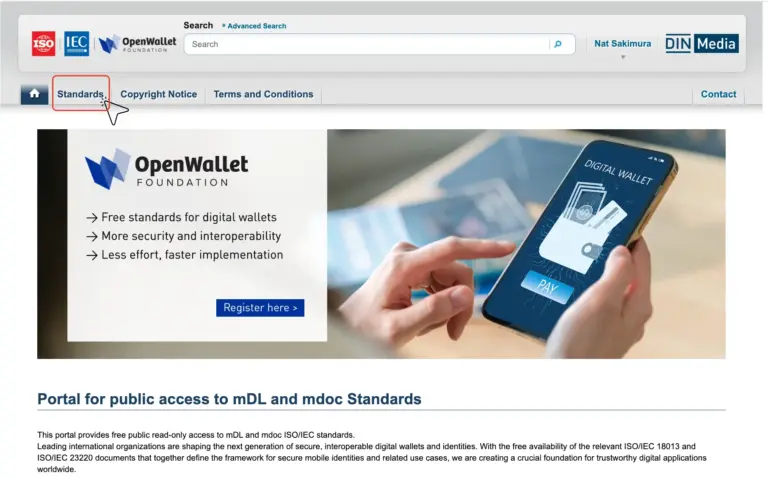
mDL/mdoc Standards Are Now Available to Access Free of Charge
As I shared in real time with those who follow me on X, standards related to mDL/mdoc are now available to access free of charge at…

IPA’s Mr. Tsuda Receives FORBES Japan’s “30 Under 30” Award
Mr. Tsuda of IPA, whom I think is one of the ID geeks, has been selected for FOEBES JAPAN 30Under30 2026. He is the second member…