
704
VIEWS
On February 23, 2012 U.S. time, President Barack Obama signed the administration white paper “Consumer Data Privacy in a Networked World”.
The paper sets out a “Consumer Privacy Bill of Rights.”
Consumer Privacy Bill of Rights[1]
- Individual Control: Consumers have the right to control what personal information organizations collect and how they use it.
- Transparency: Consumers have the right to obtain easily understandable privacy and security policies.
- Respect for Context: Consumers have the right to expect organizations to collect, use, and disclose personal information in ways consistent with the context in which consumers provided it.
- Security: Consumers have the right to have personal information handled securely and responsibly.
- Access and Accuracy: Consumers have the right to access and correct personal information in usable formats, in a manner appropriate to the sensitivity of the data and the risk that inaccurate information could cause adverse consequences for them.
- Focused Collection: Consumers have the right to appropriate limits on the personal information companies collect and retain.
- Accountability: Consumers have the right to assurance that companies handle personal information with appropriate measures in place in accordance with the Consumer Privacy Bill of Rights.
The white paper also describes steps for incorporating these principles into Federal Regulations.
As the first of these steps, a Do Not Track Agreement has been reached with internet advertising companies, including Google, Yahoo!, Microsoft, and AOL. Although this Agreement is voluntary, it will bring these companies under FTC oversight.
Let us now take a closer look at its contents, step by step.
Definition of Personal Information (Data) and Scope of the Bill of Rights
The Bill of Rights defines personal data as follows.
Personal information is any data, including aggregated data, that could be linked to a specific individual. This includes data that can be linked to a computer or other device. For example, an identifier on a home computer or smartphone used to collect usage history is personal information.
In other words, mobile phone IDs and PASMO numbers also constitute personal data.
(Please stay tuned; I will gradually add more to this section.)
[1] The original text is available here.
- Individual Control: Consumers have a right to exercise control over what personal data organizations collect from them and how they use it.
- Transparency: Consumers have a right to easily understandable information about privacy and security practices.
- Respect for Context: Consumers have a right to expect that organizations will collect, use, and disclose personal data in ways that are consistent with the context in which consumers provide the data.
- Security: Consumers have a right to secure and responsible handling of personal data.
- Access and Accuracy: Consumers have a right to access and correct personal data in usable formats, in a manner that is appropriate to the sensitivity of the data and the risk of adverse consequences to consumers if the data are inaccurate.
- Focused Collection: Consumers have a right to reasonable limits on the personal data that companies collect and retain.
- Accountability: Consumers have a right to have personal data handled by companies with appropriate measures in place to assure they adhere to the Consumer Privacy Bill of Rights.
Related posts

White House Releases Consumer Privacy Bill of Rights Draft Legislation
On Saturday the 28th, Japan time, the U.S. White House released its draft Consumer Privacy Bill of Rights Act [1]. This turns the previously announced Consumer…
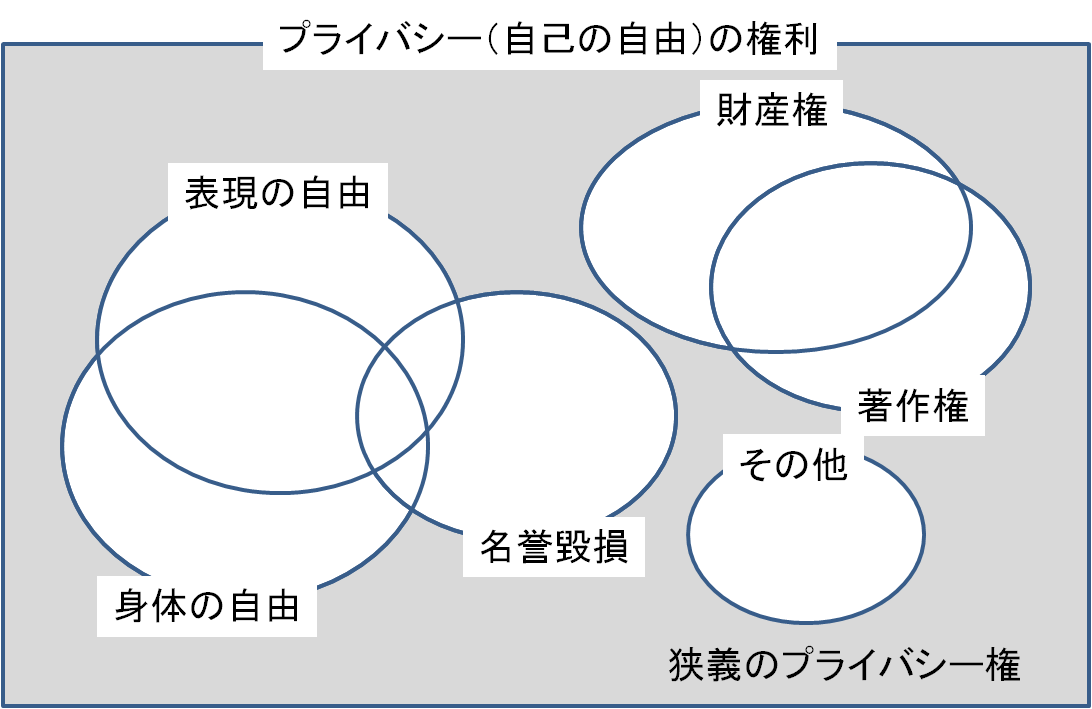
What Is Privacy?
In both the East and the West, privacy is a word often discussed on the basis of a vague understanding. So here, I would like to…
I Read Kojiro Murakami’s “A Study Toward a Typology of the Right to Information Privacy”
Kojiro Murakami“A Study Toward a Typology of the Right to Information Privacy” is a peer-reviewed paper that broadly surveys previous theories of the right to information…
You must be logged in to post a comment.