
I think this is a pretty good definition, so I am making a note of it here.
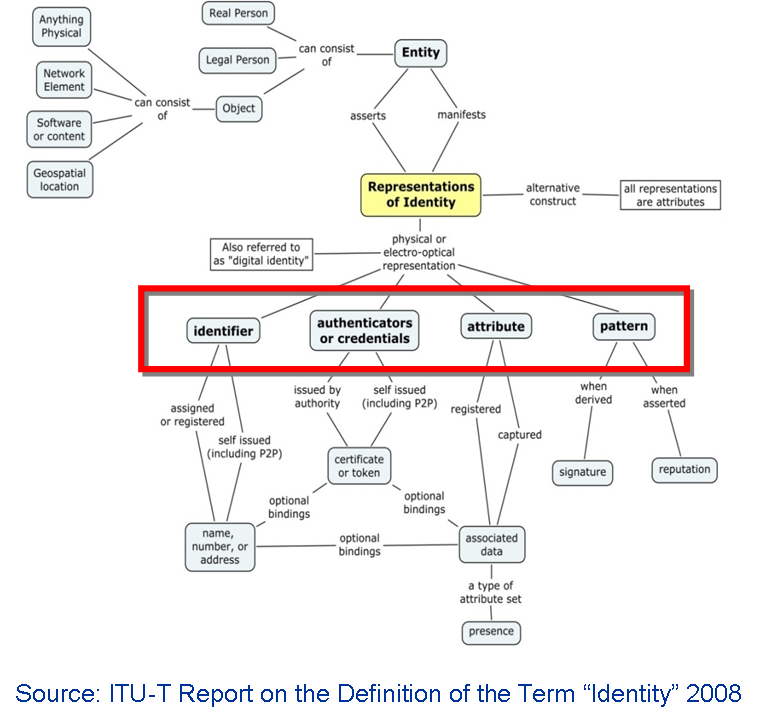
For ITU-T purposes, the identity asserted by an entity represents the uniqueness of that entity in a specific context and is not intended to indicate positive validation of a person.
Identity management (IdM) is the process of secure management of identity information (e.g., credentials, identifiers, attributes, and reputations). IdM is a complex technology that includes: establishing, modifying, suspending, archiving or terminating identity information; recognizing partial identities that represent entities in a specific context or role; establishing and assessing trust between entities; and the discovery (location) of an entity’s identity information (e.g., authoritative identity provider (IdP) that is legally responsible for maintaining identifiers, credentials and some or all of the entity’s attributes.
For reference, definitions of identity from various sources are as follows.
The attributes by which an entity is described, recognized or known (ITU-T)
The fundamental concept of uniquely identifying an object (person, computer, etc.) within a context. (OpenGroup)
A set of claims made by one party about another party. Claims are typically conveyed in Signed Security Tokens (Microsoft)
The essence of an entity. One’s identity is often described by one’s characteristics, among which may be any number of identifiers [Liberty & OASIS]
Model diagram created by ITU-T:
Related posts
OpenAI Launches Sign in with ChatGPT (Based on OpenID Connect)
(Work in progress; last updated 2026-10-02 12:39 JST) On September 29, at DevDay 2026, OpenAI officially announced Sign in with ChatGPT (SIWC). I would like to…
When Software Becomes Staff: Governance, Security, and Safety for Agentic AI
Below is the transcript of my keynote speech at EIC 2026 on May 19, 2026. The slides are provided as a PDF at the end of…
mDL/mdoc Standards Are Now Available to Access Free of Charge
As I shared in real time with those who follow me on X, standards related to mDL/mdoc are now available to access free of charge at…