
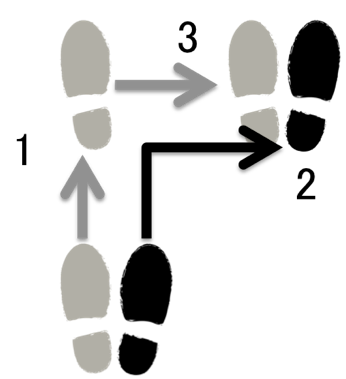
I was given the opportunity to perform at Koganei City East Center in a concert entitled “HAPPY Concert: A Concert for Everyone”1
The audience and staff were all very warm, and we were able to bring the concert to an enjoyable conclusion.
I am reproducing part of the program notes distributed at the concert below.
Program
Part One: Triple-Meter Music in the West
- Fauré: Sicilienne op.78
- Attributed to J.S. Bach: Siciliana BWV 1031
- Bizet: Minuet (from L’Arlésienne Suite No. 2)
- Satie: Je te veux (I Want You)
Part Two: Let’s Play with Instruments
- Let’s blow across bottles
- Let’s hold and play a flute
Part Three: Japanese Music
- Michio Miyagi: Haru no Umi
- Yumi Arai: Graduation Photograph
- Hachidai Nakamura: Ue o Muite Arukō
- Yoko Kanno: Flowers Will Bloom
Program Notes
Part One: Triple-Meter Music in the West
Siciliana (Sicilienne)
The siciliana (Italian; sicilienne in French) is a dance in a gentle 6/8 or 12/8 meter, characterized by a hesitant, floating mood and dotted rhythms. It is one form within the broader category of the pastorale. Its name means “Sicilian-style dance,” but no evidence has been found that it originated on Sicily. It first appeared around 1500.
It was widely composed through the 18th century. Famous examples include the Siciliana attributed to Bach and Mozart’s Piano Concerto No. 23, movement 2.
However, after the 19th century began, no famous new works appeared. Only near the end of the 19th century was Fauré’s Sicilienne finally born.
Fauré: Sicilienne op.78
Gabriel Fauré was a French composer born in May 12, 1845 who died in 1924. His youth coincided with the mature periods of Berlioz and Brahms, while his later years came as tonality was collapsing and Schoenberg and others were beginning to write so-called atonal music. Fauré’s style can be divided into an early period through the middle of the 1880s, a middle period from the late 1880s through the 1900s, when he wrote the famous Requiem, and a late period thereafter, when he suffered from sensorineural hearing loss. Since this piece was composed in 1893, it belongs to his middle period.
This piece was originally written for an unfinished production of Le Bourgeois gentilhomme in 1893. Fauré had already published it as opus 78 for cello and piano, then rearranged it as the 5th piece of the incidental music Pelléas et Mélisande, a prelude to the scene in Act 2 where Pelléas and Mélisande play by the fountain. In G minor and 6/8 meter, it is a small rondo in A-B-A-C-A-Coda form. In the famous A section, the solo flute plays a distinctive dotted-rhythm melody over harp arpeggios. (Approximately 4 minutes)
J.S. Bach: Siciliana BWV 1031
J.S. Bach perfected Baroque music and in Japan is often called the Father of Music or one of Germany’s 3 great Bs. This piece is from Flute Sonata No. 2 in E-flat Major, BWV 1031 (1734), whose 2nd movement is a siciliana in G minor.
It is attributed to J.S. Bach because C.P.E. Bach marked the score as his work, but its stylistic features belong to the later galant style, casting doubt on its authenticity. The galant style sets a singing melody over relatively simple accompaniment and flourished at Frederick the Great’s court, which embraced French Rococo taste. Its practitioners included the celebrated flutist Johann Joachim Quantz (1697 – 1773) and C.P.E. Bach (1714 – 1788), who possessed this manuscript. It was once thought to be by C.P.E. Bach, but that theory was rejected because he would presumably have included it in his own catalog and because it differs from his works of the same period. The current view is that, while teaching the new style to C.P.E. Bach and other pupils, J.S. Bach either demonstrated how to write a duo sonata using Quantz’s Trio Sonata (QV 2:18)2 as an example, or assigned another pupil to write it. A work thought to have followed a similar path is Quantz’s Trio Sonata (QV 2:35)3 4, which appears to have served as a model for the G-minor Sonata BWV 1020 (1734). The latter clearly displays features of the young C.P.E. Bach’s composition, but he did not claim it as his own; it is believed to be the “collaboration with Father” mentioned by his wife in a letter after his death5.
Although BWV1031 feels somewhat diffuse as a whole, this Siciliana is such a famous masterpiece that it has been called “the most beautiful melody Bach wrote,” and it is often performed in piano arrangements. (Approximately 2 minutes)
Minuet
The minuet was the most popular ballroom music among the upper classes in the first half of the 18th century. It is a dance of encounter in which a man and woman move from the back to the front of a ballroom under everyone’s gaze, though, as befits the court, they touch little more than hands. Its rhythm is:

With this rhythm, the dancer rises on the first 2th note, lands on beat 3, then advances with 2 small steps, bringing the feet together and bending the knees slightly on beat 3.

The “menu” in the name means “small” and refers to these small steps. Probably the most famous minuet is Petzold’s Minuet, formerly attributed to Bach.

In instrumental music, the minuet later developed into the scherzo.
Bizet: Minuet(from L’Arlésienne Suite No. 2)
L’Arlésienne Suite No. 2 was completed in 1879 after Bizet’s death by his friend Ernest Guiraud. A skilled orchestrator, Guiraud arranged it using music beyond L’Arlésienne as well.
The 3th piece, “Minuet,” is so famous that it epitomizes L’Arlésienne, but Guiraud actually adapted and arranged music from Bizet’s opera La jolie fille de Perth. A beautiful melody unfolds for flute and harp.
This minuet is in 2/3 meter, E-flat major, and a modified rondo form: A-A’-B-B’-C-A-B-A’. (Approximately 4 minutes)
Waltz
While nobles danced elegant minuets, peasants danced the Ländler, a dance involving closer contact and larger movements. Masters who grew dissatisfied with the refined minuet began crashing their servants’ dance parties to enjoy this close-contact, vigorous dance. The Ländler’s smoother transformation among urban residents became the waltz.
Were you taught that a waltz goes “boom-cha-cha, boom-cha-cha”? That is what I learned in Japanese elementary school. But Western performers make it sound more like “mm-chaa-cha,” with a longer second beat. The reason becomes clear from the waltz steps: step 2 is long. You cannot dance it as “boom-cha-cha.” This shows why understanding the steps is important for understanding dance rhythms.
Satie: Je te veux (I Want You)
Je te veux is a chanson composed by Erik Satie in 1900. Originally one of the 1 pieces in the song collection Waltzes and Café Music, it is now best known in Satie’s own solo-piano version. It is a waltz. (Approximately 2 minutes)
Part Two: Let’s Play with Instruments
Let’s blow across bottles
Did you ever play by blowing across a bottle as a child? The principle that produces a flute’s sound is actually the same as for a bottle. I brought various bottles today. Let’s all try blowing them together.
Let’s hold and play a flute
Were you able to make a sound with the bottle? If so, try playing the flute next. You will surely produce a sound!
Part Three: Japanese Music
Michio Miyagi: Haru no Umi
Inspired by the imperial theme “Seaside Rock” for the 1930 New Year Poetry Reading, this representative work of New Japanese Music was composed at the end of 1929.
Although strongly influenced by Western music and not traditional early-modern Japanese music, it retains the atmosphere of Japan very well and consequently remains frequently performed today.
The music is said to depict the beautiful scenery of Tomonoura in Fukuyama, a scenic spot on the Seto Inland Sea where the composer lived with his grandparents before losing his sight at age 8, scenery that remained engraved in his memory.
The complete work lasts about 7 minutes, but today we will present its most famous section. (Approximately 2 minutes)
Yumi Arai: Graduation Photograph
A hit released in 1975 as a song by the chorus group Hi-Fi Set. It contrasts a former lover seen in town6, whose appearance had not changed at all from the graduation photograph, with the narrator, who is being swept along by the crowd and changing, probably not for the better. In 4/4 meter, its distinctive dotted-note figure accented on the 2th and 4th beats evokes nostalgia. (Approximately 4 minutes)
Hachidai Nakamura: Ue o Muite Arukō
Composed by Hachidai Nakamura in 1961 and sung by Kyu Sakamoto. The lyrics were by Rokusuke Ei, who died last year on July 7.
Beginning in June 15, 1963, this worldwide hit spent 3 consecutive weeks on Billboard’s HOT 100, holding the weekly No. 1 position. To this day, Sakamoto remains the only Japanese or Asian singer to reach No. 1. It sold more than 13 million copies worldwide.
Kyu Sakamoto’s singing style seems to have been quite distinctive in the popular-music world of the time. According to Rokusuke Ei, his pronunciation of the opening “ue o muite” as “uhe homu fuite” may have reflected the kouta and kiyomoto singing his mother had taught him. (Approximately 3 minutes)
Yoko Kanno: Flowers Will Bloom
This charity song was created to support the material and emotional recovery of the areas and people affected by the Tohoku Pacific Ocean Earthquake (Great East Japan Earthquake) on March 11, 2011. It has served as the theme song of the “NHK Great East Japan Earthquake Project,” the disaster-support initiative run by NHK since fiscal 2011. Lyrics are by Sendai-born Shunji Iwai and music by fellow Sendai native Yoko Kanno. (Approximately 5 and a half minutes)
(Text: Natsuhiko Sakimura)
Performer Profiles
Junko Sakimura
Graduated from the percussion department of Kunitachi College of Music. Studied marimba with Akiko Suzuki, Tomoko Kusakari, Shinichi Ueno, and Tomoyuki Okada, and cimbalom with Yasuko Kano. Since launching her career with a recital in 1990, she has worked energetically, including Japanese premieres of Stravinsky’s Renard (Japanese version), Kurtág’s Stele and Concertante, and Costello’s IL SONGO. Abroad, she represented Japan at the 3th World Cimbalom Congress in Slovakia (1995), appeared on Slovak television, and was featured in Pravda and other newspapers. Her performances in Germany, Switzerland, Canada, China, and elsewhere have also been well received.
Her orchestral appearances include the Saito Kinen Orchestra concert conducted by Seiji Ozawa, Dutilleux’s The Shadows of Time, broadcast nationwide by NHK, as well as performances with the New Japan Philharmonic, Tokyo Metropolitan Symphony Orchestra, Nagoya Philharmonic, and other major orchestras. Outside classical music, from 2008 through 2009 she provided BGM for Dai-ichi Life’s social-contribution television commercials and also participated in singer-songwriter Shione Yukawa’s album.
Home Page: https://www.cimbalom.net/
Natsuhiko Sakimura
Raised in Kenya. Studied flute at the Nairobi Conservatoire. Winner of the wind-instrument division of the Kenya Music Festival in 1983.
Home Page: https://www.sakimura.org/category/music/
Footnotes
-
【Eligibility】People who live, work, or study in the city
【Capacity】40 people (in order of application)
【Time】From 10:30 a.m. to 11:30
- J.J. Quantz, Trio in E-flat Major for Violin, Flute and Continuo QV 2:18, manuscript <http://hz.imslp.info/files/imglnks/usimg/8/8d/IMSLP54821-PMLP113376-307126188.pdf> recording <http://ml.naxos.jp/work/149860>
-
J.J. Quantz, Trio Sonata in G Minor QV 2:35 (1734), manuscript <http://javanese.imslp.info/files/imglnks/usimg/2/25/IMSLP32925-PMLP75010-30666478X.pdf> recording <http://ml.naxos.jp/work/1127518>
- QV 2:35 also has thematic similarities to the 1th Flute Sonata in B Minor, BWV1030 (1736), attributed to J.S. Bach.
- Keiichi Kubota, C.P.E. Bach Studies (2000), Ongaku no Tomo Sha, p.188
- There also seems to be an interpretation that this was a female teacher from high school.
Related posts
Greetings to Everyone Who Helped Me This Year: Fauré’s “Pie Jesu”
December has already passed its 3 out of 1 mark. As every year, it has flown by, and it was another year that I somehow managed…
“Doppler: Andante and Rondo, Op. 25” in the Mirror
About Franz Doppler Franz Doppler (1821-1883) was a Hungarian-Austrian composer, conductor, and flutist. As the composer of the famous “Hungarian Pastoral Fantasy,” he is known to…
New Discovery: Mozart Works for Flute and Harp Premiered on 6/21 (6/23 Performance Recording Also Added)
Across 250 Years: Mozart’s “Unpublished Autograph” Found in Paris Reveals the Genius Behind the Legend An “Anonymous” Treasure Sleeping in a Corner of the Library On…
You must be logged in to post a comment.