
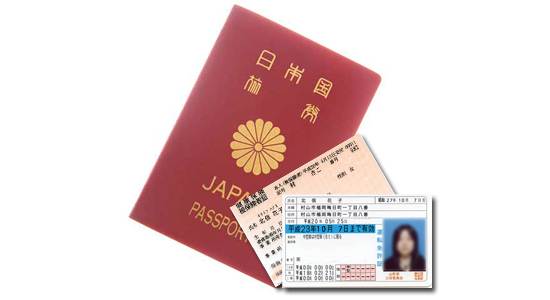
“Identity verification” is a familiar term that is often used, but it seems that what it actually means is not very well understood.
I would therefore like to make this into a series and explore the question, “What is identity verification?”
What Does “the Person Concerned” Mean?
Now let us get straight to the point. Everyone, what do “the person concerned” and “verification” mean? At times like this, nothing beats consulting a dictionary. According to Digital Daijisen, they are defined as follows.
hon’nin (the person concerned)
1 The person directly concerned with the matter; the party concerned; the person in question. “Confirm with the person concerned.” “It depends on the person concerned.”2 The ringleader; the principal culprit. “Hirano Shogen Nyudo, the ringleader of the castle” (Taiheiki, Book Six).
kakunin (verification)
noun (suru verb)1 To recognize something clearly; also, to ascertain clearly that something is so. “Verify safety.” “The survivors have not yet been confirmed.”2 The act of judging or determining the existence or nonexistence of a particular fact or legal relationship when it is disputed or in doubt; for example, determining the winner of an election.
When we say “identity verification,” both “the person concerned” and “verification” probably take their 1st meanings. In other words, identity verification means:
hon’nin kakunin (identity verification)
Clearly ascertaining that someone is the person directly concerned with the matter.
Put another way, identity verification is the process of first:
- clarifying “the matter”;
- ascertaining the reliability of the relationship with “the matter”; and
- linking “the matter” to a physical body.
This means that saying “identity verification” is meaningless unless “the matter” has been specified. In other words, there can be no such activity as “general-purpose identity verification.”
This is extremely important.
Consider identity verification when opening a bank account.
To open a bank account, you first enter your name and other details on an account application form. To use somewhat technical terminology, information you enter yourself in this way is called self-declared information or claimed identity information. There should ordinarily be little incentive to lie here, so it ought to be reasonably trustworthy. To increase its reliability further, however, it is useful to check a document in which a third party has described the applicant. A driver’s license is one example. A license contains the person’s name, date of birth, address, and other details. Moreover, because licenses use a uniform format nationwide, forgeries should be relatively easy to detect. Thus, when shown a license, one first checks whether it appears genuine and then compares the details on it with the information in the application. If they match, one can say with considerable confidence that a person with that name, date of birth, and address actually exists.
But this alone does not yet establish whether the applicant is that person. In our terminology, the physical body has not been linked to the information [1]. The facial photograph is used to make this link. The photograph on the license is compared with the face of the person submitting the application to ascertain whether they are the same person. Only at this point have the application and the applicant finally been linked. This process is called “identity verification.”
However, identity verification when opening a bank account is not performed solely for this purpose. It is also performed from the perspective of the Act on Prevention of Transfer of Criminal Proceeds.
The purpose of identity verification under the Act on Prevention of Transfer of Criminal Proceeds is to prevent the laundering of criminal proceeds and the provision of funds to terrorists and other criminals. In this case, “the matter” is the “transfer of criminal proceeds.” Accordingly, there should be a “database of persons associated with criminal proceeds” behind the process, and identity verification should consist of confirming that neither the sender nor the recipient [2] of funds is registered in it.
Are a Name and Address Essential for Identity Verification?
In every identity-verification example so far, the verification items have included a name, address, and similar information. Indeed, in Japan there often seems to be a mistaken belief that “identity verification” means acquiring the “basic 4 items of information [3]” [4]. But this is wrong. The conclusion is that a name and address are not necessarily required for identity verification.
Suppose, for example, that you order and buy a book from a bookstore. When placing the order, you pay the price and receive a claim ticket. When the book arrives, you use that ticket to collect it. Here, identity verification means ascertaining that the person who ordered and paid for the book is the same person who has now come to collect it. Presenting the claim ticket is sufficient for that purpose. Neither a name nor an address is necessary. The “claim” in this case is “I am the person entitled to receive the book,” and possession of the claim ticket is enough to prove it.
Likewise, for identity verification from the perspective of the aforementioned Act on Prevention of Transfer of Criminal Proceeds, if the blacklist database were managed using, for example, Social Security numbers, it should be enough to check a facial photograph and taxpayer identification number; neither an address nor even a name should be necessary. [5]
A “real name” and “address” are required for identity verification at a city hall or similar office because the keys in the city hall’s database—that is, the data used for comparison during “identity verification”—are the person’s “real name” and “address.” In other words, it is merely because the information contained in the comparison “document” happens to be the basic 4 items of information.
Identity verification does not invariably require an address or a real name. The information required depends on “what” about the “owner of the physical body” one is trying to verify.
[1] This is sometimes described as the “link between bit and meat.”
[2] The recipient is particularly important.
[3] Name, sex, date of birth, and address.
[4] As explained above, identity verification consists of comparing the information obtained with information acquired through another channel. Merely asking the person or their representative for the 4 items of information therefore does not constitute identity verification.
Related posts

When Software Becomes Staff: Governance, Security, and Safety for Agentic AI
Below is the transcript of my keynote speech at EIC 2026 on May 19, 2026. The slides are provided as a PDF at the end of…
mDL/mdoc Standards Are Now Available to Access Free of Charge
As I shared in real time with those who follow me on X, standards related to mDL/mdoc are now available to access free of charge at…

IPA’s Mr. Tsuda Receives FORBES Japan’s “30 Under 30” Award
Mr. Tsuda of IPA, whom I think is one of the ID geeks, has been selected for FOEBES JAPAN 30Under30 2026. He is the second member…