
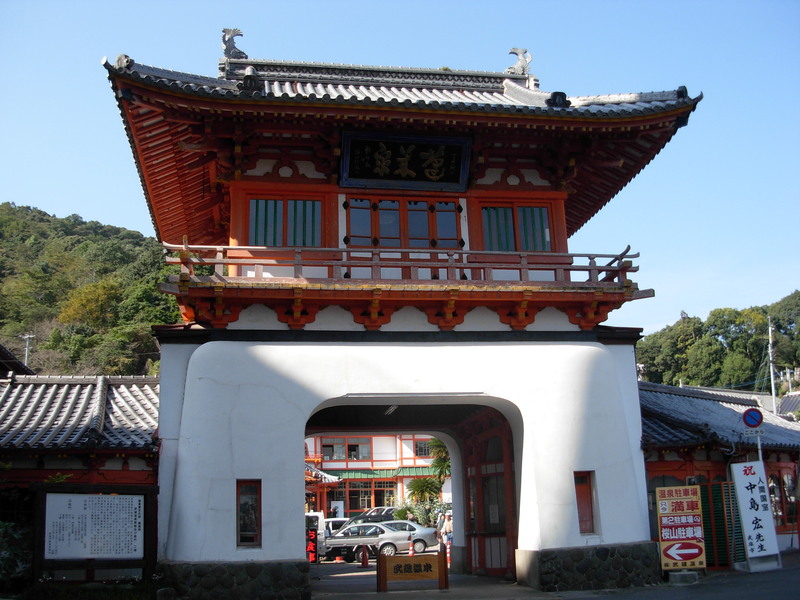
I have begun looking little by little into Takeo City’s move of its website to Facebook. On August 2011, Takeo City in Saga Prefecture boldly “fully migrated” its municipal website to Facebook [1], but places such as the White House can set up a presence on Facebook because they have another channel through which people can contact them anonymously—in other words, providing personal information is voluntary. A requirement to register with Facebook would never be accepted in the United States.
This sort of matter is described in the privacy policy linked prominently on the left side of http://www.facebook.com/WhiteHouse . How does Takeo City compare? Searching for “privacy” at http://ja-jp.facebook.com/takeocity returns only Facebook’s policy. After a little more investigation, I displayed Takeo City_Home from the left-hand menu and found the Privacy Policy at the very bottom [2]. According to it, providing personal information appears to be voluntary. In fact, the page itself is merely loaded in an iFrame, and the content appears to reside on the city’s own server. In other words, rather than having migrated to Facebook, it feels more like the city has opened a storefront there. If that is the case, it would seem possible to open storefronts on Yahoo! and elsewhere too.
Even so, not all data is written to Takeo City’s server. Posts on the Wall and similar material are stored on Facebook. This takes on greater significance if, as Mayor Higuchi says [3] , the city’s internal network was also moved to Facebook on April 2012.
The issues are cross-border data transfers and data integrity.
Facebook’s terms state that data will be transferred to the United States. As you know, that data could be seized by US authorities. How did a Japanese government body assess this? I am not necessarily opposing it, but I would like to know the results of the assessment.
Incidentally, some Canadian provinces apparently prohibit public institutions from using services that transfer data to the United States. Their reasons include privacy, confidentiality, and service continuity.
As an example of confidentiality, suppose the national government sends confidential information to a local government. It is then stored in a US data center. US authorities can then obtain and read it without presenting a warrant [4]. Is this something a government body should be doing?
Surely these matters, too, must have been examined in various ways. If minutes or reports documenting that examination exist, I very much hope they will be shared. They should prove extremely useful when other municipalities or government bodies move to the public cloud in the future.
(Added 2012/2/28)
As might have been expected, or however one should put it, it seems that none of these matters were examined. @keikuma used the public-records disclosure request system to obtain and examine all related materials [5], and reports that there was no consideration whatsoever of cross-border data or residents’ privacy. There was only some consideration of integrity, namely that the content itself remained in the city’s possession because it was displayed via an iFrame.
Also, according to Jong-Soon Yeom (@YomutakuJP), president and CEO of e-Corporation.jp, Information Policy Coordinator (assistant CIO) for Aomori City, and Information Planning Director in the Information Division of Saga Prefecture’s General Administration Headquarters, South Korea also prohibited government bodies from using certain cloud services about 2 weeks ago [6].
Meanwhile, Takeo Mayor Keisuke Hiwatashi states on his own blog page [7] :
“This Facebook intranet is free. Free. What is more, it operates extremely reliably and is enjoyable to use. We will incorporate not only exchanges of opinions, but also a calendar, official-vehicle reservations, and meeting-room reservations.”
I only hope it does not prove that nothing is more costly than something free.
[1] In fact, the original server’s page is displayed on Facebook in an iFrame, so it is not truly a full migration. However, user comments and the like are written to Facebook, and it does not seem possible to post without a Facebook account. (← Please tell me if I am mistaken.)
[2] This would be quite difficult to notice. I think it should be placed somewhere prominent on the left side.
[3] http://www.itmedia.co.jp/news/articles/1202/16/news090_2.html
[4] Under the so-called Patriot Act, I believe the presentation of a warrant can be delayed for an unspecified length of time. (← Is that correct? If you know the details, please let me know.)
[5] (Added 2/28) http://twitter.com/keikuma/status/174147307451854848
[6] (Added 2/28) http://twitter.com/YomutakuJp/status/174152532204077056
[7] (Added 2/28) http://hiwa1118.exblog.jp/15337563/
Related posts

Why Identity Federation Helps Improve Privacy
I received an inquiry from a certain party and sent a response, so I am sharing it here. The topic is “Why Identity Federation Helps Improve…
Thoughts on the Benesse Personal Data Breach
It appears that children's and other personal data—up to 20.7 million records—was leaked[1] from Benesse. This is a thought-provoking incident in many respects. Let us consider…
If You Care About Privacy, You Should Consider the Impact of the Act Rather Than the Type of Data
I have talked about this in various places, so I imagine many of you may be thinking, “I’ve heard this before...” Currently, a Study Group on…