
“An Introduction for Non-Technical Readers to the Difference Between OAuth Authentication (?) and OpenID” surpassed 800 Hatena Bookmarks, which put me in a good mood, so this time I decided to write about identity(*0).
I suspect that (digital) identity is an unfamiliar term. “Digital” may be familiar enough, but when it comes to “identity,” you may find yourself wondering, “What on earth is that?”
And yet this word invariably comes up when discussing “authentication,” whether in relation to OpenID or OAuth. Recently, the Nico Nico Douga broadcast that drew a total of more than 27000 visitors, “A Thorough Explanation of the Common Number System for Asking for the Best One: Is That Common Number System Really All Right? — MIAU Presents, Compass of the Net,” addressed a “number” system for which this concept is in fact indispensable.
Despite being such an important concept, it is surprisingly hard to find a clear, instantly understandable explanation. Even when I consult my beloved Wikipedia, it looks like this and is very difficult. Sanseido Word-Wise Web is considerably easier to understand and explains it along the lines of “the state of something existing as itself,” etc., but that still feels rather vague, and translating the term simply as “identity” does not make it click. So today, mainly from the perspective of digital identity, I will try to answer the question, “What is identity?”
Entity–Identity–Relationship
First, let us begin with a fundamental premise.
Whether it is me, you, or the MacBook Pro on which I am now writing this article, let us agree that these things exist as entities. In truth, whether they actually exist can itself be rather uncertain, but without delving into such philosophical questions, we will assume here that the things we encounter in everyday life exist. We will call an “existing thing” an “entity.”
In other words, I exist as an entity, and this Mac Book also exists as an entity.
Unfortunately, however, we cannot observe this entity itself directly. It can only ever be observed through an observer’s consciousness. Thus, even with regard to yourself, there is the version of you that you see when you observe yourself—your “self-view”—and the version of you that other people see—their “other-view” of you.
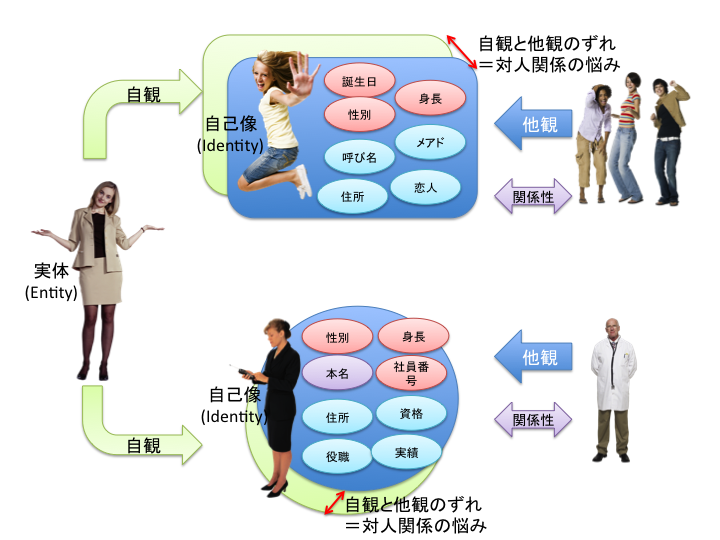
Figure 1 maps out this relationship in a little more detail.
Figure 1 Entity–Identity–Relationship
In this diagram, the “entity” at the far left is you(*1).
You live your life by forming relationships with various people in society. In Figure 1, I have placed your friends at the upper right and your workplace supervisor at the lower right. Of course, they are not the only people with whom you have relationships. There are a vast number of others; I simply could not fit them all in the diagram.
For each of these people, you have a “self-image”—an idea of “how you want them to think of you” or “how you want to be seen.” This self-image is what we call identity.
This self-image (identity), however, is abstract; it is not something your friends can directly see or sense. In practice, they indirectly acquire it by seeing, hearing, and sensing a variety of your “attributes”—your appearance, clothing, perfume, words and actions, where you live, your partner, the mobile phone you use, and so on. In this sense, your “self-image (identity)” is formed by the “set of attributes” you present to them. (← This point will become important later when we discuss privacy.) This is why identity is defined as “a set of attributes” in the International Organization for Standardization’s ISO/IEC 24760. That is right: a digital identity is a set of attributes made capable of being handled by a computer.
Incidentally, a “number” such as an employee number or resident registration number (technically called an identifier) is still only one attribute. People often treat such a number as though it were something exceptionally special. Caution is needed.
Other-View and Self-View: Difficulties in Interpersonal Relationships
Now, as noted above, this self-image cannot be generated directly. It is created by presenting or sharing various “attributes.” For example, to project a cheerful and friendly self-image, you might show the other person such “attributes” as wearing clothes that are easy to move in, speaking clearly and energetically, making plenty of physical contact, joking often, and having them call you by a nickname without an honorific.
Because the impression each person draws from this set of attributes differs, a gap inevitably arises between the self-image you intended (self-view) and the self-image others perceive (other-view). For example, you might behave in ways intended to present yourself as “cheerful and friendly,” only for your partner to interpret you as “frivolous” and say goodbye. If that happened, would you not be devastated?
The gap between “self-view” and “other-view” concerning this self-image accounts for a large share of interpersonal difficulties. And the right to control this gap is closely related to the right to privacy.
The Right to Privacy
Let me state at the outset that there does not yet appear to be a definitive interpretation of the right to privacy. With that qualification, I will describe the view that is mainstream among researchers of digital identity and is known among Japanese legal scholars as the “right to control one’s self-image (the Munakata theory).” (For other theories, please see Professor Shinpo’s lecture.)
As shown in Figure 1, a single individual uses multiple “self-images (identities)” in different contexts. Suppose that, at present, this is working extremely well. Your friends see you as you want your friends to see you, and your supervisor sees you as you want your supervisor to see you: your self-view and others’ views are substantially aligned. Your interpersonal relationships are going well, your dignity is protected, and you derive considerable happiness from them. You have the right to maintain that dignity and happiness. This is one of the fundamental human rights and is stipulated in the Constitution of Japan in the first part of Article 13 (individual dignity) and the latter part (the right to pursue happiness). The Munakata theory defines this as privacy.
“Privacy is the freedom to use different self-images in accordance with the diversity of social relationships that human beings can freely form” (the right to control one’s self-image, premised on free social relationships). Source: Yasuyuki Munakata, A New Construction of Human Rights Theory, Shinzansha (1992), pp. 187–195.
But what would happen if a malicious person came along and gave your friends information that you had not given them (but had given your supervisor)? If you were fortunate, their image of you would not change, but in many cases that image probably would change. As a result, your relationship with your friends might deteriorate. This is an “invasion of privacy.” In terms of the model in Figure 1, taking attributes from one self-image (identity) and mixing them into another self-image constitutes an invasion of privacy. The reason an information leak is said to be an invasion of privacy is that it adds attribute information from the leaked identity to one’s identity toward the public (= no attributes provided).
Access Control
We have now seen that providing attributes to particular people is useful for shaping one’s self-image. At the same time, we have also seen that providing other people with attributes that had been provided to only one particular person can cause an invasion of privacy.
A digital identity is the set of attributes provided to a particular person. To avoid an invasion of privacy, attributes must be provided only to the intended person or thing. Therefore, access to a digital identity must be controlled after identifying the party seeking access.
Performing this “identification of the party seeking access” “with a certain degree of confidence(*2)” is called “authentication.” And “allowing a person or service identified through authentication to access a set of attributes (= a digital identity)” is called “authorization.” Of course, who performs the “authorization”? The authorization is given by the person who has the right to grant access (usually the person concerned; in some cases this may be prescribed by terms and conditions or by law). This means that this person must likewise be authenticated. In other words, the following are required:
- Authenticate the person accessing the digital identity.
- Authenticate the person granting permission to access the digital identity.
- The person granting permission authorizes access by the person in 1.
- Obtain the digital identity.
In many cases, consideration of 1. is omitted, so caution is needed.
(*0) Unlike OAuth, an abstract discussion like this probably does not attract any interest at all. I wonder if it will even get a single-digit number of Hatena Bookmarks?! Incidentally, the article in the example exceeded 800 both in Hatena Bookmarks and RTs, and surpassed 10,000 PVs in just a few days. Exceptional traffic for something so niche and geeky!
(*1) This article mainly discusses identity and privacy as they relate to “natural persons,” but identity is not the exclusive preserve of human beings. Every thing can have an identity. Smart meters and mobile phones are examples that have often been discussed recently. This is why the word “entity” is used.
(*2) There is no such thing as “absolute certainty.” It is always a matter of a certain degree of confidence. Refusing to acknowledge that and speaking of “absolutes” is precisely how a society ends up “absolutely refusing to admit” an accident even when one occurs.
Related posts
Data Sustains Lives—MyDataConference 2026 Opening Address
The following is the opening address for the MyData Japan Conference 2026, delivered by Nat Sakimura in his capacity as Chair of the General Incorporated Association…

The MyData Conference 2026 Is This Wednesday. See You at Hitotsubashi Hall!
I have been posting announcements on X every few days, and the MyDataJapan Conference 2026 is this Wednesday. There are many highlights: Naohiro Fujie, Representative Director…
Unsubmitted Public Comment on the Call for Comments on the Draft First Report of the Youth Protection Working Group on Information Distribution in the Digital Space
July 823:59 was the deadline for the call for comments on the draft first report. I ended the FAPI WG early and23:40 began the submission process…
You must be logged in to post a comment.