In the previous installment, I discussed how combining the Internet with a system of universally used numbers (universal identifiers) could turn everyone into an Inspector Javert, ultimately creating a “heartless society.” This time, I will use Les Misérables again to explain the threat posed by combining another characteristic of the Internet—”fragmentary information”—with universal identifiers. (This section first appeared in gihyo.jp’s New Year feature for 2011.)
The Threat of Fragmentary Information
Now, let us introduce another central character: Marius, who becomes the husband of Cosette, Jean Valjean’s “daughter.” After Marius and Cosette marry, Jean Valjean confesses that he is not really Cosette’s father but only raised her, and that he is a former convict. As a result, Marius abandons Jean Valjean. Marius also becomes suspicious of the source of Cosette’s dowry and begins to investigate it. Naturally, he can obtain only fragmentary information. But by piecing it together, he arrives at a certain “fact.” It is as follows.
- The property had belonged to Monsieur Madeleine, who had once committed a minor offense but reformed, achieved great success in business, built a hospital, opened a school, visited the sick, and took in and raised orphans. He became the guardian of the region and even its mayor.
- However, Jean Valjean knew the secret of Monsieur Madeleine’s past misdeeds, denounced him, and had him arrested. Taking advantage of that arrest, he withdrew more than 500,000 francs belonging to Monsieur Madeleine. This withdrawal is certain because he heard about it directly from a bank employee.
- Furthermore, out of personal resentment, Jean Valjean killed Inspector Javert with a pistol. This is certain because he himself heard the pistol shot.
Of course, the facts are different. Monsieur Madeleine was Jean Valjean, so Jean Valjean did not steal Monsieur Madeleine’s property. Nor was Inspector Javert killed: when Javert was about to be killed, Jean Valjean’s quick thinking saved his life. Yet the fragmentary “facts” Marius collected yielded only a conclusion entirely different from the truth.
The perceptive reader will have noticed once again. The fact that inquiries turn up fragmentary “facts” is another characteristic of the Internet. Truth is the totality of all facts, and extracting only parts of it often produces something far removed from the truth. The Internet always carries this danger.
In Les Misérables, these “errors” are revealed by Thénardier, who comes to denounce Jean Valjean for killing a young man who appeared to be wealthy. Moreover, it is conclusively proved that the “murdered young man” was Marius himself, and that Jean Valjean had rescued Marius at the risk of his own life: the coat Marius had kept and the piece of cloth Thénardier brought as evidence of the murder match. Only then does Jean Valjean recover all his honor. Marius drives a carriage with Cosette to rush to Jean Valjean. But Jean Valjean, devastated by being unable to see Cosette, is mercilessly at the moment of death….
The Supreme Darkness, the Supreme Dawn[1]
What this suggests should now be clear. As befits a story, a messenger who happened to bring the truth appears in the form of a disguised devil, Thénardier, and brings the dawn. In reality, however, we cannot expect such a convenient turn of events.
If that is so, then to avoid creating a heartless society, we must have means to reveal all the facts as necessary and to restore people’s honor. Today’s Internet lacks these means.
Means of restoring honor and mechanisms for limiting the harm caused by entity resolution cannot be achieved through technology alone. Nor can they be achieved through institutional means or social measures, such as educating people, alone. They can be achieved only when technology, institutions, and education join hands and advance in balance. Only then can we obtain an environment that everyone can use conveniently and with peace of mind.
In 2011, Japan’s “National ID system” and the United States’ NS-TIC (the National Strategy for Trusted Identities in Cyberspace) appear poised to make major progress. I sincerely hope that these systems will advance technological, institutional, and educational measures in balance and bring us the dawn.
[1] The title of the final chapter of Les Misérables is “The Supreme Darkness, the Supreme Dawn.” In Les Misérables, the story ends with the coming of dawn. We too must not leave society behind in the “darkness.”
Related posts
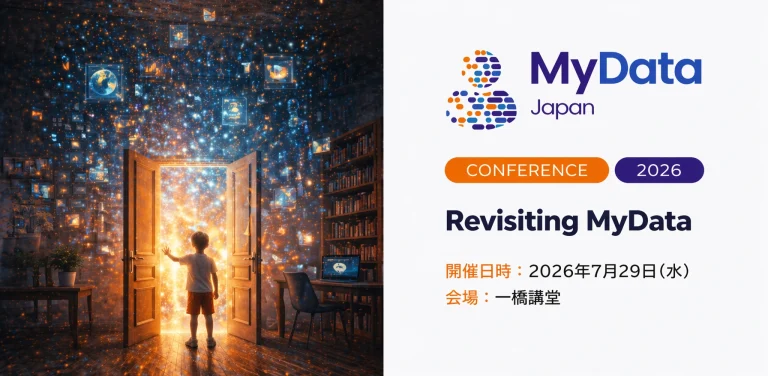
The MyData Conference 2026 Is This Wednesday. See You at Hitotsubashi Hall!
I have been posting announcements on X every few days, and the MyDataJapan Conference 2026 is this Wednesday. There are many highlights: Naohiro Fujie, Representative Director…
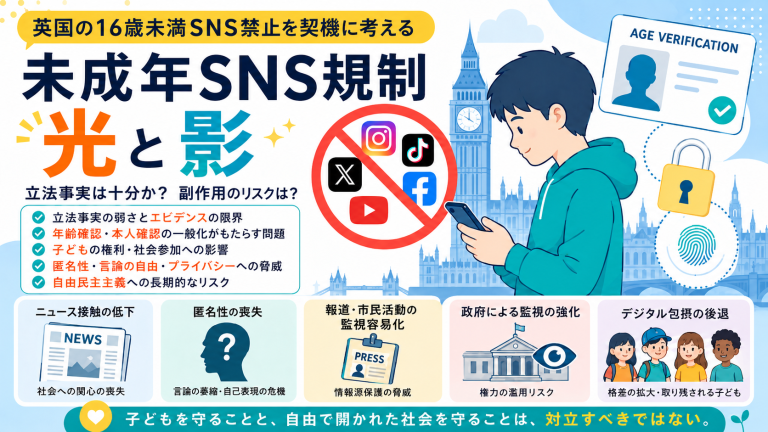
Is This Really a Good Idea? The UK Follows Australia in Moving to Ban Social Media for Children under 16
Prompted by the UK’s ban on social media use by those under 16, this article examines the legislative basis and proportionality of social media regulation intended…
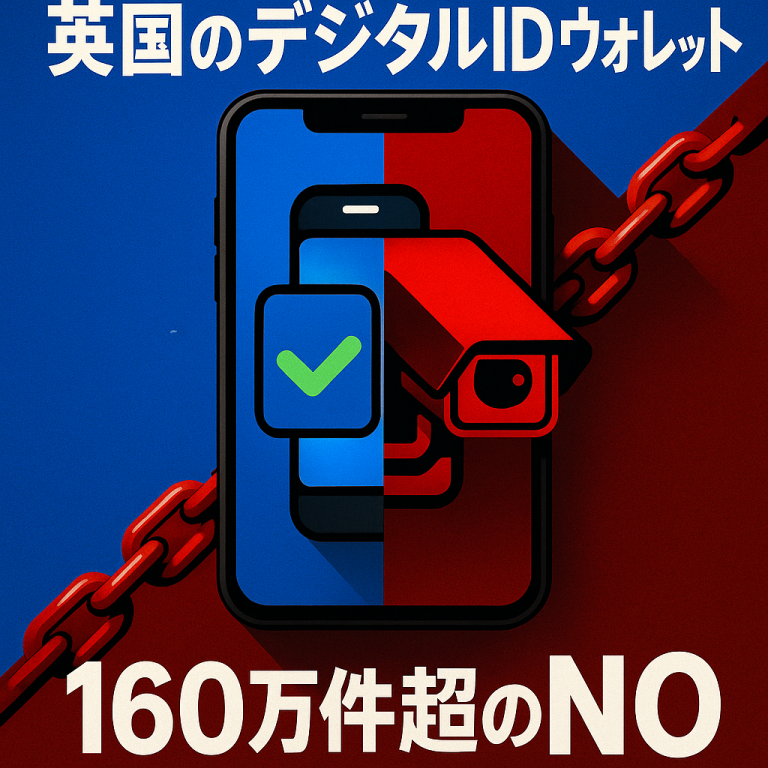
Surveillance or Efficiency? The UK’s Major Shift to a “Mandatory Digital ID Wallet”—More Than 1.6 million Sign a Parliamentary Petition in a Single Night
I posted breaking news on X, but on September 26 the UK government announced a plan to introduce digital ID through the "GOV.UK digital wallet." It…