Recently, talk of assigning people “visible, immutable, universal numbers” under slogans such as “national ID” and “numbering system” has been gaining momentum. Some companies’ share prices have even risen on claims that this will create a permanent special demand of ¥1 trillion annually.
It is said that making record linkage more efficient will dramatically improve operational efficiency, but the discussion is so crude that it concerns me. I myself do not oppose introducing an “immutable number” for operational efficiency. However, because it creates side effects such as privacy violations through record linkage, I believe it must not be visible.
Yet the threat posed by record linkage seems difficult for the public to understand.
People ask, “Even if record linkage is criticized as a threat to privacy, what specific threats does a numbering system create?”
I wrote a detailed information-model explanation beginning with “What is privacy?” in the materials for the Horibe Symposium on December 19 (to be released that day), so please consult those. Here, I would like to tell a more intuitive story.
Let me first say that not all record linkage violates privacy. What I am saying is wrong is “record linkage that the person does not want or intend.”
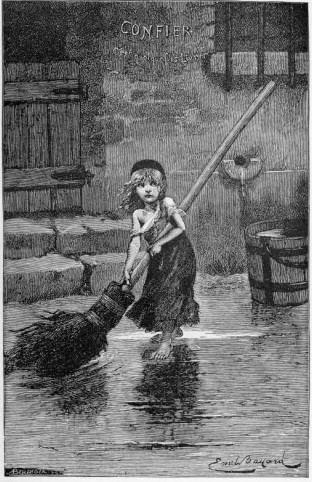
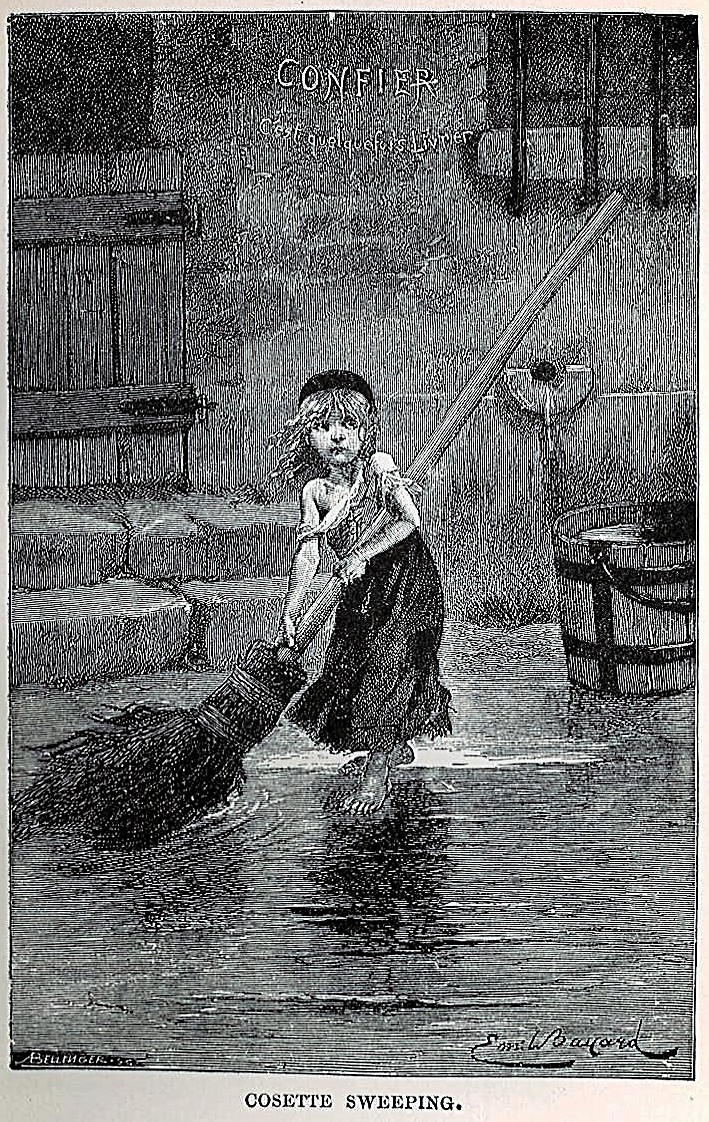 In fact, this “unwanted record linkage” is a major theme in literature, including Victor Hugo’s Les Misérables, although many people do not notice it.
Inspector Javert’s Superpowers
Les Misérables has 2 protagonists: Jean Valjean and Inspector Javert.
As a young man, Jean Valjean steals a loaf of bread out of hunger and is imprisoned. After his release, he encounters a bishop’s forgiveness and love, reforms, and gradually becomes almost saintly. Yet time and again, Javert links him to his past crime and casts him into the abyss. This absurdity and mercilessness is one of the themes of the epic novel.
Javert, by contrast, is a superhuman figure with an exceptional sense of justice and extraordinary abilities.
Let us describe those superhuman abilities.
(1) He never forgets, even after decades.
(2) He has superhuman powers of search.
Humans are creatures that forget. But Javert does not forget.
People ordinarily lack the ability to search for information across time and place and connect two things that appear unrelated. Only Sherlock Holmes and a few other superhumans possess it. Javert is one of them.
With these 2 superhuman abilities, Javert repeatedly casts Jean Valjean into the abyss in the name of “legal justice.” Although Valjean contributes to society, saves people, and behaves almost like a saint, Javert relentlessly “links” him, living under assumed names, and casts him down—bringing misery not only upon him but sometimes upon those around him and even an entire region. How merciless.
Yes, what occurs here is Javert’s “record linkage” of Jean Valjean with Monsieur Madeleine, and of Jean Valjean with Monsieur Fauchelevent, through his “ability never to forget” and his “power of search.”
Perceptive readers will already understand. Inspector Javert’s superpowers—
(1) He never forgets, even after decades.
(2) He has superhuman powers of search.
—are actually the very characteristics of the Internet. Once information appears online, it is copied repeatedly and is rarely erased completely. Internet search engines such as Google make it possible to search that information and find it extremely quickly. Through the Internet, therefore, ordinary people have acquired “superpowers” surpassing Javert’s, whether they want them or not. Now add:
(3) Distribution and use of a “visible, immutable, universal number.”
This makes linking “my past self” with “my present self,” or “my work self” with “my private self,” extraordinarily easy. It completes the plan to turn everyone into Javert.
Humans are creatures that forget. Forgetting leads to forgiveness, and people act on that premise. But the Internet does not forget. A person who never forgets, like Inspector Javert in Les Misérables, is called heartless, and the harm inflicted is merciless. Careless introduction and use on the Internet of identifiers such as “universal, immutable numbers” turns everyone into Javert. What emerges is a “merciless society”.
The Threat of Fragmentary Information
Let us now introduce another major character: Marius, who becomes the husband of Cosette, Jean Valjean’s “daughter.” After Marius and Cosette marry, Jean Valjean reveals that he is not actually Cosette’s parent but merely raised her, and that he is a former convict. As a result, Marius abandons Jean Valjean. Marius also becomes suspicious about the source of Cosette’s dowry and begins investigating it. Naturally, he can obtain only fragmentary information. By connecting those fragments, however, he reaches certain “facts,” as follows.
- The fortune belonged to Monsieur Madeleine, who had once committed a minor offense but reformed, achieved great business success, built a hospital and opened schools, visited the sick, took in and raised orphans, became the guardian spirit of the region, and ultimately became mayor.
- Jean Valjean, however, knew the secret of Monsieur Madeleine’s old crime, denounced him and had him arrested, then took advantage of the arrest to withdraw more than 500,000 francs belonging to Monsieur Madeleine. This withdrawal was certain because Marius heard about it directly from the banker.
- Furthermore, Jean Valjean shot and killed Inspector Javert out of a personal grudge. This was certain because Marius himself heard the pistol shot.
Of course, the truth is different. Because Monsieur Madeleine is Jean Valjean, Jean Valjean did not steal Monsieur Madeleine’s fortune. And when Inspector Javert was about to be killed, Jean Valjean used his wits to save his life. Yet the fragmentary “facts” gathered by Marius produced a conclusion wholly unlike the truth.
Once again, discerning readers will already have noticed that fragmentary “facts” appearing during an investigation are also characteristic of the Internet. Truth is the totality of all facts; when facts are selectively extracted, the result is often far removed from the truth. The Internet always harbors this danger.
In Les Misérables, these “mistakes” are exposed by Thénardier, who comes to accuse Jean Valjean of murdering a wealthy-looking young man. Moreover, the “murdered young man” was Marius himself, and it is conclusively proved that Jean Valjean had risked his life to rescue him when the coat Marius had kept matches the scrap Thénardier brought as evidence of murder. Only then is Jean Valjean’s honor fully restored. Marius takes Cosette in a carriage and rushes to Jean Valjean. But Jean Valjean, devastated because he could no longer see Cosette, is mercilessly approaching his final moments….
Supreme Shadow, Supreme Dawn[1]
The implication should now be clear. As befits a story, a messenger of truth appears by chance in the guise of the disguised devil Thénardier and brings the dawn. In reality, however, we cannot expect such convenience.
Therefore, to prevent a merciless society, we must have a means to reveal all facts when necessary and restore a person’s honor. Today’s Internet lacks this.
Neither technical measures alone nor institutional measures and social measures through education alone can provide means of restoring honor and mechanisms for limiting the harm caused by record linkage. They can be realized only when technology, institutions, and education proceed hand in hand and in balance. Only then can we obtain an environment that everyone can use conveniently and with confidence.
In 2011, Japan’s “National ID System” and the United States’ NS-TIC (National Strategy for Trusted Identities in Cyberspace) appear likely to make major progress. I sincerely hope these systems will advance technological, institutional, and educational measures in a balanced manner and bring us the dawn.
[1] The title of the final chapter of Les Misérables is “Supreme Shadow, Supreme Dawn.” Les Misérables ends with the arrival of dawn. We too must not leave society in the “darkness.”
The gihyo.jp “2011 New Year Special Edition” is here → gihyo.jp 2011 New Year Special Feature: The Merciless Society and the Numbering System—The Dangers of Record Linkage in Victor Hugo’s Les Misérables: “The Threat of Fragmentary Information” and “Supreme Shadow, Supreme Dawn”
Related posts
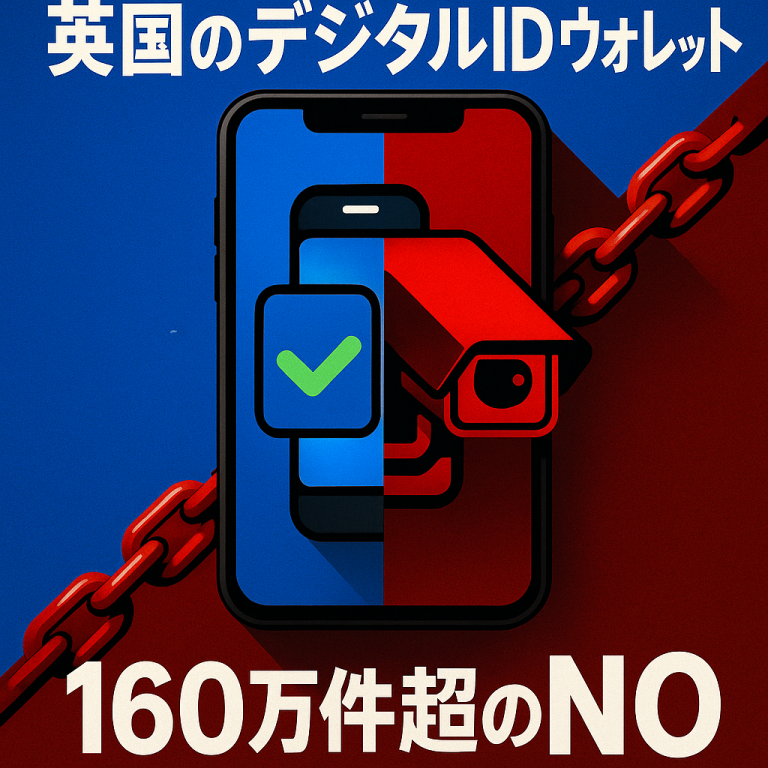
Surveillance or Efficiency? The UK’s Major Shift to a “Mandatory Digital ID Wallet”—More Than 1.6 million Sign a Parliamentary Petition in a Single Night
I posted breaking news on X, but on September 26 the UK government announced a plan to introduce digital ID through the "GOV.UK digital wallet." It…
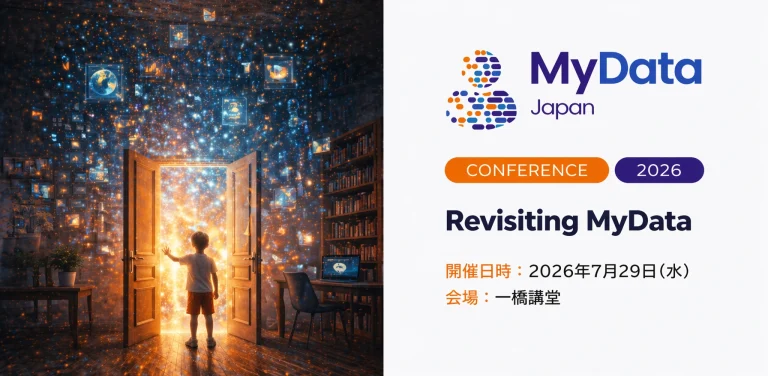
The MyData Conference 2026 Is This Wednesday. See You at Hitotsubashi Hall!
I have been posting announcements on X every few days, and the MyDataJapan Conference 2026 is this Wednesday. There are many highlights: Naohiro Fujie, Representative Director…
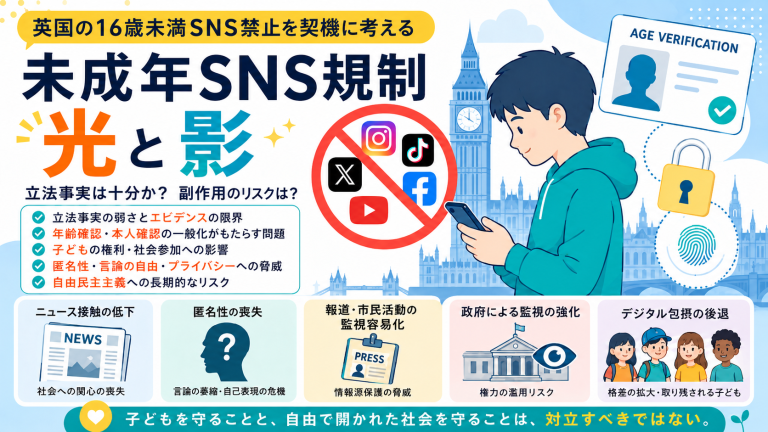
Is This Really a Good Idea? The UK Follows Australia in Moving to Ban Social Media for Children under 16
Prompted by the UK’s ban on social media use by those under 16, this article examines the legislative basis and proportionality of social media regulation intended…