
Some argue that, for government efficiency, Japan should simply use the Basic Resident Register Network to distribute national IDs without delay.
Certainly, if they could be distributed securely, accurately, completely, without duplication, and cost-effectively, I would agree that they should be. But actually doing so is not that simple.
As I also wrote in “Haraguchi’s 5 Principles and OpenID” under “Principle 1,” assigning them presents 2 challenges.
Challenge 1: Accuracy
The first is the accuracy of the Basic Resident Register Network database.
Each municipality enters data into the network. However strongly accuracy is emphasized, people perform the work, so mistakes occur. The first question is what level of operational quality is maintained.
Even if data-entry operations were perfect, what about creating the data to enter—that is, procedures for moving out and moving in?
According to an online search, the documents needed for those procedures are:
Obtaining a moving-out certificate
- Personal seal
- Photo identification, such as a driver’s license, passport, or physical disability certificate
- Address of the new residence
Filing a moving-in notification
- Moving-out certificate issued by the municipality of the previous address
- A document that can verify identity, such as a driver’s license or passport
This appears to be the case, although some places apparently demand more.
How are these checked at the service counter?
How can anyone know that they are not counterfeit?
In Japan, which lacks identity-proofing standards like those in New Zealand, this verification must be described as seriously inadequate.
I should also point out that until 19, September in the Heisei era, obtaining a driver’s license required only submission of a resident record, with no identity-verification document required. In other words, the current use of driver’s licenses for identity proofing… needs no further comment.
Furthermore, even today the identity-verification documents accepted when obtaining a driver’s license are:
- Health insurance card
- Basic Resident Register card
- Passport
- License or qualification certificate issued by a government agency pursuant to law
- Student or employee ID; the school or company may be contacted by telephone or other means for confirmation
(Source: http://www.pref.kagawa.jp/police/menkyo/shiken/shiken.htm )
And yet we are told this constitutes identity verification (identity proofing)…
Challenge 2: Distribution
OK.
Let us overlook all of the above and assume that every procedure up to this point was perfect.
In other words, assume the Basic Resident Register Network database is complete, duplicate-free, truthful, and perfect.
If so, assigning numbers there is easy—or rather, they will already have been assigned as database keys. Distributing them, however, is not easy, because each database entry must be linked to a real, living person. Incidentally, this is called Identification or registration. How is it to be done? Through identity proofing, of course. But without identity-proofing standards?
This is the 2nd problem.
Ultimately, Japan has not completed the first step of identity proofing, so it must begin there. We must be prepared for rigorous identity proofing to cost a great deal, and we do not even know whether it can be implemented in a short period. Realistically, rather than performing general-purpose identity proofing, it will be necessary to define and perform identity-proofing procedures at the level required for each operation. This is closely related to how a national ID itself is positioned.
Addressing the Challenges
Simply saying that everything is difficult gets us nowhere, so let us consider what can be done under the given conditions.
First, identity-proofing standards (manuals) must be created.
These should be created for each level of identity proofing.
Every type of operation has a corresponding level of harm that identity fraud could cause. For example, if a campsite in a national park were reserved under someone else’s name, it would not be a serious problem. In that sense, paying taxes is similar. I doubt that anyone would be kind enough to pay taxes in my name, but if someone did, I would welcome it, and the government would have collected the taxes due, so there would be little problem. It would be a victimless crime. Incidentally, by this logic it is unclear why Japan requires public personal authentication for e-Tax. Looking at examples overseas, requiring a digital signature to file a tax return is unusual.
Tax refunds, by contrast, require somewhat firmer identity proofing. I would be unhappy if someone else received mine. Even so, the amount involved is limited.
Issuing a passport, on the other hand, must be rigorous. A passport is used internationally as evidence of identity, so the potential impact is large. Suppose, for example, that a Japanese passport were mistakenly issued to a foreign terrorist, enabling that person to pass a checkpoint and carry out a large-scale terrorist attack. Japan would effectively have assisted terrorism. In the worst case, it could even trigger a war. Passport issuance can therefore be regarded as a high-risk operation.
Globally, the trend is to classify the risk levels of such operations into 4 stages.
Level 1 covers low-risk operations and level 4 high-risk operations. In the examples above, filing a return and paying taxes might be level 1, receiving a refund level 2, and obtaining a passport level 4. Naturally, the manuals would require more complex and costly procedures for level 4 than for level 1.
Not every citizen obtains a passport, so not everyone needs level 4 identity proofing. Under Haraguchi Principle 4, “the mechanism must minimize costs while being reliable and efficient,” issuance and distribution of a national ID should be limited to an appropriate level of identity proofing based on the operations the person is likely to perform. A “number” distributed for a limited purpose after a limited level of verification must therefore also carry information indicating the level of identity proofing it underwent. In other words, this should be an incremental model that starts where needed, not a big-bang model.
Use of Private-Sector IDs and the Government’s Role
It is also necessary to consider whether to use government-issued IDs or ones already used in the private sector. In terms of efficiency and convenience, the latter is preferable, as the Obama administration concluded. After all, they have already been distributed and are used every day.
What is difficult for the private sector alone is confirming that IDs have not been issued redundantly by different providers—in other words, verifying existence and uniqueness. A realistic course may be for the government first to verify existence and uniqueness—which requires identity-proofing standards and manuals as well as careful database review, especially the latter of which takes time and money—and to define operational requirements and frameworks for connecting private-sector IDs to government services, while considering using private-sector IDs as national IDs. [*1]
Other Challenges
Incidentally, the challenges discussed so far concern only registration and distribution. Once distributed, IDs will be used, but their use raises various institutional and technical considerations, and there are also many issues concerning the properties that a “number (identifier)” should possess. It is not enough merely to assign numbers.
I hope to discuss these on another occasion.
[*1] Incidentally, when connecting to government services, limiting the system to Japanese citizens is impossible, so a “national ID” is actually problematic. Furthermore, it may be necessary to allow access by foreign nationals located abroad. This is one reason the U.S. government decided to accept private-sector IDs meeting certain criteria, including OpenID, SAML, and Infocard. (Added 2010-03-22T20:04-09:00)
Related posts
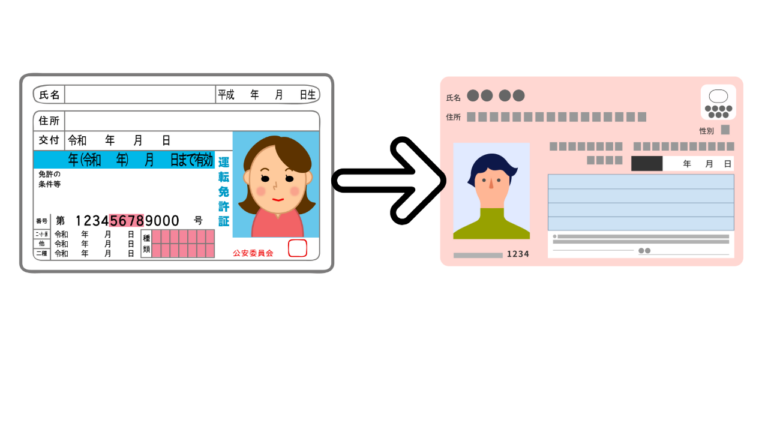
“My Number Driver’s License” to Be Introduced in 25 on March: One-Stop Address Changes and Online Renewal Courses
The integration of driver's licenses and My Number Cards will soon become a reality. This groundbreaking change could have a major impact on our daily lives.…
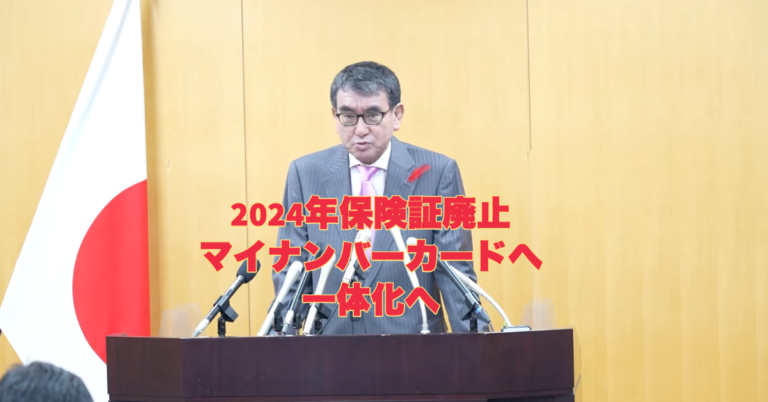
Summary and Personal Impressions of Digital Minister Kono’s 10/13 Press Conference, Which Covered Many Important My Number Card Topics Beyond Integration with Health Insurance Cards
On October 13, at around 10 o'clock, Minister Kono held a press conference on efforts to promote adoption of the My Number Card. Several important announcements…
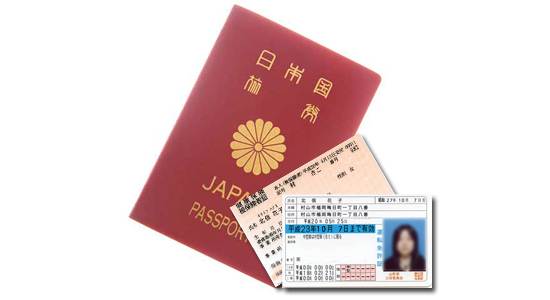
What Is Identity Verification? (1)
“Identity verification” is a familiar term that is often used, but it seems that what it actually means is not very well understood. I would therefore…