
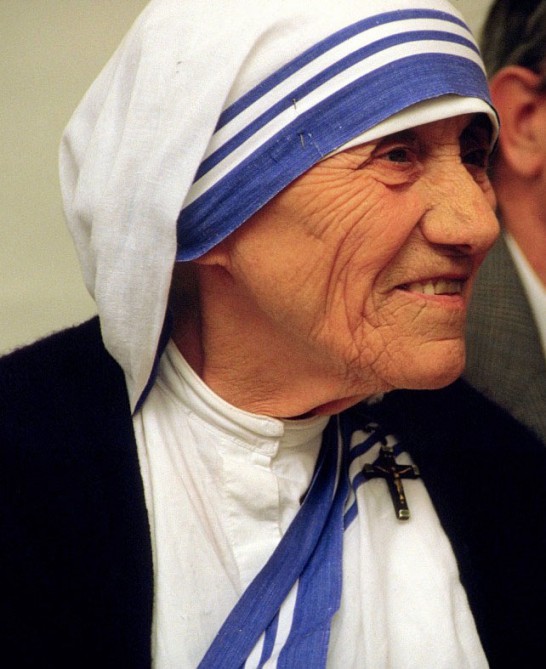
The other day, shortly after Mother Teresa died, I watched what I think was an NHK documentary about the religious order she led and its work. The people gathered in that order had each come there for different reasons, and their backgrounds were immensely varied. Even so, as I watched them, I felt: “Ah, they are a family.”
They are, of course, a Christian group, but those whom they seek to help are not limited to Christians. Whatever a person’s religion, they recognize that person’s difference and regard them as someone to be helped. In a sense, their work can be called salvation that goes beyond the “exclusion of difference” found in secular religion.
I feel that this is why I was able to see “family” in them.
At heart, every person is an individual. We cannot fully understand even ourselves, much less fully understand others. Much unjust discrimination arises from refusing to recognize this “difference” and judging others by one’s own particular values—values that one mistakenly regards as universal. This often leads to treating “others” harshly and refusing to acknowledge their values. It is especially evident in colonial and racist policies, but I think such a tendency can be found, to a greater or lesser degree, in everyone. We are all hard on other people.
Although this basic structure does not change, it takes on a somewhat different form among blood relatives. This is because, as a family, there is an unconscious, tradition-supported forgiveness: in the end, one must forgive most things.
The reason Mother Teresa’s order appeared to me as one family may lie here. That is, they were in a relationship in which they could forgive one another. This was conscious forgiveness, grounded in an understanding of one another’s differences. In other words, the essence of family is “forgiveness,” and in that sense I intuitively felt that the order was a higher form of family, founded on “reason.”
Even without blood ties, and even with different backgrounds, people can become a family if they have a spirit of forgiveness. This is true at school and in society at large. And only when the world becomes one family will a society without war or hunger arrive.
Related posts
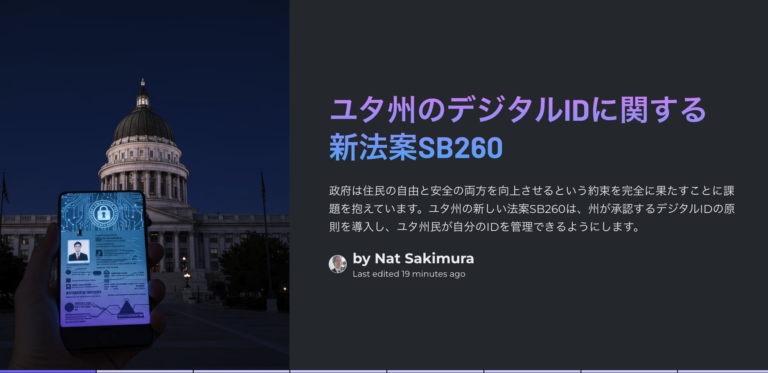
Anyone Who Thinks Identity Is Given by the State or Government Should Sit Up and Read This: Utah Digital ID Bill SB260 and the Transformation Brought by a User-Centric Digital ID System
As digital technology evolves, our dependence on personal information and data continues to grow. Yet many government-provided ID systems do not always give sufficient consideration to…
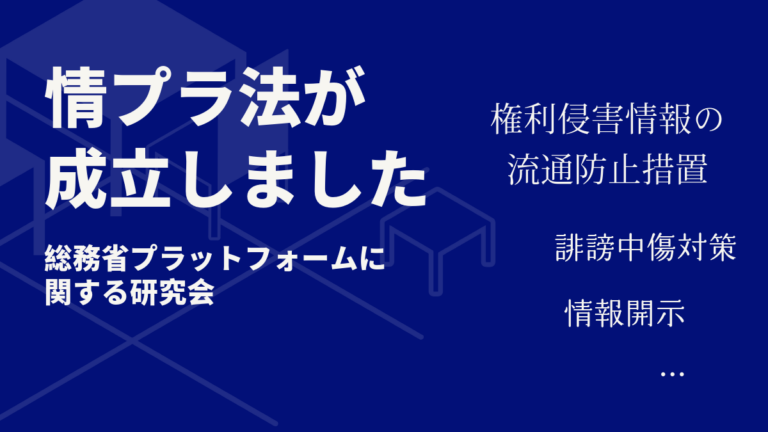
The Provider Liability Limitation Act Has Become the Information Distribution Platform Act (May 10)
Following deliberations by the Ministry of Internal Affairs and Communications’ Study Group on Platforms, of which I was also a member, the amended “Provider Liability Limitation…
MyData Japan submitted comments in response to the public consultation on the “Order Partially Amending the Regulation for Enforcement of the Act on Certification Business of the Japan Agency for Local Authority Information Systems Pertaining to Electronic Signatures, etc.”
In response to the public consultation announced on January 26 regarding the "Draft Order Partially Amending the Regulation for Enforcement of the Act on Certification Business…