
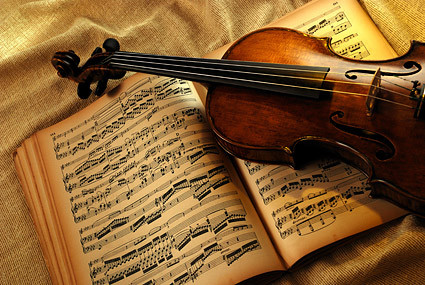
Having recently become rather star-struck, after the 3 Great Tenors I went to another extremely star-struck concert: the Stradivarius Summit Concert.
The concert was a project that gathered 6 Stradivarius violins, 2 violas, and 2 cellos, and had them play in ensemble under concertmasters from orchestras around the world. It was the kind of plan that seemed certain to appeal to the public. In fact, it appealed to me as well, so it was probably a success as a project. I attended the performance at Suntory Hall.
However, as soon as the 1st piece began, I felt a subtle sense of unease: “Huh?” The sound was certainly soft, but even before that, the ensemble seemed to be falling apart. At first I wondered whether there was a delay, but then instruments that should have been heard later were heard first. Still, these were concertmasters from orchestras around the world, led by the Berlin Philharmonic. I thought that the problem surely must be me, and listened to the first-half program: Wolf’s Italian Serenade in G major and Grieg’s Holberg Suite, op. 40.
The second half was the also rather predictable Vivaldi Four Seasons. To me, the solo pitch sounded unstable and the tempo seemed to waver badly. But I told myself that I was probably tired and that my own ears were wavering, and kept listening. That doubt was cleared up once “Summer” began. In The Four Seasons, a different soloist performed each of spring, summer, autumn, and winter; for “Summer,” the concertmaster of the Japan Philharmonic became the soloist. The instant he began to play, the ensemble tightened up, and above all, the pitch and tempo finally sounded exactly right to me. “I see! The person in ‘Spring’ really was tone-deaf after all!” I could finally listen with peace of mind.
What went wrong came afterward. A former concertmaster of the Lugano National Orchestra was the soloist, but I could not really tell what he was doing in “Autumn” from beginning to end. A vague “boh” sound came out, and that was all. The thought crossed my mind: “Come on, this is not a children’s recital!”
For the final movement, “Winter,” the Berlin Philharmonic’s concertmaster was the soloist. The performance itself was not particularly skillful, but what was impressive was the way he firmly took hold of the ensemble. Everyone moved under his control; that felt very much like the Berlin Philharmonic.
Incidentally, the Hungarian cellist was also very good.
The container was first-rate, at least. The instruments used were superlative.
But in the end, it is the people playing them who move us.
It would have been better to audition students or someone similar and have them play. We might have heard a better performance. But then it probably would not have had that star-struck appeal.
As for the essential Stradivarius instruments, each one really sounded completely different. I strongly felt that their sound never became “harsh,” but simply listening to Stradivarius instruments did not quite register with me, since I do not normally go to violin concerts very often.
For educational purposes, I would like them to mix in Amati and other famous instruments next time, so that they can be compared.
Related posts
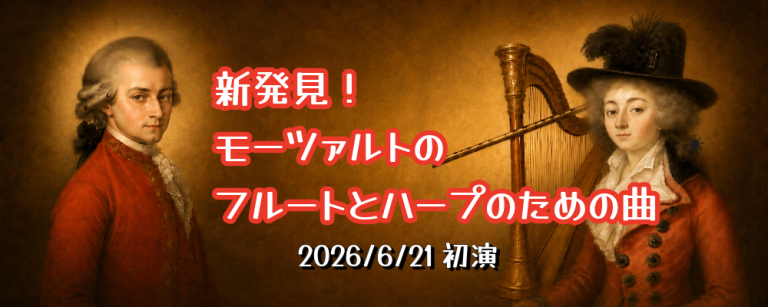
New Discovery: Mozart Works for Flute and Harp Premiered on 6/21 (6/23 Performance Recording Also Added)
Across 250 Years: Mozart’s “Unpublished Autograph” Found in Paris Reveals the Genius Behind the Legend An “Anonymous” Treasure Sleeping in a Corner of the Library On…
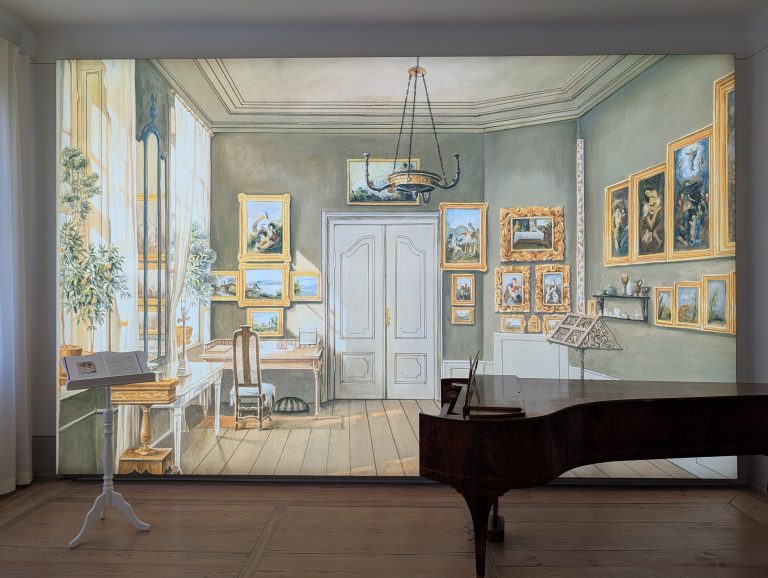
A Visit to the Mendelssohn House in Leipzig — The Difficulties Faced by the Mendelssohn Family and Women
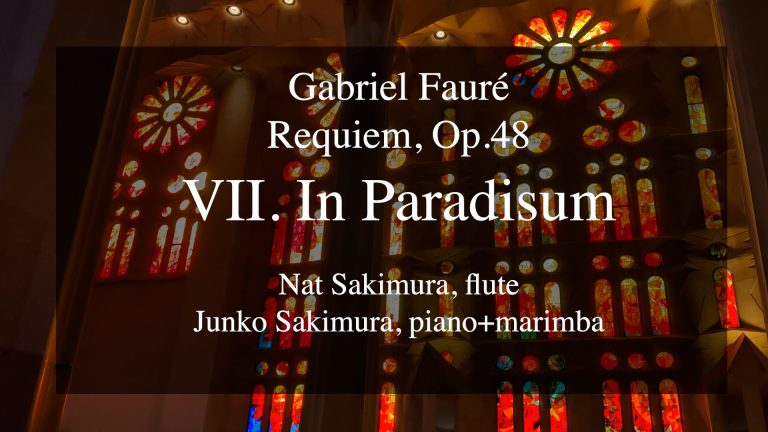
Year-End Greetings: Fauré’s “In Paradisum” from Requiem, Op. 48—In Memory of Andrew Nash
Here are my customary year-end greetings. This year I had begun preparing to perform “Lilium”, but after learning of the death of my close friend and…